


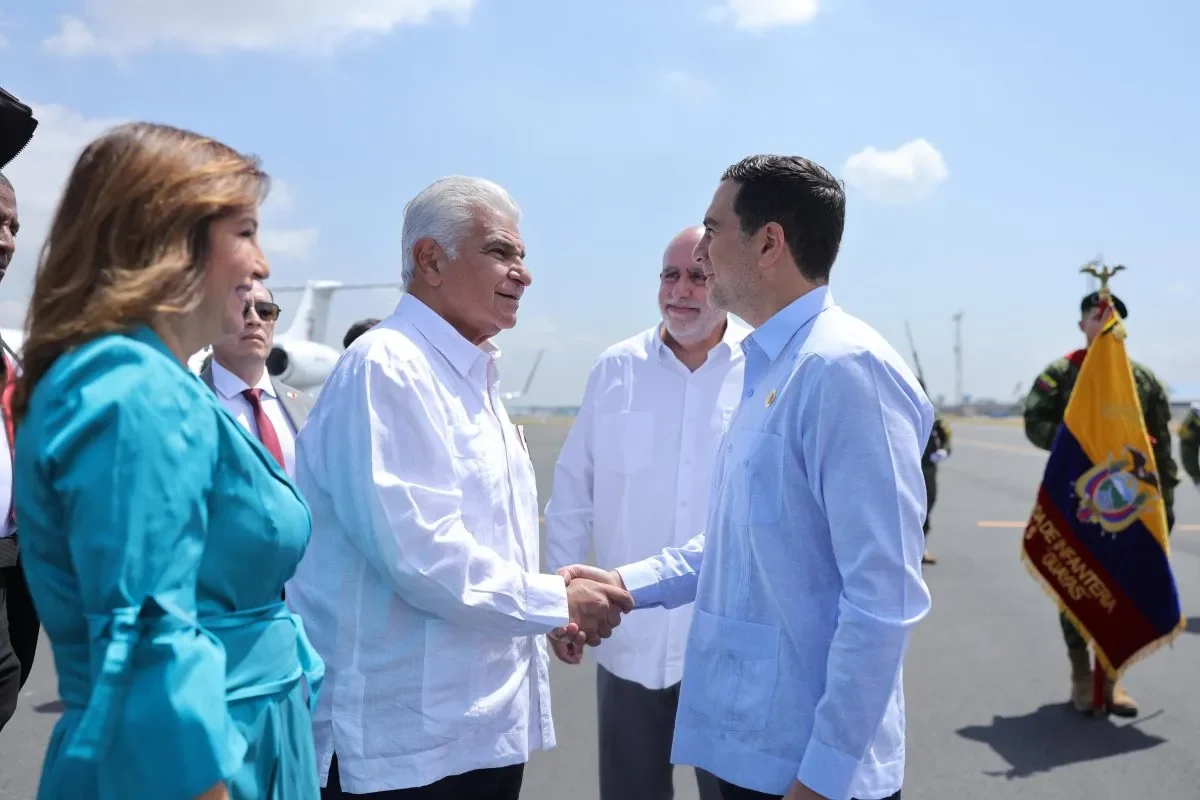
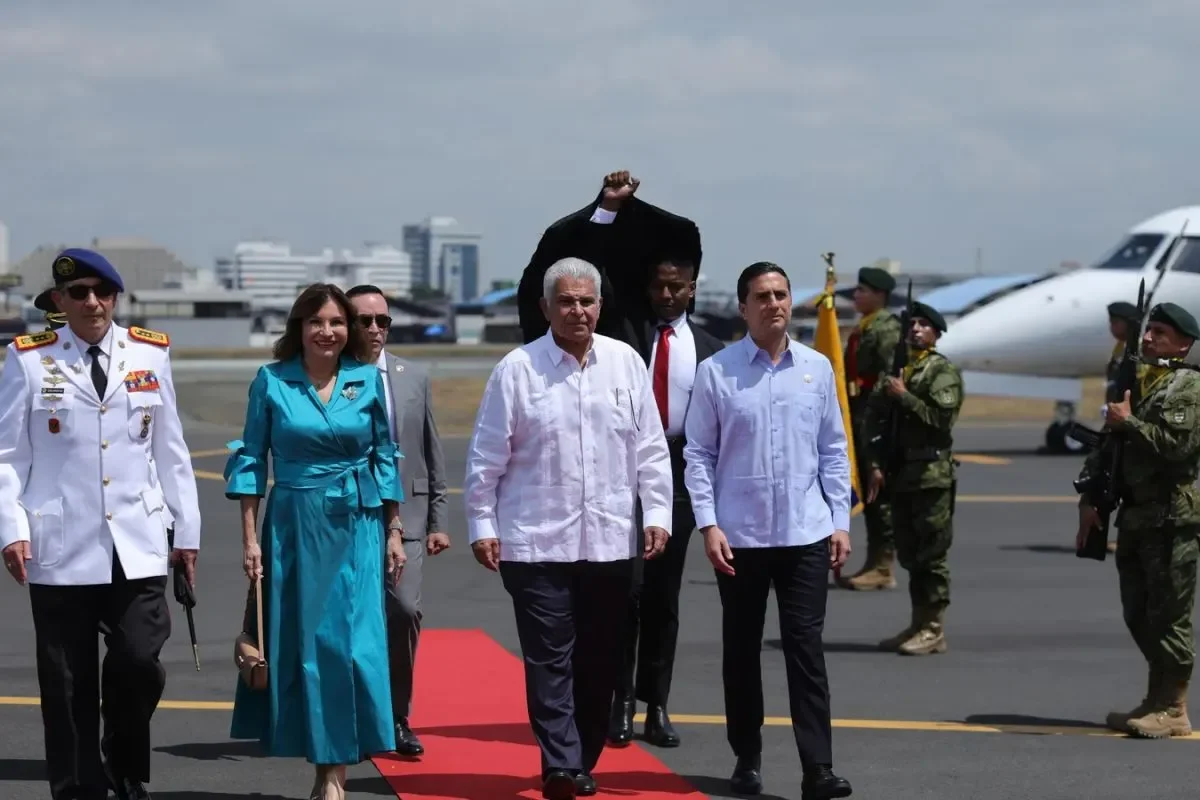
Panama Ecuador relations took a decisive step forward on Friday, September 4, 2026, when President Mulino touched down at Simón Bolívar Air Base in Guayaquil for a high-level meeting with his Ecuadorian counterpart, Daniel Noboa Azín. The one-day diplomatic mission brought together two nations confronting shared challenges, from transnational organized crime to the urgent need for deeper commercial integration and investment flows across the Pacific corridor.
Panama Ecuador Relations and the Security Imperative
Security cooperation anchored the conversations in Guayaquil, reflecting a broader regional recognition that criminal networks operate without regard for national boundaries. Both governments view intelligence sharing and coordinated enforcement as essential tools in confronting drug trafficking routes, money laundering operations, and organized crime syndicates that have expanded their reach through Central and South America.
Mulino addressed the situation directly, acknowledging the pressures facing his host nation while pledging Panamanian solidarity.
“We all know the difficult situation in Ecuador and the effort we are making; whatever Panama can do to collaborate with our neighbors, we will do, we have a latent threat that is increasing more and more. We have to unite efforts” [Translated from Spanish]
The comments reflect an evolving approach to regional security, where bilateral partnerships increasingly drive practical outcomes. Ecuador has faced significant challenges from drug-
violence and prison unrest in recent years, while Panama’s strategic position as a transit hub makes it vulnerable to smuggling and trafficking networks. By pooling information and aligning enforcement strategies, the two countries hope to close gaps that criminal organizations have exploited.
Trade Negotiation Framework Signed in Guayaquil
While the presidents conferred, officials from both administrations gathered at the Governorate of Guayas to sign the terms of reference for a Partial Scope Economic Complementation Agreement between Ecuador and Panama. The signing marked a concrete milestone in formalizing commercial ties that have long carried untapped potential for both economies.
Ecuador’s Minister of Economic Development and Productive, Sahira Moya, signed the document on behalf of Quito, while Panama’s Minister of Commerce and Industries, Julio Moltó, represented Panama City. The framework establishes a political and technical roadmap for launching bilateral trade negotiations under the Latin American Integration Association and the Montevideo Treaty of 1980, consistent with obligations under the World Trade Organization.
A partial scope agreement offers a pragmatic pathway for two nations that want to liberalize specific sectors without committing to a comprehensive free trade pact immediately. For Panama, the accord opens opportunities for its logistics, financial services, and agricultural exports. For Ecuador, access to Panamanian markets and logistical infrastructure could support its diversification efforts beyond traditional commodity exports. The negotiating structure provides both sides with flexibility while anchoring the process in established multilateral rules.
President Mulino Will Bring a High-Level Delegation
The composition of Panama’s delegation underscored the multidimensional nature of the visit. First Lady Maricel de Mulino accompanied the president, joined by Foreign Minister Javier Martínez-Acha and Commerce Minister Julio Moltó. Jorge Vallarino attended in representation of the Panama Canal Authority, a presence that highlighted the waterway’s enduring importance to hemispheric trade and the potential for increased Ecuadorian cargo flows through the canal.
Panama’s ambassador to Ecuador, Alfredo Montaner, also participated in the delegation. By integrating diplomatic leadership, commercial expertise, and canal interests into a single mission, Panama signaled that it views the relationship with Ecuador through a comprehensive lens that links security, trade, and infrastructure. The approach reflects a maturing partnership that seeks practical outcomes over symbolic gestures.
Regional Implications and the Road Ahead
The Guayaquil summit carries significance beyond bilateral cooperation. Latin American nations are navigating overlapping pressures, including uneven economic recovery, organized crime expansion, and shifting global trade patterns. The Panama-Ecuador partnership demonstrates that smaller and medium-sized economies can pursue meaningful integration through targeted agreements and security coordination without waiting for broader regional consensus.
The trade negotiations now have a formal framework, giving investors and businesses a predictable path forward. For Panama, deepening ties with Ecuador adds another South American market to its commercial network and reinforces its role as a connectivity hub linking the Atlantic and Pacific economies. Ecuador gains a reliable partner with a dollar-based economy, sophisticated logistics infrastructure, and a financial services sector capable of facilitating regional investment.
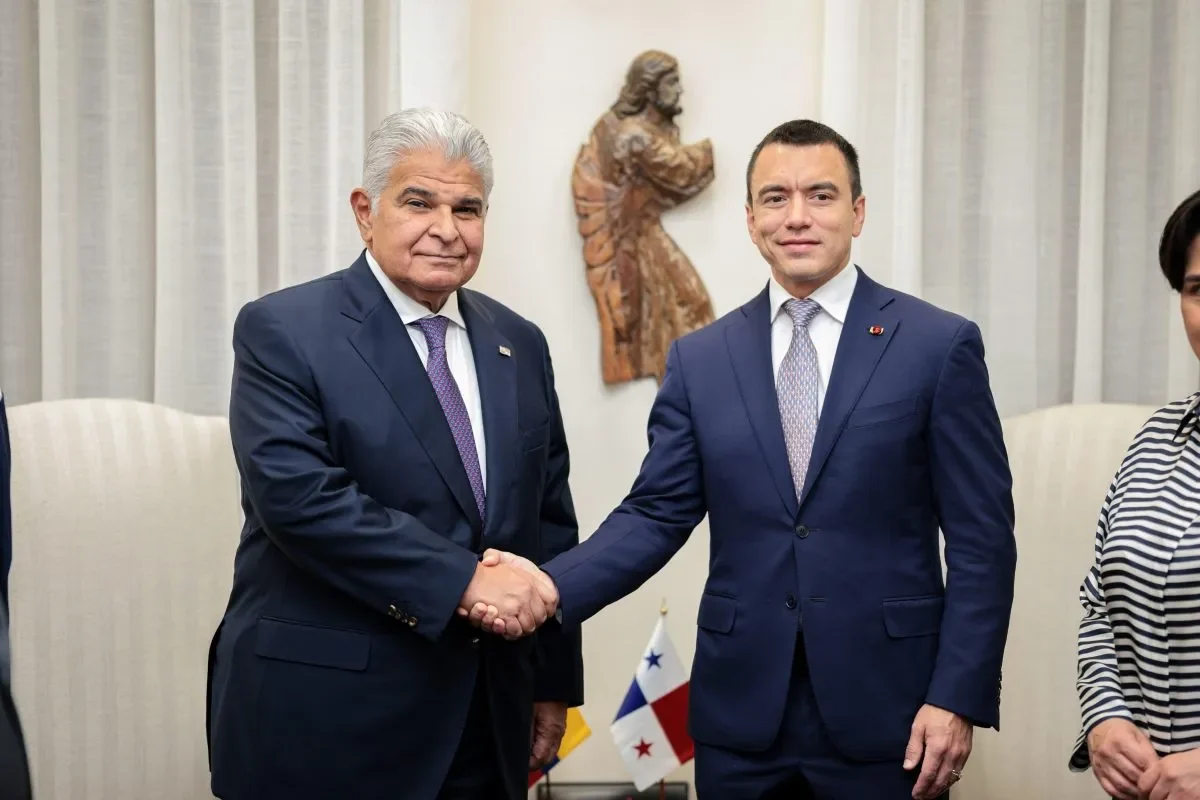
President Mulino will stay only a single day, but the documents signed and the commitments discussed could shape Panama Ecuador relations for years to come. The two presidents left Guayaquil with a shared understanding that coordinated action on security and trade delivers stronger results than isolated efforts. As negotiations advance and intelligence sharing deepens, this brief summit may prove to be a pivotal moment for bilateral cooperation and regional stability.