


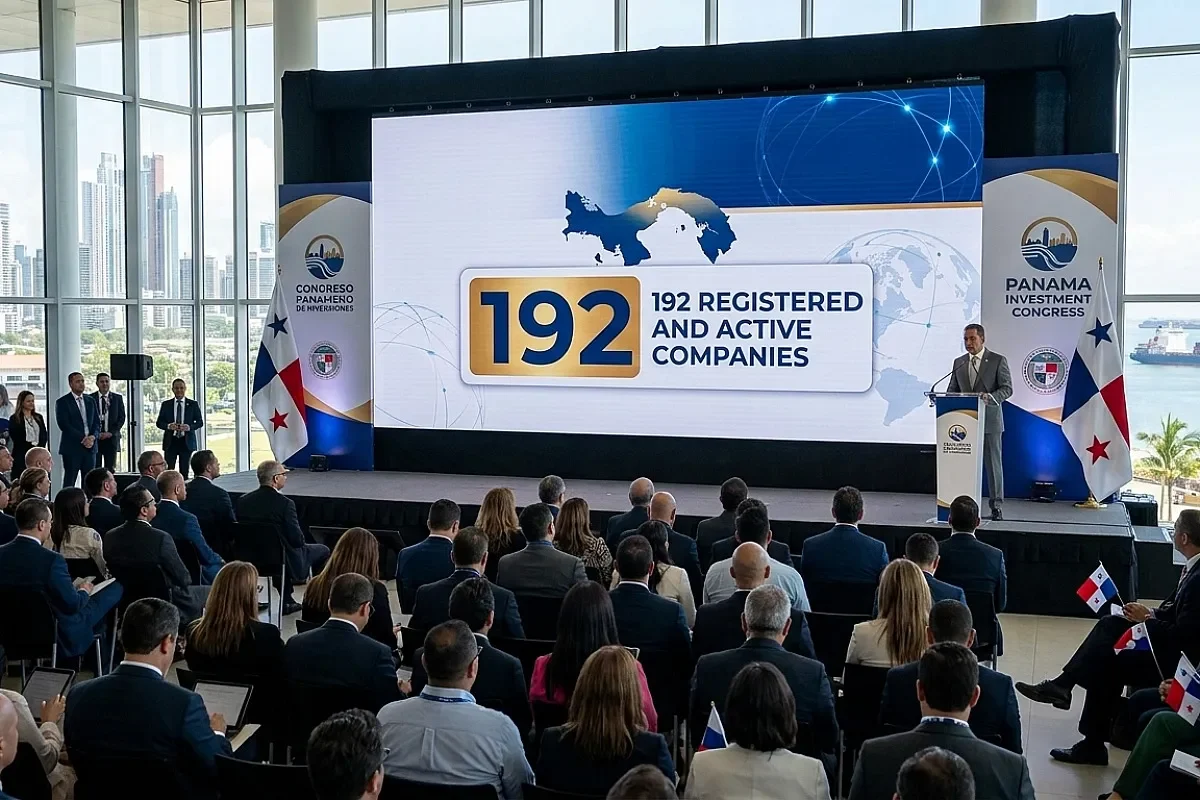
Panama multinational companies have generated more than 10,000 jobs since the special headquarters regime began operating, and Panamanian citizens hold roughly half of those positions. The registry now includes 192 firms from over 40 countries as of May 2026, according to the Ministry of Commerce and Industries (MICI). The country’s dollarized economy, strategic canal location, and business-friendly framework keep pulling corporate regional headquarters from nearly every continent.
The milestone signals more than simple growth in company registrations. Behind the numbers sits a deliberate push to transform Panama into a services hub where global firms manage regional operations, logistics, finance, and technology. That ambition has produced a diverse corporate landscape with deep pockets from North America, Asia, and Europe.
How Global Powers Shape Panama Multinational Companies
United States corporations dominate the register with 37 firms operating under the SEM regime. China follows with 18 companies, a figure that underscores Beijing’s expanding commercial footprint across Latin America and the Caribbean. The two economic rivals account for nearly a third of all multinational headquarters established in the country.
European nations hold significant positions as well. Switzerland ranks third with 14 companies, while the Netherlands and Panama itself each host 13 registered entities under the regime. The United Kingdom contributes 10 firms, Japan and Denmark each have eight, Germany adds seven, and France and Spain register six apiece. South Korea and the British Virgin Islands each account for four companies.
The registry also reflects participation from emerging markets and smaller economies. Venezuela, the Dominican Republic, and Singapore each have three companies. Sweden, Mexico, Canada, Australia, Belgium, and Colombia register two each. Another 23 countries including Brazil, Argentina, Ireland, Guatemala, Jamaica, Italy, Hong Kong, and Uruguay appear with one company each, showing that the regime’s appeal extends far beyond traditional corporate tax havens.

Sector Diversity Across the SEM Framework
Technology, logistics, and financial services stand out among the sectors represented in the multinational registry. Consumer goods, pharmaceuticals, advanced manufacturing, and digital economy operations also maintain a strong presence. That mix has expanded the types of professional roles available inside these organizations beyond simple back-office functions.
The operational scope includes administrative and financial management, technology development, logistics coordination, commercial strategy, and marketing. Several companies also run technical assistance programs, research and development units, electronic transaction processing centers, and regional management divisions from their Panama bases. Procurement, supply chain oversight, and data analytics functions round out the professional landscape.
What makes the SEM framework distinct is its emphasis on knowledge transfer rather than purely headcount growth. The regime encourages companies to expose local talent to global systems, specialized training, and emerging technologies that otherwise might not reach the Panamanian labor market. That emphasis on capability building distinguishes the program from simpler investment promotion schemes elsewhere in Latin America.

Workforce Development and Employment Milestones
The employment picture within the SEM regime shows steady accumulation. Companies reported 8,359 direct jobs during 2024, focusing their training efforts on artificial intelligence, cybersecurity, and data analysis. Those three areas have become critical for regional operations centers managing activities across multiple countries and time zones.
By early 2026, the historical job count reached 10,000 positions since the program’s inception. MICI officials caution that the two figures measure different things. The 8,359 number captures direct employment generated during 2024 alone. The 10,000 figure represents the cumulative total over the regime’s lifespan. Mixing the two indicators would overstate the program’s recent growth, so analysts track them separately.
The workforce development angle matters because multinational companies operating under SEM frequently train staff who later circulate through Panama’s broader economy. Skills acquired at these firms in areas like cybersecurity, artificial intelligence, data analytics, and cross-border logistics management can translate into startups, consultancy firms, or leadership roles at domestic companies.
The Road Ahead for Panama Multinational Companies
The MICI’s Directorate of Multinational Company Headquarters serves as a single window for licensing, visas, certifications, and other administrative processes tied to SEM operations. That streamlined approach reduces friction for companies weighing Panama against rival hubs in Costa Rica, the Dominican Republic, or Colombia. Bureaucratic speed can determine whether a regional headquarters lands in Panama City or San José.
Thirteen new multinational headquarters joined the registry during 2025, a pace that suggests continued momentum despite global economic uncertainty. The EMMA regime, which targets manufacturing operations, complements the SEM program by attracting production facilities that need both physical plants and regional management structures.
Looking forward, the challenge for Panamanian policymakers involves converting corporate registrations into durable economic benefits. That means prioritizing higher-quality employment, deeper technology transfer, and expanded professional development opportunities for local workers. With 192 companies already committed and competition for regional headquarters intensifying across Latin America, the country’s ability to deepen its value proposition will determine whether the next decade brings another 10,000 jobs or something far greater.