


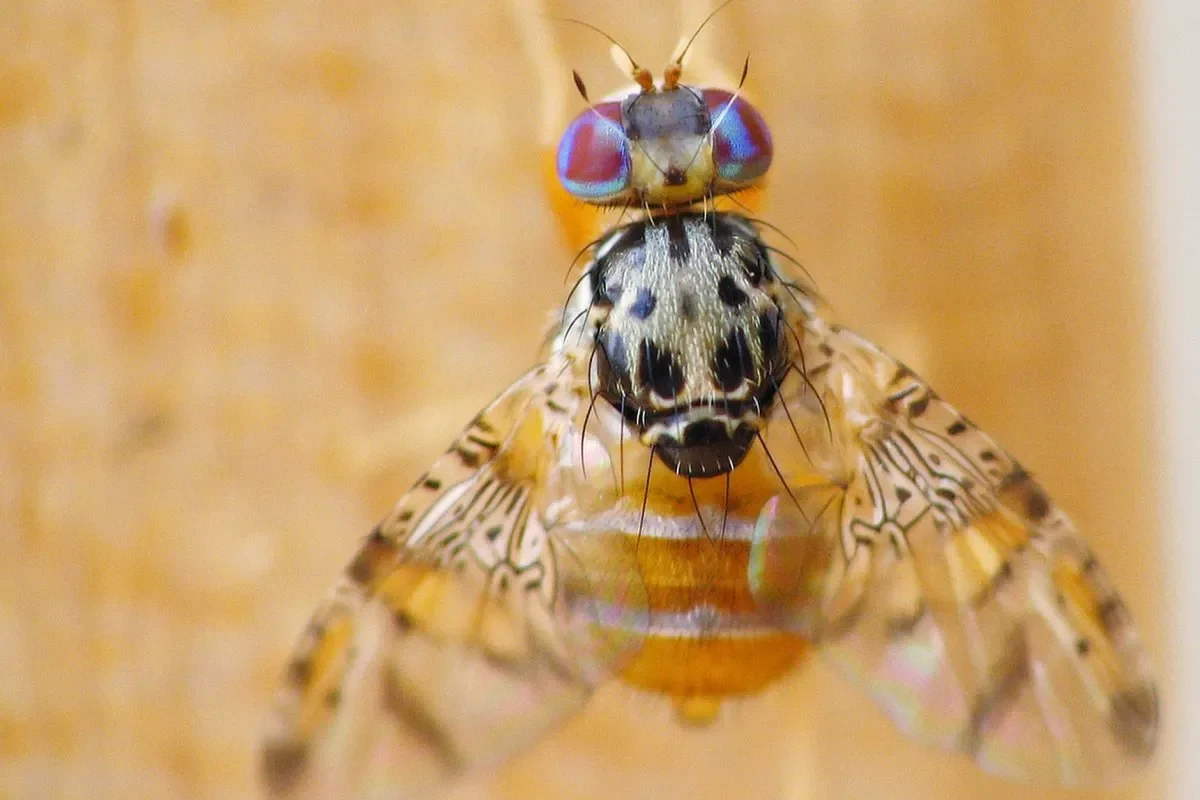
Panama will carry out its first sterile flies release on October 16 in the Chiriquí Province community of Maneyes, Potrerillos Arriba. The Ministry of Agricultural Development (MIDA) is coordinating the effort through its National Plant Health Directorate to suppress populations of Ceratitis capitata, commonly known as the Mediterranean fruit fly or medfly.
The medfly ranks among the world’s most destructive agricultural pests. It attacks a wide range of fruit and vegetable crops, and its presence often triggers phytosanitary restrictions that block farmers from selling produce in domestic and international markets. Chiriquí, Panama’s primary agricultural hub, currently hosts established medfly populations in several strategic production zones.
Sterile Insect Technique Targets Wild Medfly Populations
The program relies on the Sterile Insect Technique (SIT), a biological control method that involves mass-rearing and sterilizing male flies before releasing them into infested areas. When sterile males mate with wild females, no viable offspring result. Repeated releases progressively shrink the wild population over successive generations.
MIDA officials said the approach forms part of a broader Integrated Fruit Fly Management strategy that combines surveillance, monitoring, and control actions. The first release falls under Technical Cooperation Project PAN 5031, titled “Validation of the Sterile Insect Technique for the Control of the Mediterranean Fruit Fly.” The project aims to test SIT under Panama’s specific production conditions and build tools for long-term integrated pest management.

International Partners Back Agricultural Protection Effort
The International Atomic Energy Agency (IAEA) provides technical cooperation for the project through its programs applying nuclear science to agricultural development. The Regional International Organization for Agricultural Health (OIRSA) and the Food and Agriculture Organization (FAO) of the United Nations also support the initiative.
Project objectives include improving the phytosanitary status of fruit and vegetable producing regions, protecting small, medium, and large-scale growers, and boosting agricultural yields. Officials expect the strategy to increase the availability of quality produce for domestic consumption while strengthening food security in rural communities. Improved pest control could also open doors for Panamanian producers seeking access to international markets that maintain strict quarantine standards against medfly.
Agricultural Trade and Production Outlook
The sterile flies release represents a shift toward environmentally sustainable pest management. Unlike broad-spectrum insecticide spraying, SIT targets only the medfly species without harming beneficial insects, pollinators, or surrounding ecosystems. The technique has been successfully deployed in Mexico, Guatemala, Chile, and other Latin American countries to suppress or eradicate fruit fly populations.
For Panama, establishing a validated SIT protocol could reduce crop losses that currently undermine farm profitability in Chiriquí. The province produces much of the country’s vegetables, coffee, and fruit. Persistent medfly pressure has forced some growers to abandon susceptible crops or invest heavily in chemical controls that increase production costs and carry environmental risks.

MIDA’s long-term goal centers on maintaining areas of low pest prevalence that meet international export requirements. Achieving that status would allow Panamanian producers to ship fresh produce to markets currently closed due to medfly quarantine restrictions. The October release marks the first step in determining how effectively the technique works under local climate and agricultural conditions.