


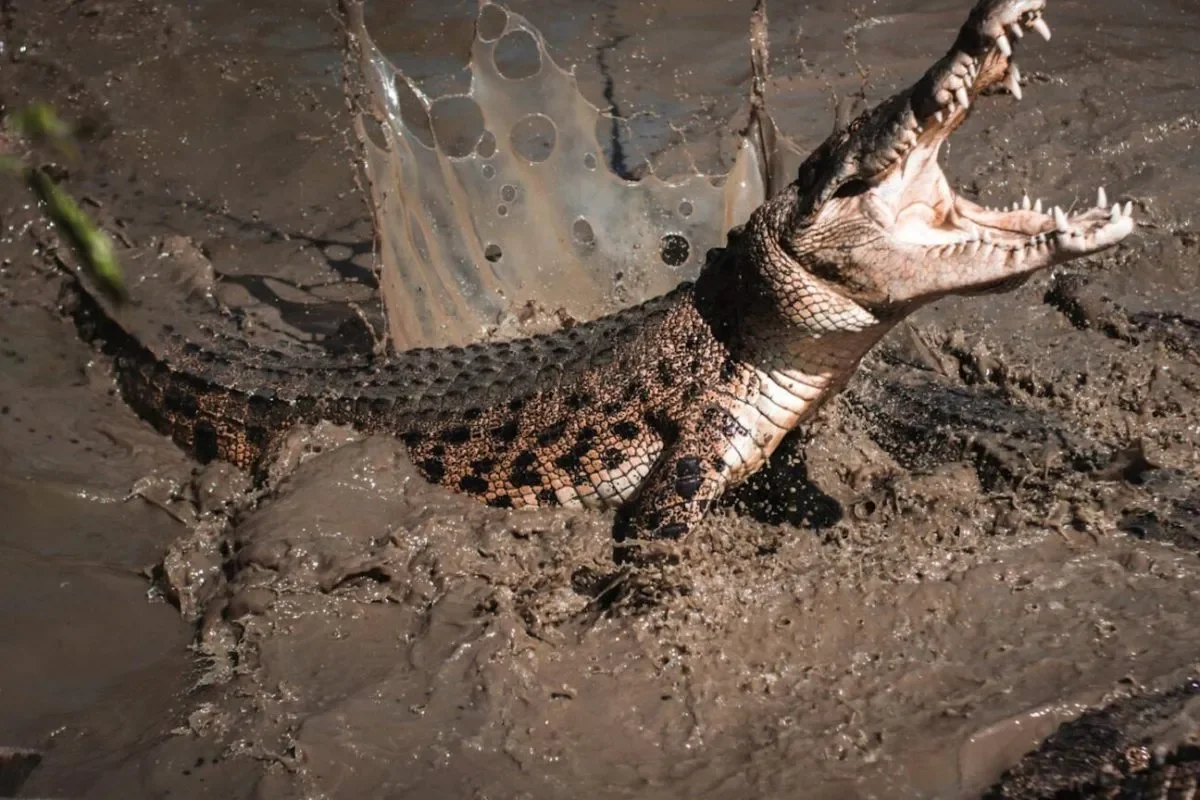
Panama’s rivers are seeing a notable crocodile population recovery, but researchers say the animals are not simply multiplying. They are being drawn to specific areas by human activity, particularly fishing ports and shrimp farms where food is abundant and easy to access.
In one striking example, scientists identified 36 crocodiles along a single kilometer of the Río Grande de Coclé’s mouth. The concentration underscores a growing challenge for communities living near waterways, where encounters between people and reptiles have become more frequent. Adding to this tension, a video that surfaced last week showing a man recklessly approaching a crocodile has further inflamed the public debate regarding a perceived overpopulation of crocodiles in Panama’s rivers.
Why Crocodiles Are Concentrating in Panama’s Rivers
Miriam Venegas Anaya, a researcher at the Technological University of Panama’s Hydraulic and Technical Research Center, said decades of hunting had previously suppressed crocodile numbers. Protection measures have since allowed populations to rebound, but that alone does not explain why the animals cluster in certain spots. Experts note that rapid urban expansion along coastal zones has also drastically reduced natural buffer zones, pushing these powerful reptiles into much closer, high-risk contact with unsuspecting local residents and daily human activities.
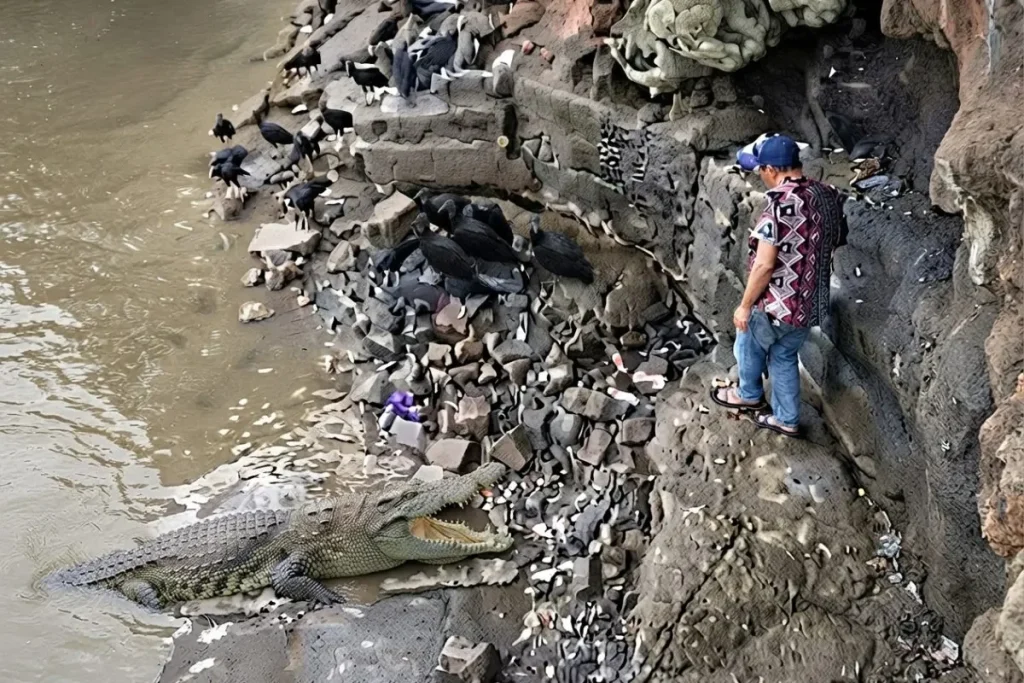
Venegas Anaya, widely known as the “crocodile doctor,” pointed to habitat transformation and food availability as key factors. Ports where fishermen clean their catch and discard remains into the water create reliable feeding grounds. Shrimp farming installations produce similar effects, attracting reptiles with organic waste and byproducts.
The researcher warned that the issue extends beyond the presence of crocodiles near communities. Organic matter dumped into rivers can degrade water quality and trigger fish kills, damaging the broader aquatic ecosystem that local livelihoods depend on.
Crocodile Population Recovery and Human Safety Risks
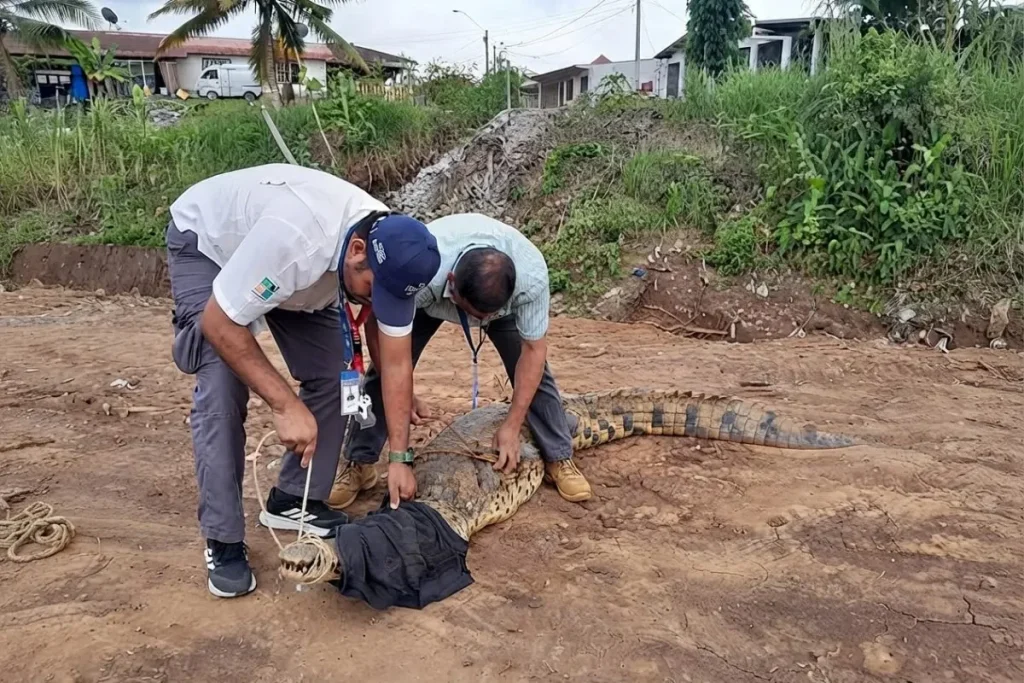
The situation gained public attention after a crocodile bit a fisherman in the leg at the port of Coquira. For Venegas Anaya, responses to such incidents must address both the animal and the conditions that keep it in the area.
Removing individual crocodiles without eliminating the attractants, she said, will not solve the problem. “Retirar a los animales sin resolver esas causas podría no solucionar el problema,” she stated. [Translated from Spanish]
Panama’s contingency protocol for managing negative interactions between crocodiles and humans includes surveillance, evaluation, and monitoring of problem animals. It also calls for controlling the food sources that keep crocodiles lingering near populated areas.
Prevention Measures and Ongoing Research
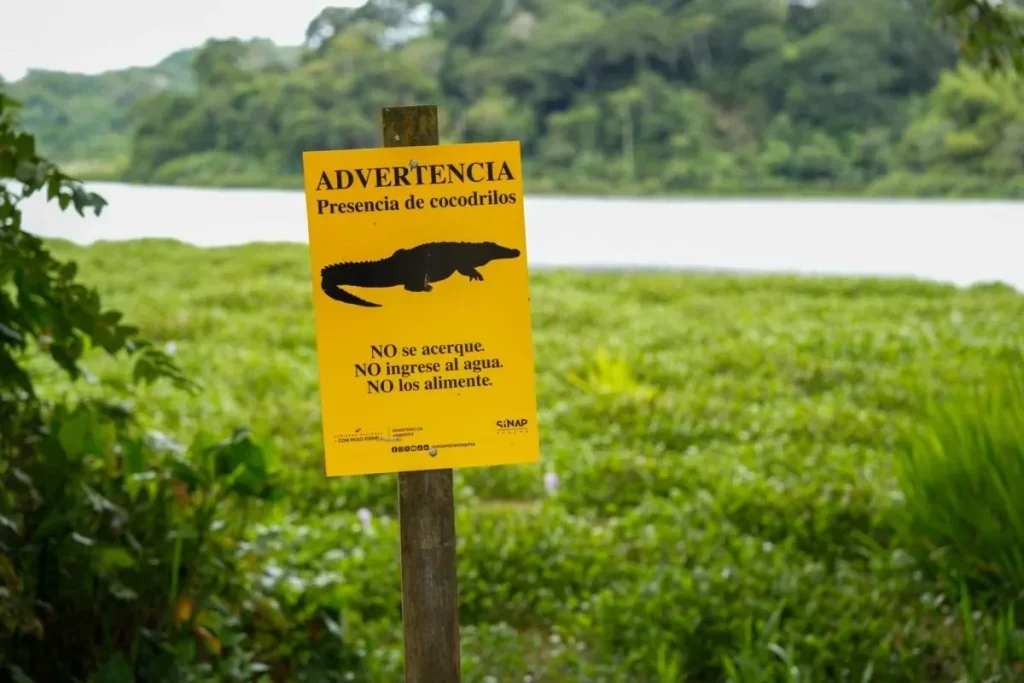
Venegas Anaya urged residents to stop feeding crocodiles directly or indirectly. “Lo primero que hay que hacer es no alimentar a los cocodrilos. No limpiar los peces ni tirar los desechos al río,” she explained. [Translated from Spanish]
She recommended building proper waste disposal facilities and keeping fish cleaning activities away from ports. These small changes could significantly reduce the number of crocodiles that associate human activity with food.
Biologists from the Technological University of Panama, working with the Environment Ministry and the National Secretariat of Science, Technology and Innovation, are capturing, tagging, and tracking crocodiles across major Pacific river basins. The data will help officials understand movement patterns and assess risks to communities.
Results from that monitoring project are expected to be published soon, according to Venegas Anaya. The findings could shape future management decisions as Panama balances conservation goals with public safety in riverside towns.