


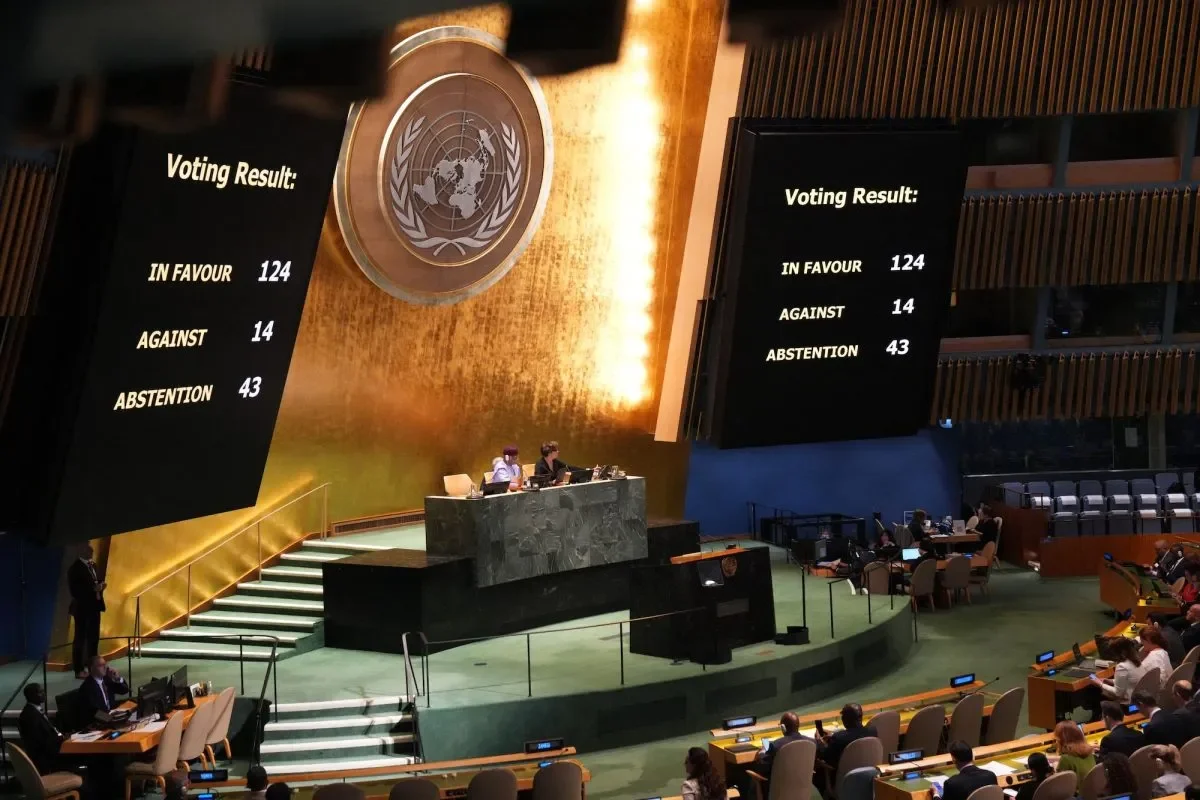
Panama was one of four nations to abstain from a United Nations General Assembly vote authorizing virtual participation for Palestinian officials during the 81st session. The resolution passed overwhelmingly with 152 votes in favor, three against, and four abstentions, according to official UN records.
The measure, adopted as Resolution A RES 81 1, allows Palestinian President Mahmoud Abbas and other senior officials to participate via videoconference or prerecorded messages when unable to travel to UN headquarters in New York. Colombia, Honduras, and Peru joined Panama in abstaining, while the United States, Israel, and Paraguay cast the only opposing votes.
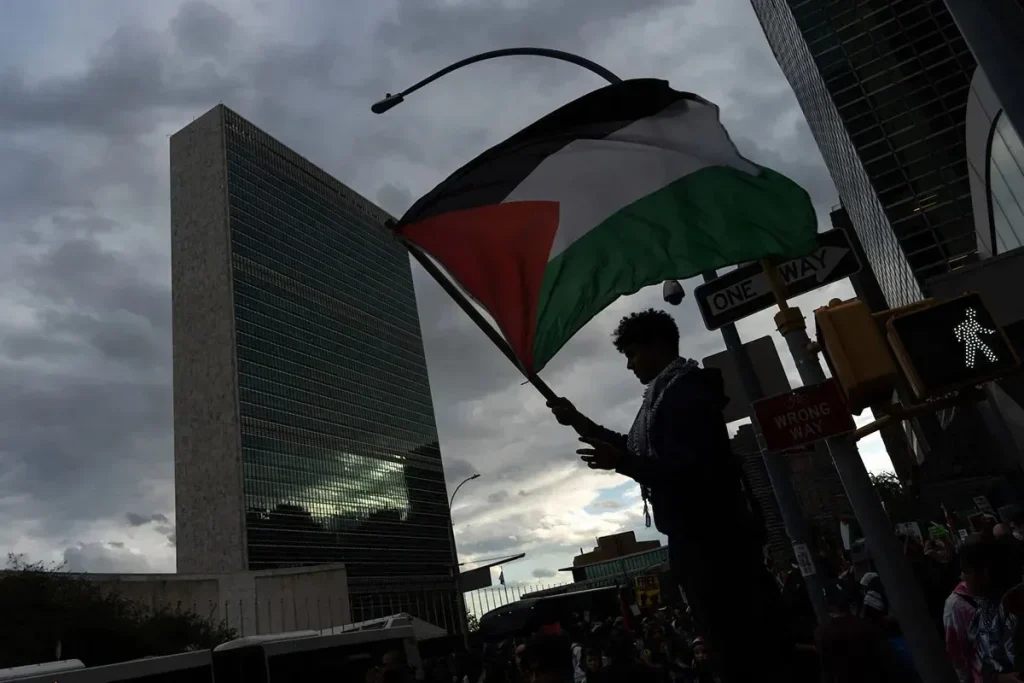
Panama Abstention Vote Breaks From Regional Majority
Fifteen of 20 Latin American countries backed the resolution, making Panama’s position notable within the region. Argentina, Brazil, Chile, Mexico, Uruguay, and ten other nations voted in favor. Paraguay stood alone as the only Latin American country to vote against the measure alongside the United States and Israel.
The resolution did not address Palestinian statehood recognition or full UN membership. Its scope remained limited to ensuring remote participation when US visa denials prevent Palestinian officials from attending in person. The initiative emerged after Washington again denied visas to Abbas and other delegation members.
Votación ONU 🇺🇳🇵🇸
— BlackMaps 🗺️ (@maps_black) September 20, 2026
Permitir a Palestina participar de la Asamblea de las Naciones Unidas pic.twitter.com/DuAJWlJVL0
Shifting Diplomatic Stance on Representation for Palestine
Panama’s abstention represents a departure from its 2012 position, when it became the only Latin American country to vote against granting Palestine non-member observer state status. That resolution passed with 138 votes in favor, nine against, and 41 abstentions.
The 2026 decision reflects a less confrontational approach. Panama did not join Israel and the United States in outright rejection, but it also declined to support the mechanism ensuring Palestinian virtual presence. This placed the country outside the Latin American majority for the second time in a vote concerning Palestinian representation.
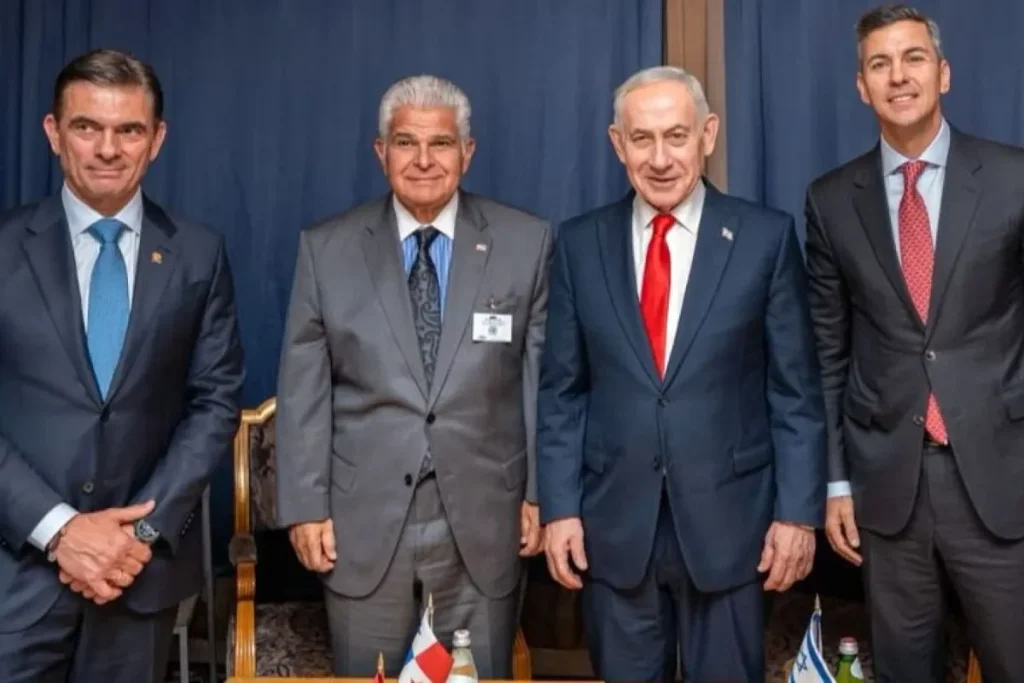
Timing Coincides With Netanyahu Meeting
The vote occurred days before President José Raúl Mulino attended a meeting with Israeli Prime Minister Benjamin Netanyahu in New York. Paraguayan President Santiago Peña and Bolivian President Rodrigo Paz also participated in the gathering.
During the conversation, Netanyahu expressed willingness to expand cooperation with Panama on security, technology, and artificial intelligence. Mulino outlined Panama’s interest in strengthening capabilities to combat drug trafficking and organized crime structures. The leaders also discussed reducing irregular migration through the Darién Gap and agreed to prepare a list of priority needs for potential Israeli cooperation.
The meeting followed Netanyahu’s address to the General Assembly, which was marked by heckling and walkouts from numerous delegations protesting Israeli military operations in Gaza. The Panamanian delegation remained in the chamber during the speech.
Panama’s abstention aligns with the Mulino administration’s broader diplomatic orientation toward Israel. The decision avoided direct opposition to the resolution while maintaining distance from the regional consensus, a balancing act that underscores the government’s foreign policy priorities amid deepening ties with Israeli leadership.