


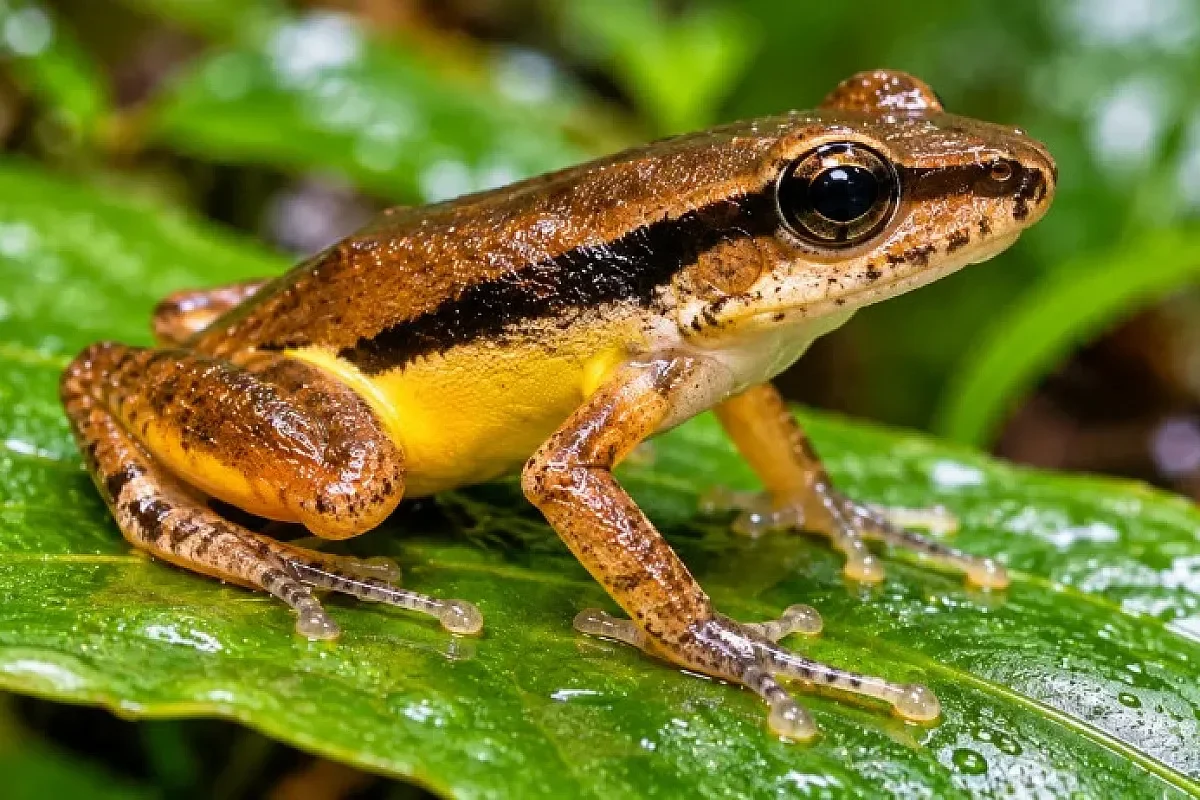
A team of researchers has confirmed the discovery of six new frog species across Panama’s highland regions, a finding that resolves a century-old scientific confusion and expands the known diversity of amphibians in Central America. The new frog discovery, published in the journal Vertebrate Zoology, was led by Panamanian biologist Abel Batista and involved field expeditions spanning nearly two decades.
The study, which ran from 2006 to 2025, combined genetic analysis, morphological measurements, acoustic recordings, and geographic distribution data to formally describe the six species. All belong to the genus Colostethus, commonly known as rocket frogs, which now includes 17 recognized species.
Resolving a Decades-Old Scientific Mystery
Since the 1920s, Panamanian populations of these stream-dwelling frogs had been classified as Colostethus pratti, a species originally described in 1899 from specimens collected in Antioquia, Colombia. But as early as 1968, researchers had flagged that Panama’s frogs did not match the Colombian type specimen.
The confusion persisted until Batista and his team, working with the University of Antioquia, compared samples from both countries. Genetic testing revealed that Panama’s populations formed their own distinct lineage, more closely
to Colostethus latinasus than to the Colombian species they had been lumped with for generations.
Científico panameño identifica seis especies nuevas de ranas en las serranías de Panamá. Lea la nota completa en: https://t.co/RecfmrEX1c https://t.co/fuZeYDJU26
— Senacyt Panamá (@senacyt) November 25, 2026
New Frog Discovery Relies on Integrative Taxonomy
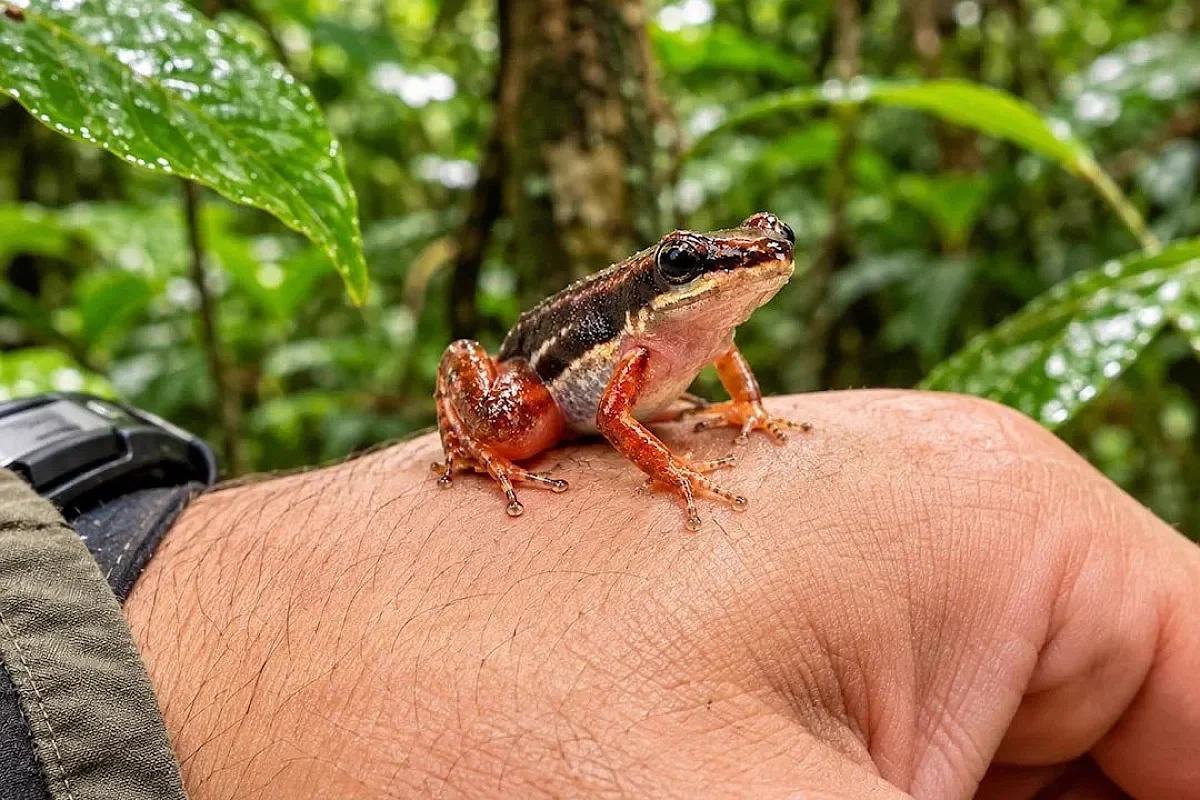
The six frogs measure roughly two centimeters in length and share a brown back with a dark lateral stripe. Their similar appearance makes them cryptic species, organisms that look nearly identical but are genetically distinct. To tell them apart, researchers extracted DNA from 62 specimens and analyzed two mitochondrial genes and one nuclear gene.
Male mating calls proved to be a critical differentiator. Each species produces unique vocalizations, ranging from just a few notes to nearly 50, with measurable differences in frequency and rhythm. Body measurements and precise location data for each population completed the picture.
Five of the new species were named for the regions where they live, while one received a name tied to a physical trait. Colostethus bocatoro inhabits Bocas del Toro province. Colostethus donosensis is found in the Donoso district of Colón and parts of Coclé. Colostethus portobelensis ranges across central Panama, including Portobelo and Chagres. Colostethus sanblasensis occupies the San Blas range and northern Darién. Colostethus chucantiensis lives in the Majé range and Cerro Chucantí. The sixth, Colostethus kuara, gets its name from the Emberá word for “yellow,” referring to its golden belly.
Geological History Shaped Frog Diversity
Researchers estimate the ancestors of these frogs arrived from South America approximately 4.4 million years ago, during the formation of the Isthmus of Panama. The subsequent uplift of mountain ranges isolated populations in separate highlands, separated by lowland barriers that prevented interbreeding.
That geographic isolation likely drove the divergence in male mating calls, a key signal frogs use for species recognition and reproduction. Each of the six species now occupies a range tied to a single mountain chain, a pattern that raises conservation concerns. Habitat disruption in any one of these areas could threaten the entire population of that species.
The study underscores how much remains unknown about Panama’s amphibian fauna. The researchers argue that continued field work and integrative taxonomic approaches are essential for documenting biodiversity before it disappears. The findings also highlight the value of cross-border scientific collaboration, as the comparison with Colombian specimens proved decisive in untangling the taxonomic confusion.