


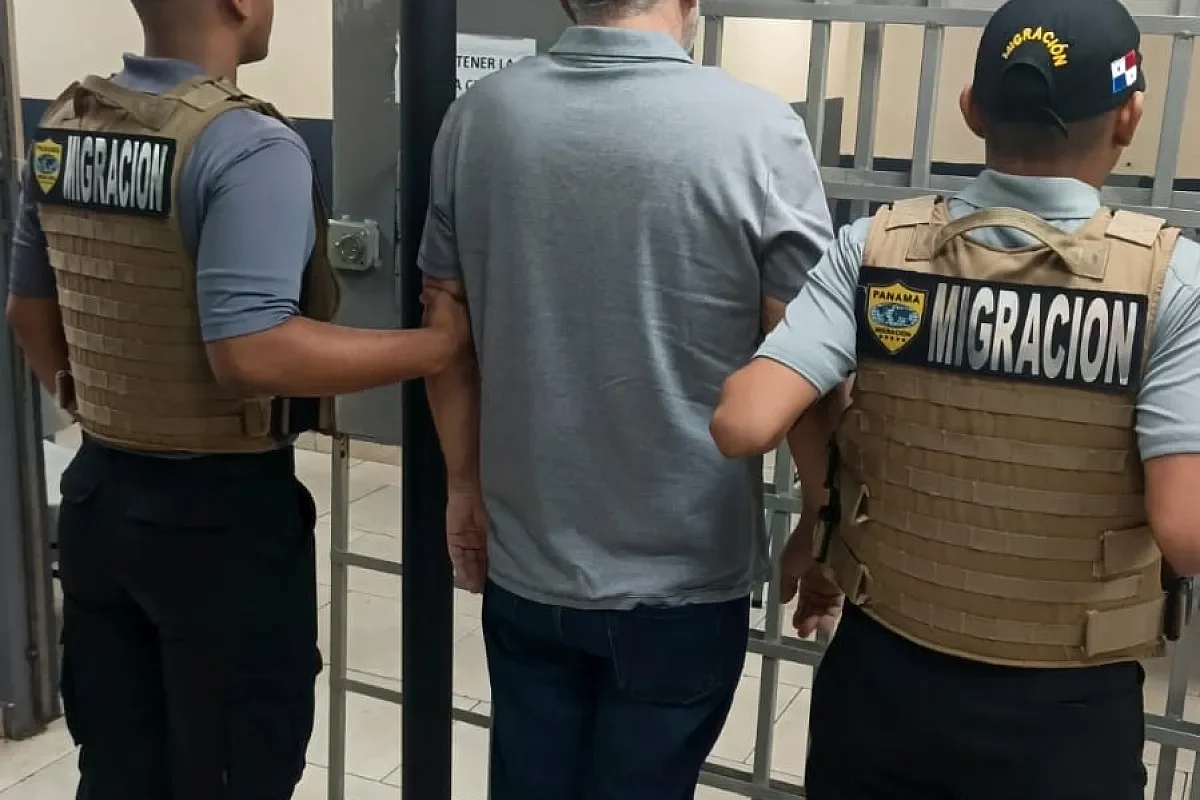
A Cuban-American fugitive wanted in Florida for allegedly trafficking cocaine and selling controlled substances was removed from Panama this week after migration authorities discovered his active arrest warrant. The man, a naturalized United States citizen originally from Cuba, was detained at a migration facility before being escorted out of the country by Panamanian officials, a swift operation that underscores deepening bilateral security coordination.
Detention of the Cuban–American Fugitive in Chiriquí
The National Migration Service confirmed that the suspect was first flagged in the western province of Chiriquí, near the border with Costa Rica. He had been referred to the Male Administrative Migration Detention Center in Panama City, where inspectors cross-checked his identity against international databases. That verification process turned up a pending warrant from Florida for drug-offenses, prompting immediate action.
Officials did not release the man’s name or age, but described him as a naturalized U.S. citizen born in Cuba. The warrant lists charges of cocaine commercialization and sale of controlled substances, serious felonies that carry heavy prison sentences in the American justice system. The discovery effectively ended his ability to remain in Panama, a country that has been strengthening its posture against transnational crime.
Arrest Warrant Reveals Florida Drug Trafficking Charges
The Florida warrant specifically accuses the Cuban-American fugitive of engaging in cocaine distribution and illegal sales of prescription-type controlled substances, law enforcement sources indicated. Such charges are often tied to broader networks that move narcotics through Central American corridors. The U.S. Drug Enforcement Administration regularly cooperates with Panamanian counterparts on interdiction efforts, given Panama’s strategic location along trafficking routes stretching from South America to North America.
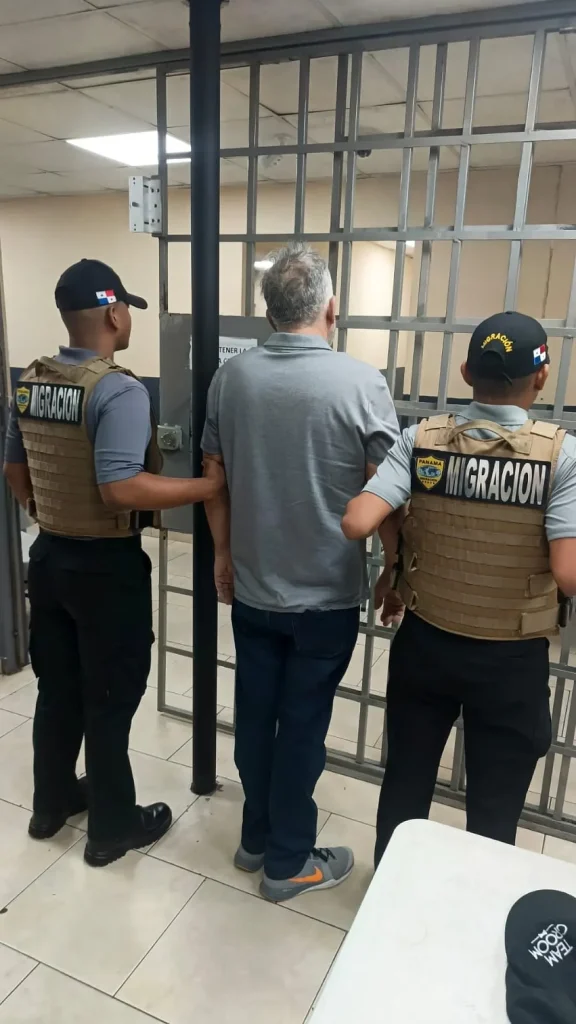
With the judicial alert confirmed, Panamanian migration inspectors moved the detainee from the holding center to a departure point. They physically escorted him back to the United States, ensuring he was under custody until handover to American authorities. The expulsion did not require a drawn-out extradition hearing because migration law allows for the removal of foreign nationals who present active warrants, a mechanism increasingly used to disrupt criminal mobility.
Panama’s Hard Line on Immigration and Foreign Fugitives
Panama’s National Migration Service issued a statement emphasizing its commitment to firm immigration control and international collaboration.
‘We will not allow individuals with outstanding judicial requirements to remain on national territory,’ [Translated from Spanish]
a spokesperson said, reaffirming that such cases will be dealt with expeditiously. The agency has been under pressure to crack down on foreigners using Panama as a safe haven, particularly those linked to drug cartels and organized crime.
This expulsion follows other recent operations where migration officers intercepted vehicles packed with suspected drug packages and arrested individuals in high-profile altercations near the 24 de Diciembre area. Panama’s geographic position as a bridge between continents has made it both a commercial hub and a transit point for illicit flows, demanding constant vigilance from authorities. The removal of a Cuban-American fugitive adds to a record of expulsions that prioritize national security over leniency.
International Cooperation and the Fight Against Transnational Crime
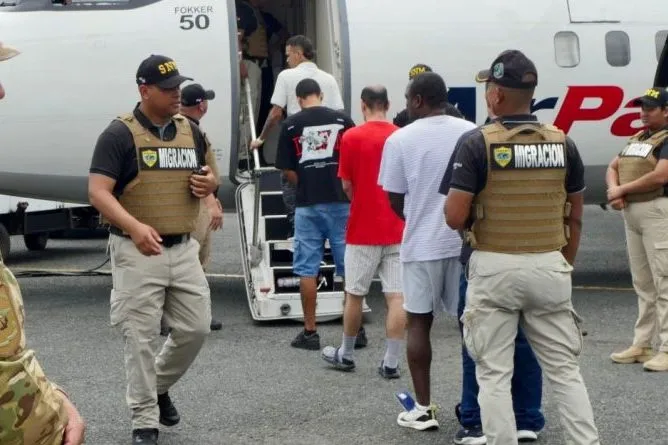
The case highlights the growing speed of information-sharing between Panama and the United States. Biometric screening and database integration allow migration officials to instantly identify wanted persons. Because the suspect held U.S. citizenship, his return was straightforward, avoiding the bureaucratic entanglements that can slow extraditions of third-country nationals. The Panamanian government has signed multiple bilateral agreements with Washington to combat drug trafficking, money laundering, and human smuggling, all of which facilitate such rapid removals.
For American law enforcement, apprehending a fugitive abroad through partner agencies eliminates the risk of a drawn-out manhunt. The Florida warrant will now be executed on U.S. soil, where the accused can face formal prosecution. Panamanian officials have made clear they intend to remain a hostile environment for fugitives, regardless of their nationality or country of citizenship.
A Clear Message to Criminal Networks
By expelling a Cuban-American fugitive within days of detection, Panama sends an unambiguous signal to criminal networks that the country is no easy refuge. The National Migration Service has invested heavily in technology and training to detect irregularities at entry points and interior checkpoints alike. While drug trafficking organizations constantly adapt, coordinated multinational enforcement creates a formidable barrier.
The swift removal also reflects domestic political pressure to maintain order amid regional migration challenges. As thousands of migrants pass through the Darién Gap each year, authorities must separate those fleeing legitimate dangers from individuals with criminal intent. In summary, the expulsion not just solves an immediate security concern but reinforces a broader doctrine: Panama will not shelter fugitives, and transnational justice will be served with efficiency and resolve.