


Panama luxury living is defined by more than height. Every city has its architectural trophies, those glass-and-steel towers that compete for attention by reaching higher into the clouds. Panama City certainly has no shortage of them. But a curious thing happens when you step inside YOO Panamá on Avenida Balboa, a 60-story residential tower that doesn’t just promise panoramic bay views or hotel-style convenience. It promises something far more elusive in the world of Panama luxury living: a personality. The lobby doesn’t feel like a corporate waiting room. The furniture doesn’t look like it was ordered from a generic hospitality catalog. Instead, there’s a playful, almost theatrical quality to the space, with statement pieces, vivid colors, and unexpected objects that make the building feel less like an address and more like an experience.
📑 Table of Contents
For prospective residents weighing their options in Panama City’s increasingly crowded luxury market, that distinction matters. Height and ocean views are commodities now. Design identity is not. YOO Panamá, developed by Habitats Developments and brought to life through the creative vision of the internationally recognized YOO brand, represents a different kind of residential proposition, one where the act of coming home is meant to feel as curated as the apartment itself.
The Unlikely Origin Story Behind a Panama City Icon
The story of YOO Panamá doesn’t actually begin in Panama at all. It starts in 1999, when property entrepreneur John Hitchcox joined forces with the legendary French designer Philippe Starck to create a development company with an unusual premise. Rather than building conventional apartments and slapping a luxury label on them, YOO would bring internationally recognized design into residential projects through partnerships with local developers. The model was simple but radical for its time: design wouldn’t be an afterthought; it would be the entire point.
That philosophy eventually made its way to Central America, where YOO Panamá became the brand’s first completed project in the country. The tower’s completion announcement described a 60-story building with 256 residences, a significant addition to the Avenida Balboa skyline. But what set it apart from neighboring towers wasn’t the number of floors or units. It was the creative direction inspired by Starck, whose influence is most visible in the interiors and shared spaces rather than the structural engineering itself. The available primary-source documentation doesn’t establish that Starck personally served as the tower’s architect of record, but his design ethos permeates the building’s aesthetic DNA, from the lobby’s playful furnishings to the resort-style amenities that define the resident experience.
How Design Transforms Panama Luxury Living Into an Everyday Experience
Most luxury towers in Panama City market themselves on a predictable formula: a swimming pool, a gym, maybe a concierge desk, and floor-to-ceiling windows. YOO Panamá certainly checks those boxes, but it approaches them differently. The building’s official materials describe an amenity package that goes well beyond the standard offerings, including a 300-square-meter swimming pool, a separate 60-square-meter children’s pool, private cabanas, two professional squash courts, and a day spa equipped with treatment rooms, a jacuzzi, Turkish baths, and saunas. There are dedicated children’s spaces and entertainment areas, all designed with the same attention to visual detail that defines the lobby.
For residents, the appeal is both practical and psychological. The pool can replace a trip to a beach club. The gym and squash courts make regular exercise convenient without leaving the building. The social areas offer space to host gatherings without turning every apartment into an event venue. This is particularly attractive for people transitioning from detached homes who want to maintain leisure space while shedding the maintenance responsibilities that come with private property. The building essentially functions as an extension of the home, with each amenity designed to feel like part of a cohesive, curated environment rather than an afterthought tucked into a basement corner.
The residences themselves were marketed with loft-style layouts, broad terraces, and floor-to-ceiling windows that frame views over the bay and city. Hotel-style services, including housekeeping, laundry, and valet parking, were part of the original project announcement, though prospective buyers and renters should confirm current availability and costs with building management. What’s clear is that YOO Panamá was conceived as a total lifestyle package, not just a collection of apartments stacked on top of each other.
What It Actually Costs to Live in a Designed Landmark
The brand and amenities create a premium impression, but the financial reality of living at YOO Panamá depends heavily on the specific unit. Size, floor level, view, renovation standard, furnishings, and parking all influence the asking price. Current advertised listings provide a useful snapshot of the market. A 125-square-meter one-bedroom apartment is listed at $390,000, while a 155.19-square-meter two-bedroom unit carries an asking price of $514,000. Another 156-square-meter two-bedroom listing was advertised at $450,000 earlier in 2026. These are asking prices, not evidence of completed sale values, and actual transaction prices may differ.
Rental prices follow a similarly broad range. A building-focused listing portal advertises rentals between $1,700 and $3,500 per month, with recent furnished examples clustering around $2,600 to $3,200 per month. Availability, lease terms, and whether furniture or utilities are included vary by apartment, so prospective tenants need to verify details for each listing. Monthly building maintenance costs add another layer to the equation. Two advertised sale listings indicate ownership costs of approximately $312 per month for a 125-square-meter unit and $388 per month for 155.19 square meters. One listing expressly states a maintenance charge of $2.50 per square meter, though this is a listing-based estimate rather than a verified building-wide tariff.

YOO Panamá: Renting vs Buying Costs Compared
| Apartment Type | Monthly Rent | Purchase Price |
|---|---|---|
| One-bedroom apartment | Approx. $2,600 Furnished rental example |
Approx. $390,000 Advertised 125 m² apartment |
| Two-bedroom apartment | $2,500–$3,200 Furnished rental examples |
$470,000–$514,000 Illustrative asking-price range |
| Premium or larger residence | Varies by apartment Confirm current availability |
$740,000+ Illustrative premium listing level |
What Does Ownership Cost Each Month?
- 125 m² apartment: purchase price $390,000; monthly maintenance $312.50; annual maintenance $3,750.
- 155 m² apartment: purchase price $514,000; monthly maintenance approx. $388; annual maintenance approx. $4,656.
- Mortgage and utilities: additional for both apartment sizes.
The bottom line: Renting at YOO Panamá offers flexibility without committing substantial capital. Buying offers ownership and greater control, but requires budgeting for maintenance, financing, taxes and potential special assessments.
Price and methodology notes: All figures are in U.S. dollars and represent illustrative advertised listings, not completed transactions or a formal market appraisal. Rental and sale examples are not necessarily the same apartments. Maintenance estimates are based on individual advertised units and should not be treated as a verified building-wide rate. Purchase prices exclude transaction costs. Monthly ownership figures exclude mortgage payments, electricity, internet, insurance, applicable property taxes and special assessments. Rental inclusions depend on the individual lease. Confirm current prices, availability and charges before making a decision.
Source: YOO Panamá advertised listings
These figures place YOO Panamá firmly in the premium segment of Panama City’s real estate market, but not necessarily at the very top. The building’s value proposition rests on its design identity, waterfront setting, amenities, and access to the surrounding city. Whether it’s the right choice depends on individual preferences for a busy central location, the condition of the specific apartment, monthly carrying costs, and the quality of building management. A thorough inspection of the facilities is essential, since marketing photographs can only tell part of the story. Prospective residents should ask which amenities are currently operating, whether any require reservations or additional payment, and how maintenance and future capital improvements are funded.
The Waterfront Setting That Anchors the YOO Panamá Lifestyle
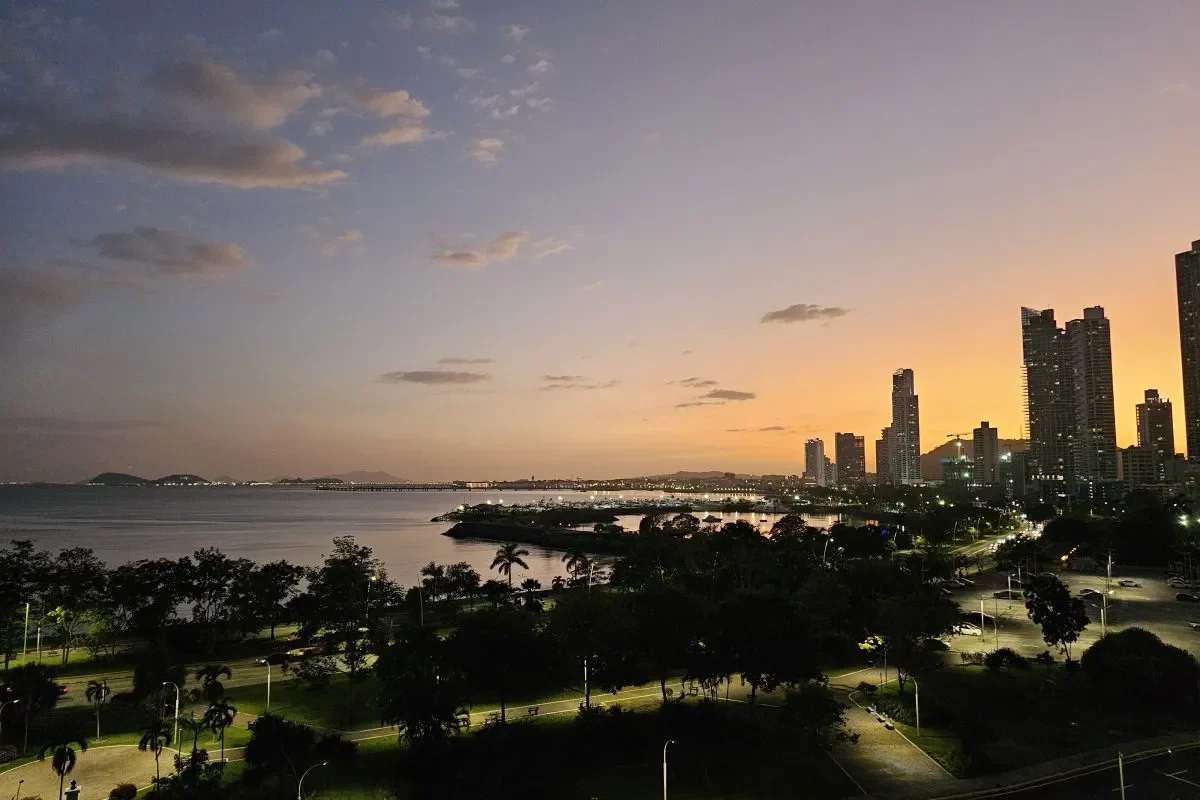
Location plays an outsized role in any real estate decision, and YOO Panamá’s position on Avenida Balboa places it directly opposite the Cinta Costera, Panama City’s beloved waterfront promenade. This isn’t just a scenic backdrop; it’s a functional extension of the residential experience. Residents can step outside and access one of the city’s most popular public spaces for running, cycling, walking, or simply watching ships move across the bay. The energy of Panama City is immediate and tangible, with restaurants, shops, and cultural attractions all within reach.
That central location comes with trade-offs, of course. Avenida Balboa is one of the busiest thoroughfares in the city, and the constant hum of traffic is part of the package. For some residents, the convenience and vibrancy outweigh the noise and congestion. For others, particularly those seeking quiet seclusion, a more residential neighborhood might be preferable. The building’s design attempts to mitigate some of these concerns through thoughtful interior spaces and amenities that create a sense of retreat from the urban bustle, but the fundamental character of the location remains urban and energetic.
The waterfront setting also contributes to the building’s identity as a landmark. It’s not just another tower on the skyline; it’s a recognizable presence on one of Panama City’s most important avenues. For residents who value being part of the city’s visual identity, that’s a meaningful distinction. For those who prefer anonymity, it might be less appealing. Either way, the location is inseparable from the YOO Panamá experience, shaping everything from daily routines to long-term property values.
Why Design Identity Matters More Than Height in Today’s Market
Panama City’s luxury real estate market has evolved significantly over the past two decades. In the early 2000s, the primary selling points were height, views, and modern construction. Today, those features are baseline expectations rather than differentiators. Nearly every new tower offers floor-to-ceiling windows, a pool, and a gym. What’s harder to find is a building with a distinct point of view, a recognizable design language that makes it memorable and livable in equal measure.
YOO Panamá’s advantage lies precisely there. The building doesn’t try to be the tallest or the most exclusive. Instead, it positions itself as the most designed, the most curated, the most intentional about the experience of daily life. That’s a subtle but significant shift in how luxury residential properties market themselves. It acknowledges that wealthy buyers and renters are increasingly sophisticated, looking for more than square footage and amenities checklists. They want spaces that reflect their taste, support their lifestyle, and offer something genuinely different from the building next door.
This approach has implications for the broader Panama luxury living market. As more international design brands enter the region and local developers recognize the value of distinctive aesthetics, the bar for what constitutes luxury continues to rise. Buildings that rely solely on conventional markers of prestige may find themselves competing on price rather than value. YOO Panamá, by contrast, has built its reputation on an identity that can’t be easily replicated, a design-driven ethos that resonates with residents who see their home as an expression of who they are.
For anyone considering a move to Panama City’s waterfront, the building deserves serious consideration. Its design character, amenity package, and central location create a compelling combination. But the decision ultimately comes down to personal fit. The right building for one person might be wrong for another, depending on lifestyle preferences, budget, and tolerance for urban energy. What YOO Panamá offers is a clear alternative to the generic luxury tower, a place where design isn’t just a marketing slogan but a lived reality. In a market crowded with impressive buildings, that might be the most valuable distinction of all.