


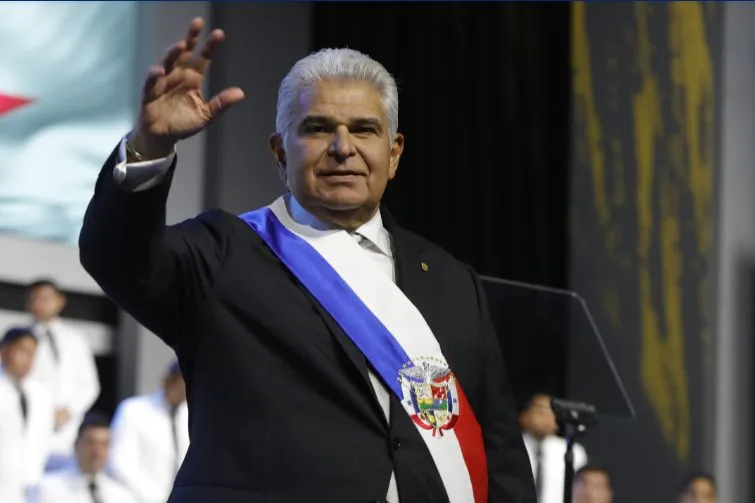
Panamanian President Jose Raul Mulino signed a revised version of a key sports law this Tuesday, putting an end to a months-long legislative process. The enactment of Law 509, which modifies the framework for the National Institute of Sports (Panama), followed partial objections from the executive branch that forced a rewrite.
Mulino’s office had raised constitutional and budgetary concerns about the original bill passed by lawmakers in September 2025. The president formally sanctioned the law only after the National Assembly incorporated his administration’s required changes during a new round of debates this month.
Constitutional Concerns Prompted Presidential Veto
The executive branch initially objected to four specific articles within the proposed legislation. Officials flagged two articles as “unconstitutional” and two others as “inconvenient” in an October 2025 document sent to the assembly. The core issue involved fiscal responsibility.
Articles 31-M and part of 31-N were deemed unconstitutional because they created new public spending commitments without identifying a funding source or proving budget availability. This directly contravened fiscal rules within the nation’s Constitution of Panama. The other contested articles, 31-B and 31-F, were criticized for creating redundant functions already covered by existing laws governing the sports institute’s structure.
“The articles established public spending commitments without specifying the source of financing or accrediting budget availability, which contravened constitutional provisions on fiscal matters,” [Translated from Spanish] the executive branch’s objection document stated.
Faced with these detailed objections, the National Assembly of Panama had little choice but to reconsider. The legislative body returned the bill to the full chamber for another debate, a move that incorporated the necessary adjustments to secure final approval.
Legislative Revision Clears Path for Final Approval
The revised bill successfully passed its crucial third debate on January 6, 2026. Lawmakers accepted the executive’s objections regarding unconstitutionality and inconvenience, adjusting the text of all four problematic articles. This legislative compromise allowed the bill to move forward within the proper constitutional process toward becoming law.
This back-and-forth between the executive and legislative branches highlights the ongoing checks and balances in Panama’s political system. The asamblea nacional demonstrated its ability to revise legislation based on substantive legal feedback from the president’s team.
With Mulino’s signature now in place, Law 509 takes immediate effect. It adds a new chapter to the 1995 law that originally reorganized the National Institute of Sports, known locally as Pandeportes. The institute is the primary state entity responsible for developing sports and physical education policies across the country.
The final version of the law aims to modernize the institute’s operations without violating fiscal guardrails or duplicating existing legal frameworks. Its implementation is expected to proceed now that the constitutional hurdles have been resolved through collaborative revision.