


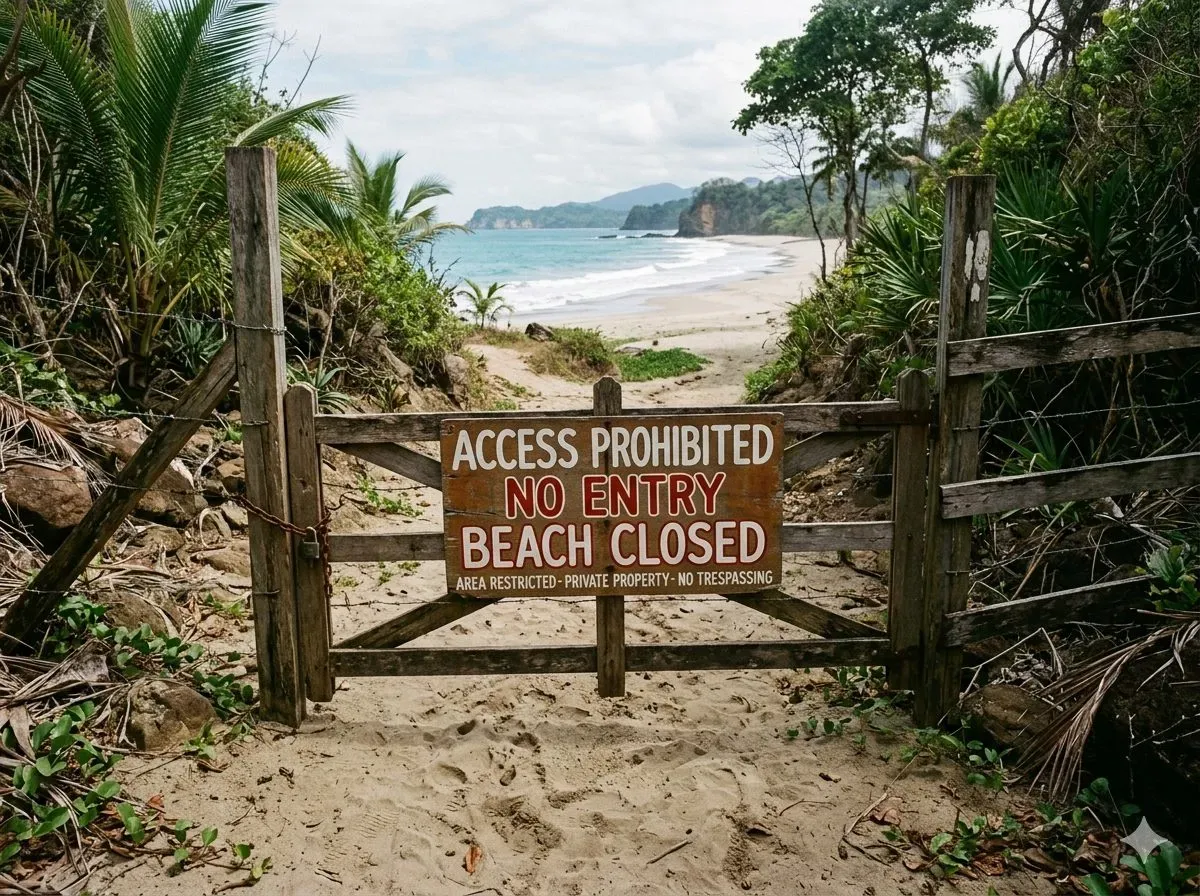
Panama’s National Assembly of Panama has approved a new law targeting the illegal closure of public roads and natural spaces. The legislation passed in a third debate on the final day of the legislative session. It aims to protect access to beaches, rivers, and recreational areas.
For years, communities across multiple regions have watched traditional pathways disappear. Gates, fences, and even makeshift toll booths now block what was once free passage. The practice has sparked tensions and hurt local tourism. The new law modifies the Penal Code of Panama by adding Articles 229-A and 229-B. These sections specifically criminalize the arbitrary obstruction of public access routes.
Lawmaker Cites Widespread Blockades in His District
Deputy Edwin Vergara from the Panameñista Party proposed the initiative. He represents Circuit 13-3, which includes Chame and San Carlos. Vergara stated that within a small three-kilometer radius in his district, nine traditional roads have already been closed. These were paths residents used daily to reach pastures, farms, and recreation spots.
“This is happening in different parts of the country,” Vergara said. “We have reports of blockades that prevent transit to pastures, recreational zones, and tourist destinations. Some people are even charging fees to enter places that have historically been free for everyone.” [Translated from Spanish]
The problem extends far beyond Vergara’s district. Citizens have filed complaints about restricted access to rivers, lagoons, national parks, and archaeological zones. The situation has created a patchwork of blocked pathways across the nation.
The proposal states: “Whoever, acting without just cause, intentionally or negligently obstructs, closes, or restricts public roads and spaces, including those leading to rivers, beaches, lagoons, national parks, archaeological zones, natural monuments, water sources, and protected areas that are inalienable state property, using fences, gates, ditches, structures, or other material means, shall be punished with three to seven years in prison.” [Translated from Spanish]
The law includes a tougher penalty for those who use fraud. If someone obtains property titles through deception for land that belongs to national parks or protected areas, the prison sentence jumps to between five and ten years.
Economic and Social Impact Drives Legislative Action
Blocked access does not just inconvenience local residents. It hurts small businesses and tourism operators. Fishermen cannot reach traditional launching points. Families cannot visit their favorite weekend swimming holes. Tour guides lose access to scenic overlooks.
The law recognizes that Public Access Rights are fundamental for both citizens and visitors. These spaces belong to the state. They should remain open for everyone to enjoy.
President José Raúl Mulino now holds the final decision. He can sign the bill into law or veto it. The legislation arrived on his desk following widespread public complaints. Many Panamanians have grown frustrated with losing access to natural treasures they once took for granted.
The National Assembly moved quickly on this issue. Lawmakers prioritized it during the final hours of their session. Supporters argue the measure restores a basic right. Critics worry about enforcement and potential overreach.
Property owners who legally control their land have nothing to fear. The law targets those who block public pathways without justification. It also goes after people who illegally appropriate state land for private use.
Vergara remains optimistic. He believes the law will send a strong message. People who have closed off public roads for years may now think twice. The threat of prison time changes the calculation.
Environmental groups have praised the initiative. They note that many protected areas have suffered from illegal closures. Tourists and researchers sometimes cannot access important natural sites. The new law should help change that reality.
The coming weeks will determine the law’s fate. President Mulino has not yet indicated his position. If he signs it, Panama will have one of the region’s strongest legal tools against public access blockades. The country will join others in Latin America that have taken similar steps to protect common spaces.
For now, communities wait. They hope the law will finally reopen the gates that have kept them from their rivers, beaches, and forests. The vote in the Assembly represents a clear statement. Panama values public access and will defend it with criminal penalties.