


A doctor in rural Chile consulting a specialist in Miami through seamless high-definition video, a Panamanian startup tapping cloud-based artificial intelligence tools, a climate researcher in Bermuda sharing massive ocean datasets with European labs, these scenarios will soon become far more reliable and routine. The engine behind that transformation is a massive Google submarine cable expansion announced Tuesday, which positions Panama as a critical nexus in a new digital spine for the Americas.
The technology giant unveiled three fresh submarine fiber-optic systems, Alisios, Canoa, and OlaLuz, along with an extension of the existing Firmina cable. Together, they form an initiative branded Americas Connect, a multi-pronged effort to boost internet capacity, slash latency, and create backup pathways for the enormous data flows that underpin everything from daily browsing to advanced scientific collaboration. For Panama, the announcement marks more than an infrastructure upgrade; it validates a years-long push to become the region’s premier digital hub.
Google Submarine Cable Routes Weave a New Caribbean-Pacific Fabric
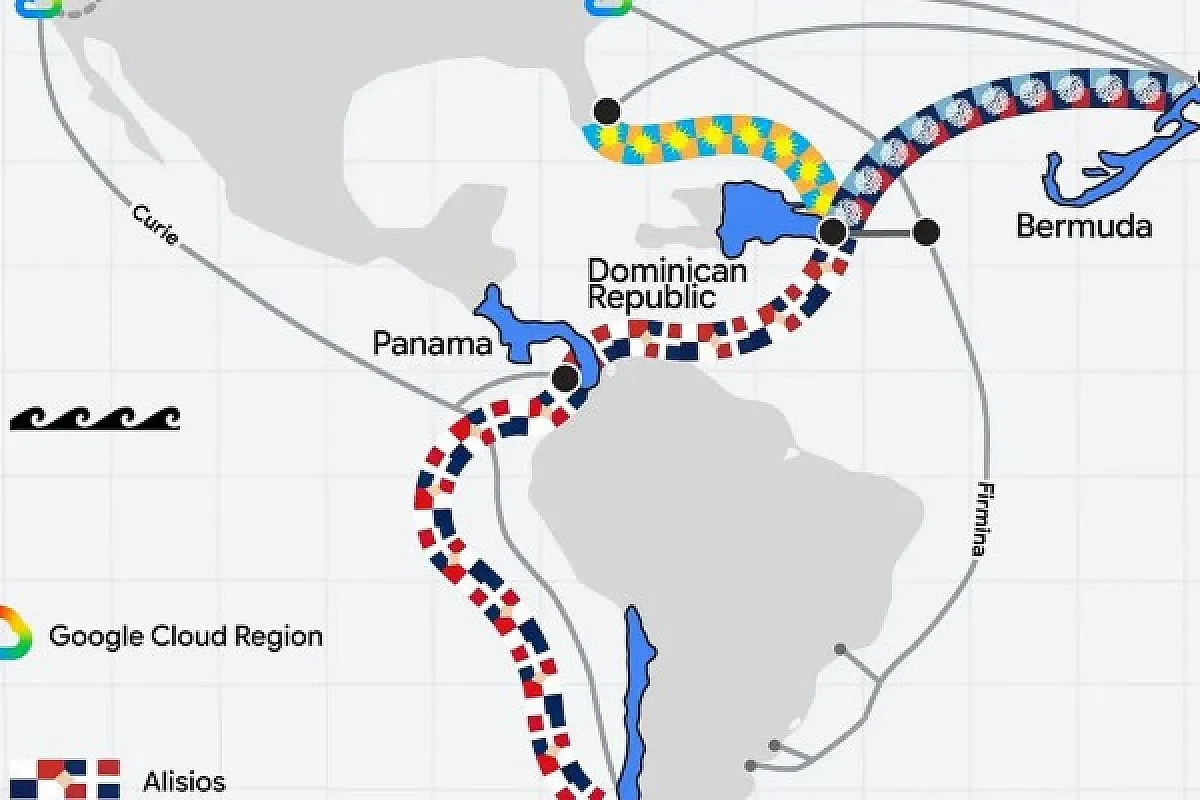
At the heart of the architecture sits the Alisios system, named after the steady trade winds that once propelled explorers across the tropics. This cable will stretch from the Dominican Republic to Panama and onward to Chile, forging a direct high-capacity link between the Caribbean basin and South America’s Pacific coast. Planners designed it to create redundant loops: one Pacific ring will tie Chile to Panama and then to the U.S. West Coast, feeding into Google Cloud regions in Los Angeles and Las Vegas. The Caribbean segment, meanwhile, interconnects Panama with the Dominican Republic and then beams traffic to the eastern seaboard of the United States, landing in South Carolina and Virginia.
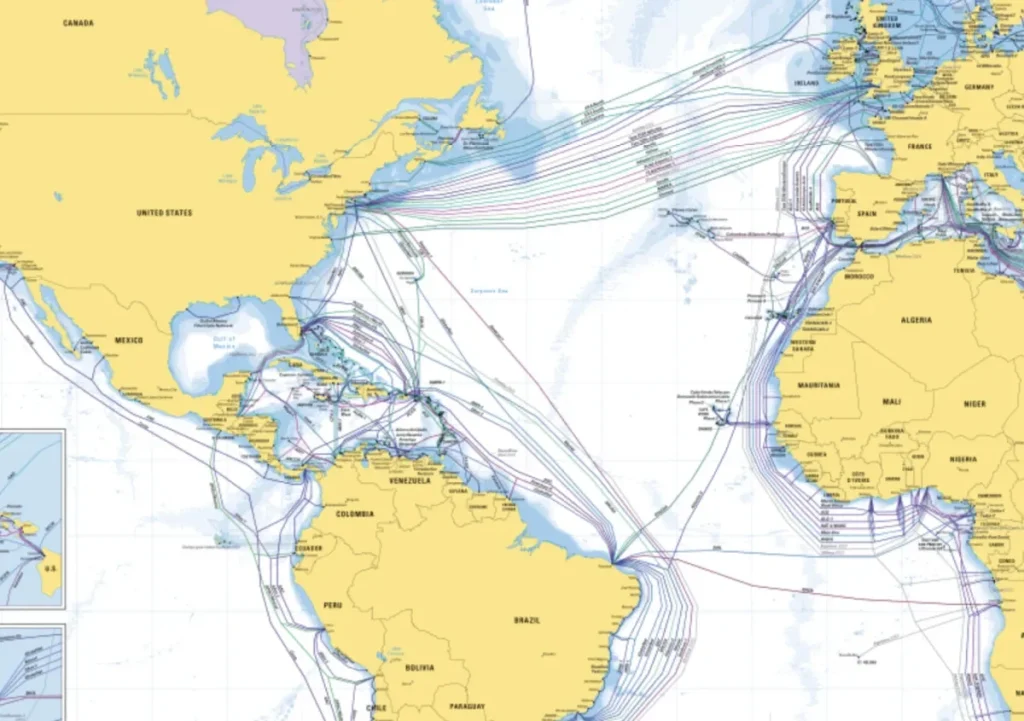
That redundancy is no minor detail. Today’s digital economy cannot afford single points of failure, and the Americas Connect blueprint deliberately weaves rings that keep data moving even if one path gets severed. The approach mirrors lessons from past outages, where a single cable cut could black out entire nations. By meshing multiple submarine routes, Google is betting that the new layout will deliver exactly what cloud customers and everyday users demand: near-constant uptime.
From Canoa to OlaLuz, the Nautical Language of a Subsea Network
Two additional Google submarine cable systems deepen the network’s reach in ways their names evoke. Canoa, derived from the Taíno word for canoe, will connect the Dominican Republic directly to Bermuda. When combined with the existing Nuvem and Sol cables, that link opens a high-resilience corridor from Latin America and the Caribbean toward Europe, specifically Madrid, and North America. The choice of name pays homage to the ancient maritime cultures of the Caribbean and the North Atlantic, a symbolic nod to the region’s seafaring heritage.
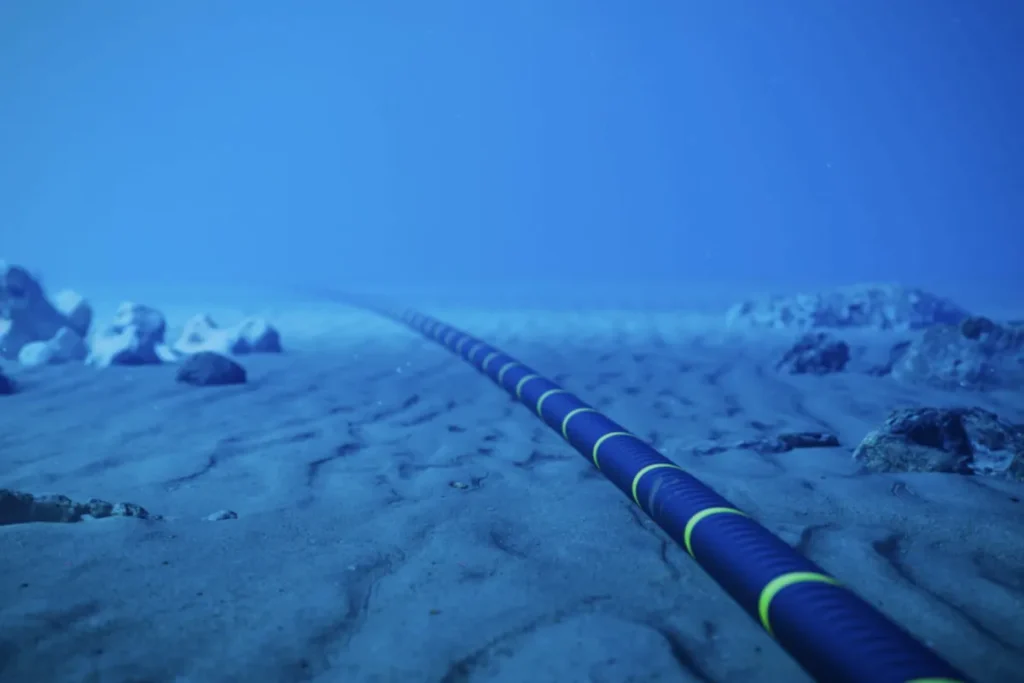
Meanwhile, OlaLuz, a fusion of the Spanish words for “wave” and “light”, will run directly from the Dominican Republic to Florida. This cable strengthens the busiest data artery between the Caribbean and the U.S. East Coast, delivering what Google describes as a significant boost in regional resilience. Beyond the buzzwords, the practical implications are tangible: telemedicine platforms can stream diagnostic images without lag, financial trades can execute with near-instantaneous reliability, and students from Santo Domingo to Santiago can access bandwidth-hungry educational content as if they were sitting in a North American classroom. A new branch of the Firmina cable, originally built to bridge North and South America, will also terminate in the Dominican Republic, extending that system’s high-capacity footprint into the Caribbean.
Panama’s Digital Hub Strategy Gets a Powerful Endorsement
The launch event drew heads of state and ministers from the countries anchoring the network, a clear signal of the political weight behind the cables. Panamanian President José Raúl Mulino did not hide his satisfaction at seeing his country placed at the center of the undersea map.
“The announcement of the new submarine cables marks a transformative milestone and aligns with Panama’s Digital Hub Initiative and the digital infrastructure pillar of the National Digital Strategy. We recognize that building a more prosperous future requires this type of transformative infrastructure, which fosters opportunities both for our country and for the region, propelling us toward a new era of secure and competitive global integration.” [Translated from Spanish]
That statement crystallizes a policy direction Panama has pursued with increasing determination. Over the past few years, the country has rolled out tax incentives for data centers, updated its legal framework for digital services, and leveraged its geographic advantage, the narrowest point between the Atlantic and Pacific, to attract undersea cable landings. Google’s earlier Curie cable, which connected California to Chile with a stop in Panama, already demonstrated the appeal of that proposition. Now the Alisios system locks Panama into a hemispheric ring, making the isthmus not just a transit zone for physical goods through the canal, but also a gateway for the invisible commerce of bits and bytes.
Joining Mulino were Dominican Republic President Luis Rodolfo Abinader Corona, Bermuda’s Minister of Home Affairs Alexa N.H. Lightbourne, and Chile’s Biminister of Transport and Telecommunications and Public Works Louis de Grange. Their presence underscored how deeply the new Google submarine cable architecture intertwines national digital ambitions. For Chile, the cables provide an alternative route to North American and European markets, bypassing traditional hubs. For the Dominican Republic and Bermuda, the infrastructure vaults them from isolated nodes to crossroads, a transformation that economic development officials in both territories have long pursued.
Closing the Digital Divide and Powering Scientific Discovery
Beyond the geopolitical ribbon-cutting, the Americas Connect project carries a promise to narrow stark connectivity gaps. In rural Panama, for instance, reliable high-speed internet remains a challenge that hampers everything from remote work to online education. The new cables themselves do not magically wire last-mile communities, but they dramatically expand the bandwidth that local providers can purchase and resell. That wholesale capacity tends to push down retail prices over time, a dynamic that telecom regulators in the region are already eyeing.

The cables also feed directly into a global scientific ecosystem. Researchers who rely on massive cloud computing resources to model climate patterns, sequence genomes, or simulate earthquakes can now draw on a network engineered for low-latency, high-throughput data exchanges. With Panama located in one of the planet’s most seismically active zones, the ability to process early-warning algorithms faster is not abstract, it is a matter of public safety. The same fiber that carries a Netflix stream could someday carry real-time alerts that give communities precious seconds to brace for a tremor.
In summary, what looks on the surface like a corporate infrastructure announcement is really a quiet rewiring of the Americas. The three new Google submarine cable systems, together with the Firmina branch, bind nations into a digital fabric that makes the hemisphere’s cloud regions behave like a single, resilient organism. Panama now sits at the center of that organism, leveraging geography and policy to turn data corridors into economic arteries. As the first wavelengths of light begin their journey along these seafloor routes, the real work of converting bandwidth into broad-based opportunity begins.
Panamá avanza como Hub Digital. El anuncio de Google, a través de Americas Connect con nuevos cables submarinos, abre oportunidades para Panamá y la región en una nueva era digital que trasformará el futuro. pic.twitter.com/GAU1JacDok
— José Raúl Mulino (@JoseRaulMulino) August 11, 2026