


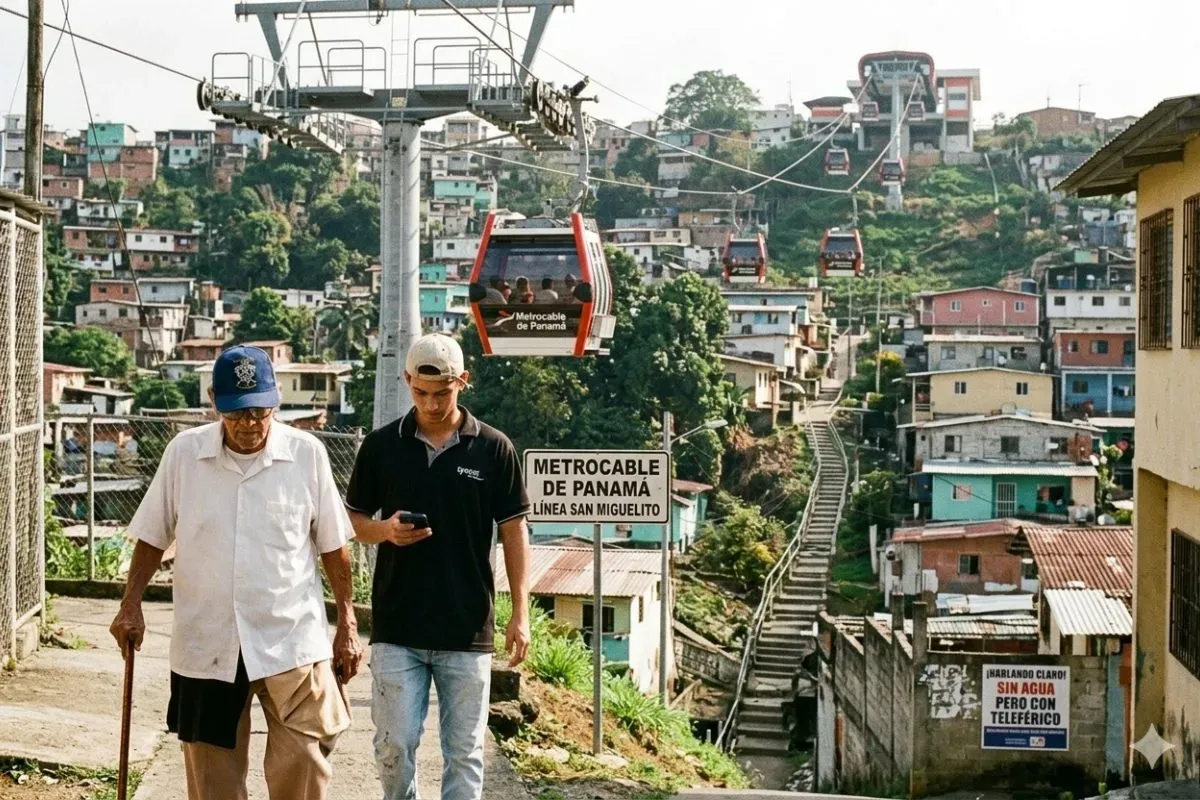
President José Raúl Mulino has declared that San Miguelito will get its long-promised cable car system, announcing Friday that a technical evaluation commission has finished reviewing the sole proposal submitted for the ambitious cable car construction project. The announcement marks a pivotal moment for an initiative designed to reshape how thousands of residents navigate the dense urban corridors between Panama City and San Miguelito.
Doppelmayr’s Sole Bid and Project Scope
Austrian firm Doppelmayr Panama Corp. submitted the only offer in the reopened tender, proposing to deliver the complete system for B/.255,163,788.03 before taxes. The company’s bid encompasses far more than basic infrastructure, covering design work, complementary studies, construction, supply, fabrication, integration, testing, certification, commissioning, and operational delivery, with an option for ongoing maintenance services.
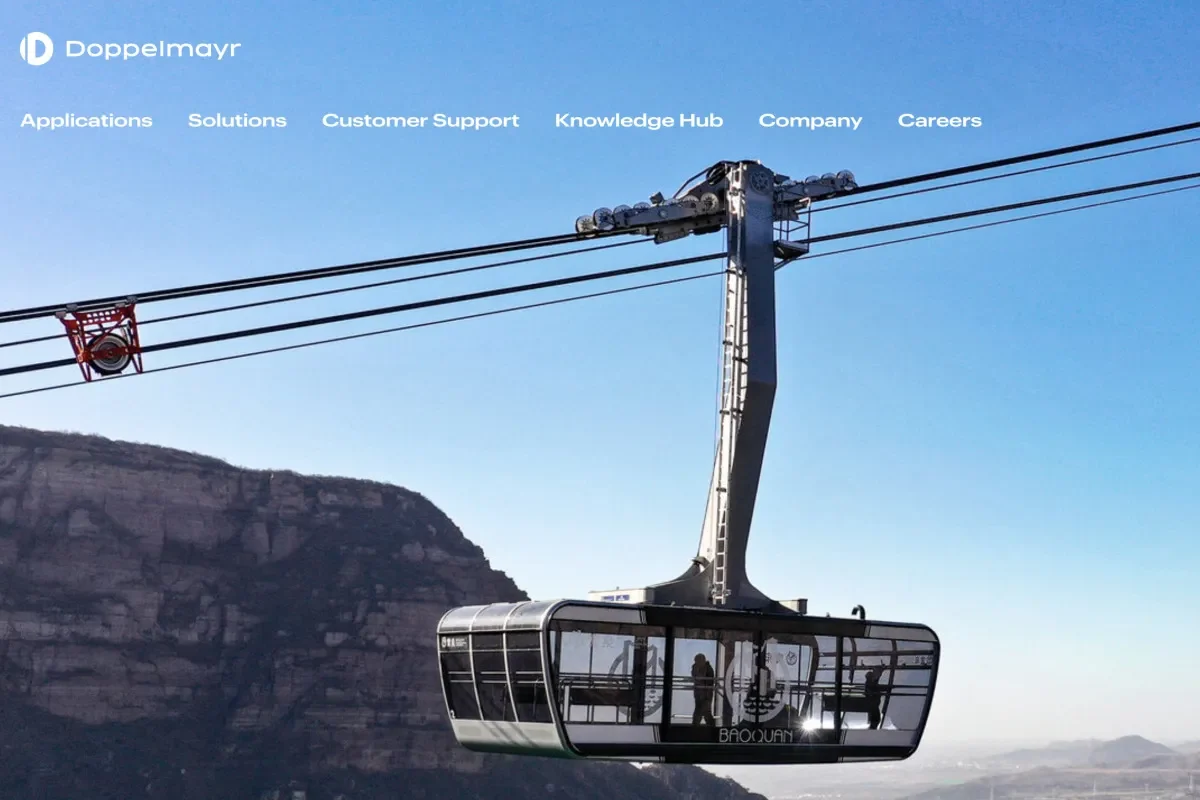
Doppelmayr brings substantial credibility to the table. The Austrian company has built a global reputation for urban cable transport systems, having delivered similar projects in various Latin American cities where challenging topography demands creative mobility solutions. The firm’s international track record was specifically highlighted by President Mulino in his public remarks, underscoring the administration’s confidence in the company’s capabilities.
The evaluation commission’s report does not automatically guarantee a contract award. Officials must still complete the remaining administrative and legal steps before formalizing any agreement. But the completion of the technical, economic, and legal review represents the most significant progress since the government relaunched the tender under a best-value procurement model with a reference price of approximately B/.270 million.
Overcoming Procurement Setbacks in Cable Car Construction
The road to this point has been anything but smooth. The initial tender process collapsed on May 28, 2026, when Panama Metro authorities received zero bids despite having prequalified two consortia for the project. That failure forced the government to rethink its approach entirely and confront questions about whether the project’s scope and financial terms were attractive enough for international contractors.
Officials responded by restructuring the contracting mechanism, moving to a best-value bidding format that evaluates proposals on a broader set of criteria beyond simple price competition. The revised framework appears to have achieved its purpose, drawing a formal proposal from Doppelmayr, though competition remained elusive in the second round as well. The single-bidder scenario has generated debate among procurement analysts about whether the project’s technical demands or risk allocation deterred other qualified firms.
For residents of San Miguelito, Panama’s most densely populated district, the delay has been frustrating. The district’s steep hills and tightly packed neighborhoods make conventional ground transportation particularly difficult, which is precisely why the cable car concept gained political traction in the first place. Community leaders have long argued that their residents deserve the same quality of public transit enjoyed in more affluent parts of the metropolitan area.
A 6.6 Kilometer Corridor With Six Stations
The proposed system will stretch approximately 6.6 kilometers across six stations, creating a new transit spine through some of the metropolitan area’s most congested sectors. Planners have designed the alignment to complement the existing Panama Metro network rather than compete with it, including direct connections where riders can transfer between modes and integrate their journeys across the broader public transportation system.
The route’s design acknowledges a fundamental reality of the Panama City metropolitan area. In neighborhoods where narrow streets, sharp elevation changes, and dense development make expanding bus or rail service prohibitively expensive, cable systems offer a viable alternative that can move thousands of passengers per hour above the traffic. This approach mirrors successful deployments elsewhere in the region. Medellín, Colombia, pioneered the integration of cable cars into urban transit networks with its Metrocable system, and La Paz, Bolivia, operates the world’s largest urban cable car network. Panama’s planners have studied these examples closely while adapting the concept to local conditions.
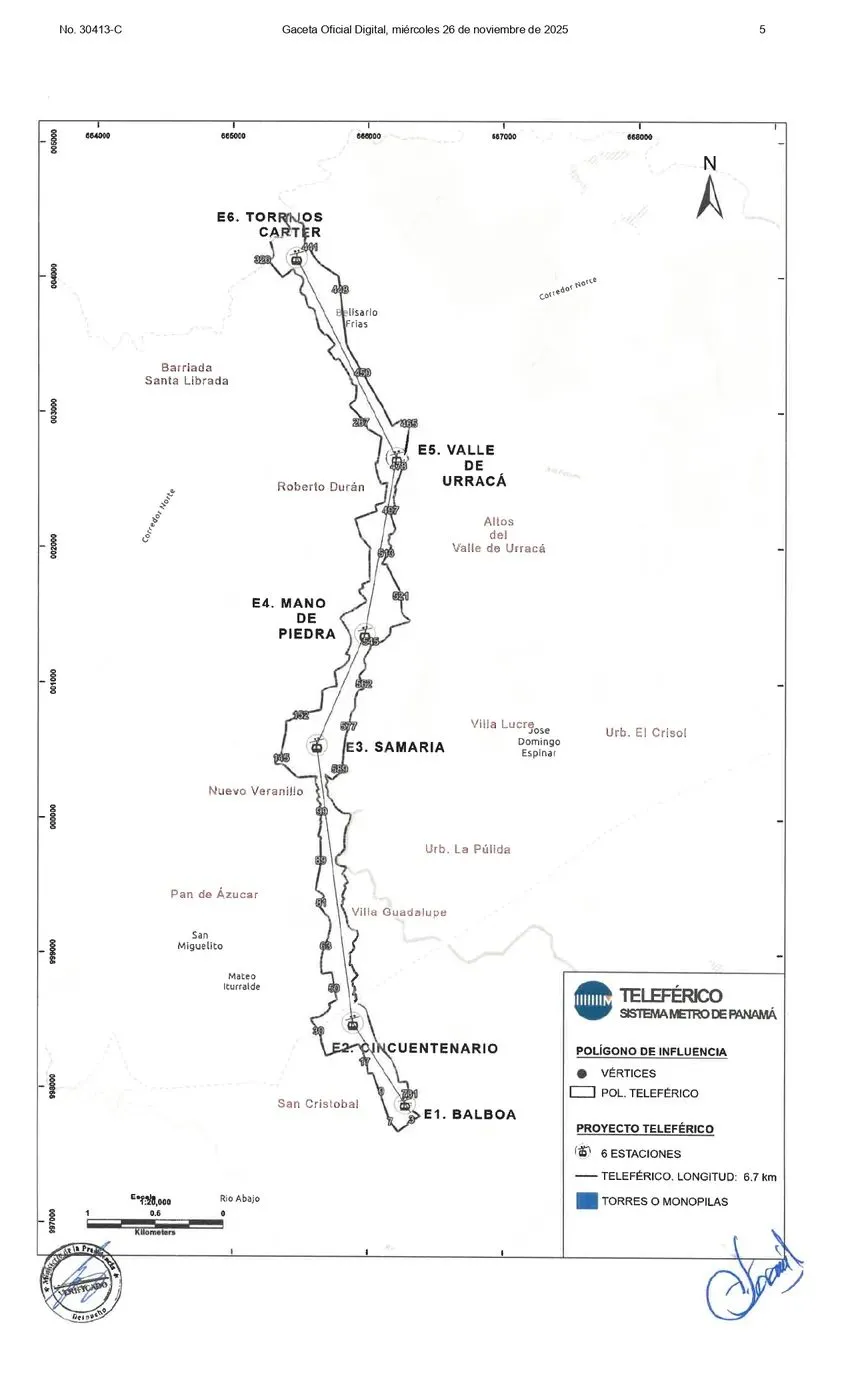
The integration with the Metro network represents a critical design element. Rather than operating as an isolated system, the cable car will function as a feeder service, bringing residents from hillside communities to major transit corridors where they can continue their journeys across the city. This multimodal approach has proven effective in other Latin American cities where cable systems have transformed daily commutes for working-class neighborhoods.
🚡 San Miguelito tendrá su teleférico! La comisión Evaluadora emitió su informe cumpliendose con otra fase del proceso para este importante proyecto: La empresa austriaca Doppelmayr, líder mundial en construcción de Teleféricos, con presencia en 97 países, presentó una propuesta…
— José Raúl Mulino (@JoseRaulMulino) August 28, 2026
What Comes Next for the San Miguelito Cable Car
“San Miguelito will have its cable car!” [Translated from Spanish]
President Mulino‘s social media declaration captured the administration’s confidence that the project will now proceed after years of planning and false starts. The president framed the initiative as a transformation in mobility for thousands of Panamanians who currently spend hours navigating congested surface routes and unreliable bus services.
The evaluation commission’s report now moves the process into what officials describe as a decisive phase. The remaining steps include final administrative approvals and the formal contract award, after which Doppelmayr could begin mobilizing for construction. No specific timeline for those decisions has been announced, but the government’s urgency suggests movement could come quickly, especially given the political capital invested in the project.
Beyond the immediate construction phase, the project carries broader implications for Panama’s transit strategy. A successful cable car system could establish a template for future expansions into other hillside communities around the metropolitan area, potentially unlocking new mobility options for neighborhoods that have long been underserved by traditional transit infrastructure. The lessons learned from the procurement challenges and eventual evaluation process could also inform how Panama structures future infrastructure tenders.
In summary, the completion of the evaluation report moves the San Miguelito cable car from concept toward reality. With a single qualified bidder now vetted through the technical and legal review process, Panama stands closer than ever to joining the ranks of Latin American cities that have embraced cable transport as a practical answer to urban congestion and challenging terrain. The coming weeks will determine whether Doppelmayr’s proposal translates into a signed contract and, eventually, a functioning system that delivers on the promise of transformed mobility for San Miguelito’s residents.