



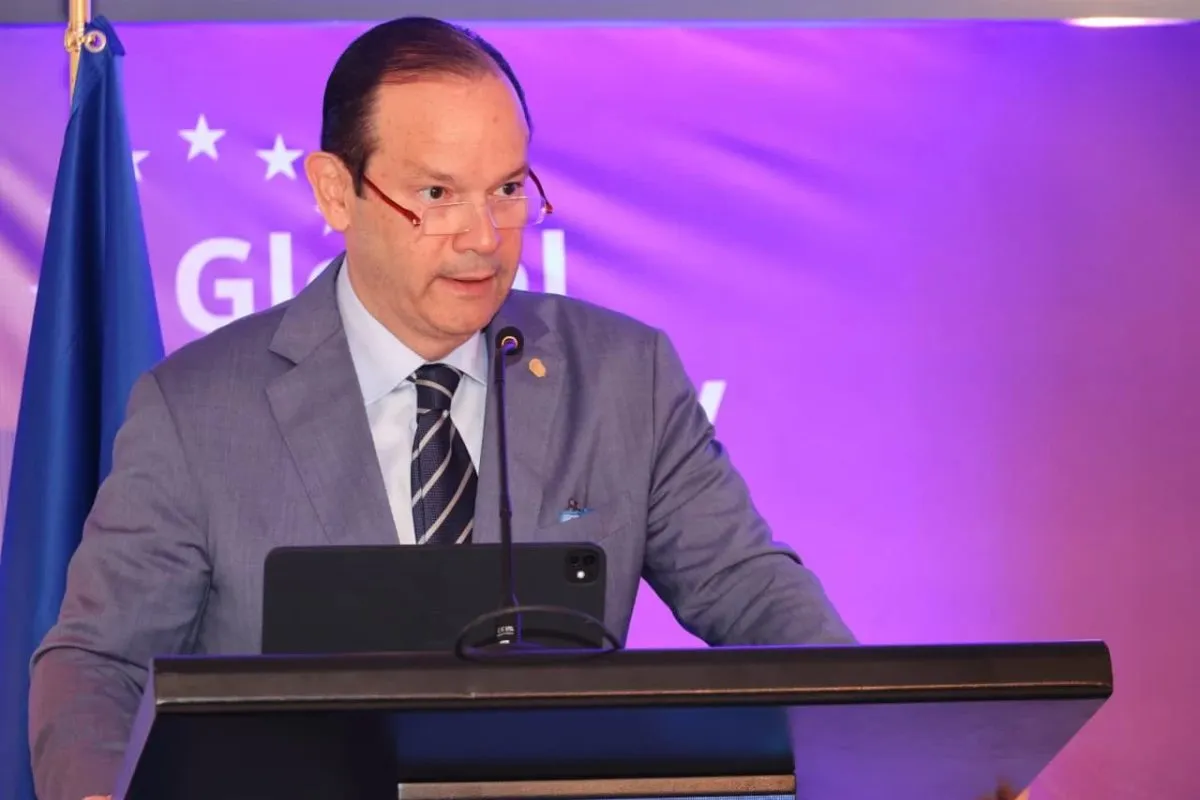
Panama has surpassed 90 percent compliance with the benchmarks required to join the United States Visa Waiver Program, Foreign Minister Javier Martínez-Acha confirmed Wednesday. The announcement signals major progress toward eliminating Panama visa requirements for short-term travel to the US, though officials acknowledged that several conditions remain unmet.
The country’s visa rejection rate plummeted from 19.93 percent in fiscal year 2024 to 6.51 percent in fiscal year 2025, according to State Department data. That 13.42 percentage point drop represents one of the steepest single-year improvements in the region, bringing Panama closer to the program’s 3 percent threshold.

Panama Visa Requirements and Remaining Benchmarks
Martínez-Acha said the government must reach at least 96 percent compliance before Washington will formally consider Panama’s admission. “I can tell you that the country meets more than 90 percent of those goals. But, the requirement is very rigorous,” he said [Translated from Spanish].
The foreign minister declined to specify which requirements remain outstanding or provide a timeline for completion. He confirmed that he is working directly with President José Raúl Mulino on the pending items.
In February 2026, the Panamanian government established an interagency task force to coordinate border security, migration management, documentation standards, and information sharing with US authorities. That group has driven much of the recent progress, officials said.
@lindabran1 También informó sobre el proceso para que los panameños puedan ingresar a Estados Unidos sin visa. https://t.co/HSVLX0DR6y
— Diario Critica.Pa (@criticaenlinea) November 11, 2026
Visa Waiver Program Standards and Regional Context
The Visa Waiver Program currently covers citizens of 42 countries and territories, including Spain, France, Germany, Italy, the United Kingdom, Australia, Japan, South Korea, Israel, and Qatar. Chile remains the only Latin American participant, having joined in 2014.
Panama would become the second Latin American nation admitted if Washington grants approval. The program permits stays of up to 90 days for tourism or business purposes without a traditional visa.
Eligible travelers must obtain an Electronic System for Travel Authorization (ESTA) before departure. The authorization costs approximately $40 and remains valid for two years, allowing multiple entries during that period.
Security Requirements and Border Cooperation
Admission criteria extend beyond visa rejection rates. Aspiring countries must issue electronic passports with embedded chips, promptly report stolen or lost travel documents, and meet counterterrorism prevention standards.
Additional requirements include strengthening police cooperation, sharing information on security threats, and maintaining reliable traveler identification and border control mechanisms. Panamanian officials have emphasized their commitment to these measures through the interagency task force.
Martínez-Acha thanked Washington for its cooperation throughout the evaluation process. The gradual assessment approach reflects the program’s strict standards, which require sustained performance rather than isolated improvements.
The ESTA authorization does not guarantee entry into the United States. Border control officials retain authority to determine admission for each traveler on a case-by-case basis. For Panamanian citizens, the potential shift from mandatory visa interviews to electronic authorization would significantly reduce travel friction for business and tourism.