


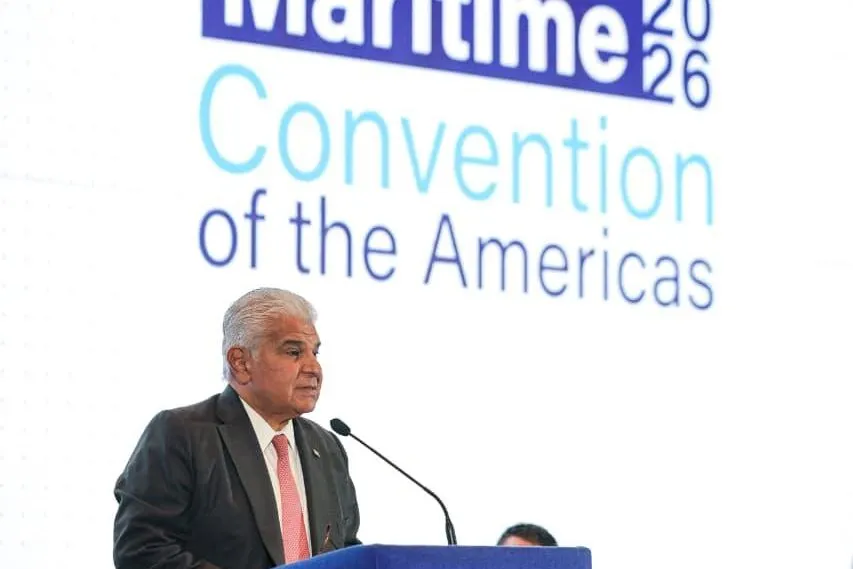
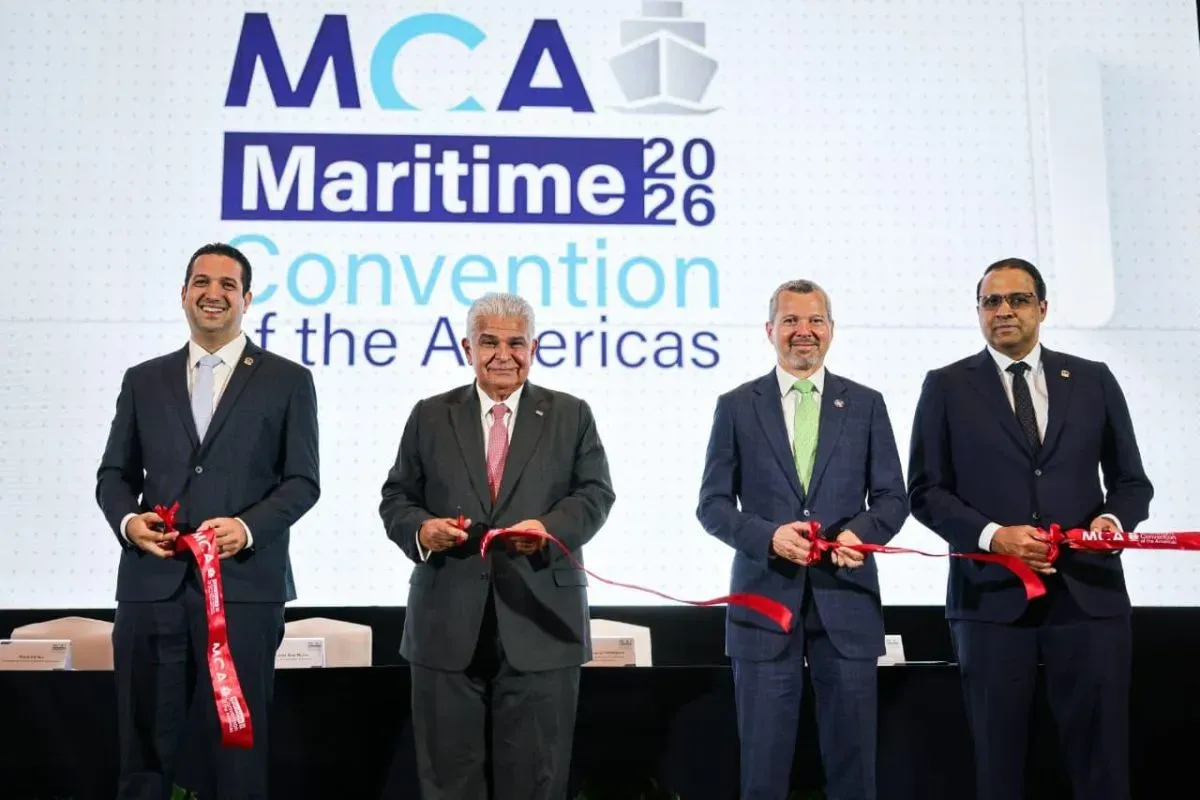
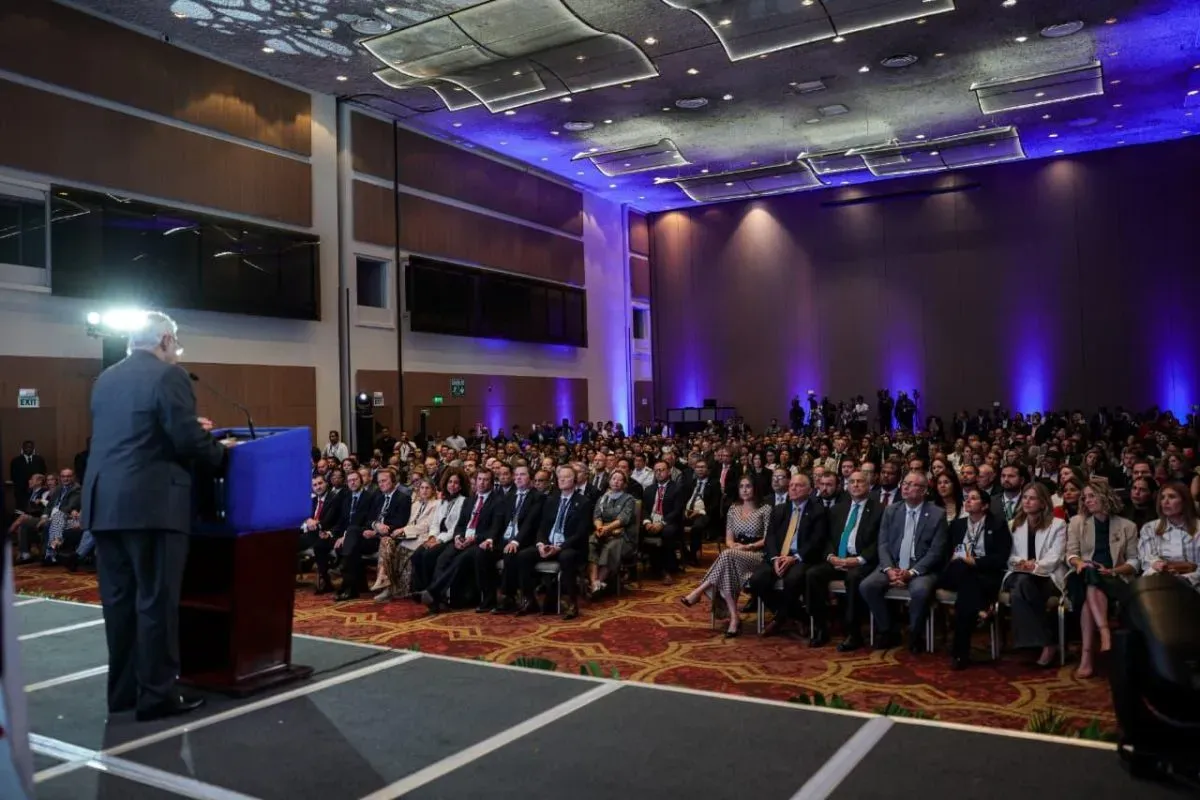
Panama City, Panama – President José Raúl Mulino has delivered a forceful defense of the Panama Canal’s neutrality and the nation’s ship registry. He made the remarks on Thursday while inaugurating the Maritime Convention of the Americas 2026.
The event, organized by the Panamanian Maritime Chamber, stands as the premier business gathering for the maritime, logistics, and port sectors in the Western Hemisphere. Mulino used the platform to reaffirm his government’s commitment to a series of major infrastructure and regulatory projects.
Neutrality and the Flag of Convenience
President Mulino was emphatic about Panama’s stance on the global stage. He stated that amid current global volatility and conflicts, the neutrality of the interoceanic waterway is non-negotiable. The president also delivered a robust defense of the nation’s ship registry system, often referred to as a Flag of convenience.
“Panama does not accept arbitrary actions. Behind a vessel flying our flag is our country, which will defend it,” Mulino declared. “That is the great difference from other competitors. We are not a franchise; we are a country behind its registry.” [Translated from Spanish]
“Panama does not accept arbitrary actions. Behind a vessel flying our flag is our country, which will defend it.”
The president welcomed the easing of tensions related to the detention of Panamanian-flagged ships in Chinese ports. He described China’s call for dialogue as a significant step forward. “We demand and ensure respect for international conventions,” he added.
Port Concessions and Financial Strength
Turning to the upcoming concessions for the ports of Balboa and Cristóbal, Mulino outlined a plan for operational continuity. These terminals are vital for global trade, he noted. “Today they are operating normally, and we guarantee that our country continues to serve world trade efficiently,” he said. “Both ports will be concessioned separately in a new process that favors investment, transparency, and logistics activity.”
Another future concession involves Isla Margarita. The government expects to launch an international tender for that project before the end of the year. “My objective is to increase the competitiveness of our port system, provide world-class services, and coordinate initiatives through the Logistics Cabinet,” Mulino explained.
The president also expressed satisfaction with Panama’s improved international financial risk level. According to JP Morgan Chase & Co.’s Emerging Markets Bond Index, Panama now ranks fourth among Latin American nations with the lowest country risk. “These are the reference factors any investor looks for regarding a country where they intend to invest money,” the president detailed.
Canal Expansion and Workforce Modernization
Beyond port concessions, the government is backing key initiatives from the Panama Canal Authority. These include the multipurpose reservoir project on the Indio River, which secures water for canal operations and for residents of Panama and Colón. “The Canal will soon tender the construction of a gas pipeline to free up space in vessel transit,” Mulino highlighted. “Along with this, two more projects are in the Canal Authority’s portfolio: the ports of Corozal and Telfers. These two new terminals will add 7 million TEU to the current capacity.”
The president emphasized his government’s commitment to reducing the carbon footprint of the supply chain. He pointed to the Canal’s Net Zero Slot initiative, which incentivizes low or zero-emission vessels with expedited transit in under 24 hours. On the modernization of the Merchant Marine, Mulino announced a new law will be presented to the National Assembly in July. The goal is to streamline bureaucracy and improve decision-making. “We need more logistics engineers, maritime cybersecurity experts, hybrid engine maintenance technicians, and data management specialists,” he stated. “We will do this alongside the country’s training, education, and research institutions.”
International Maritime Organization Secretary-General Arsenio Domínguez acknowledged the significance of Mulino’s presence. He said it demonstrates Panama’s commitment to advancing its maritime and logistics sector. René Gómez, president of the Panamanian Maritime Chamber, noted that Panama connects over 140 maritime routes and links 160 countries. The sector accounts for nearly 25% of the national GDP. “This convention is a showcase to display that strength to the world,” Gómez said.