


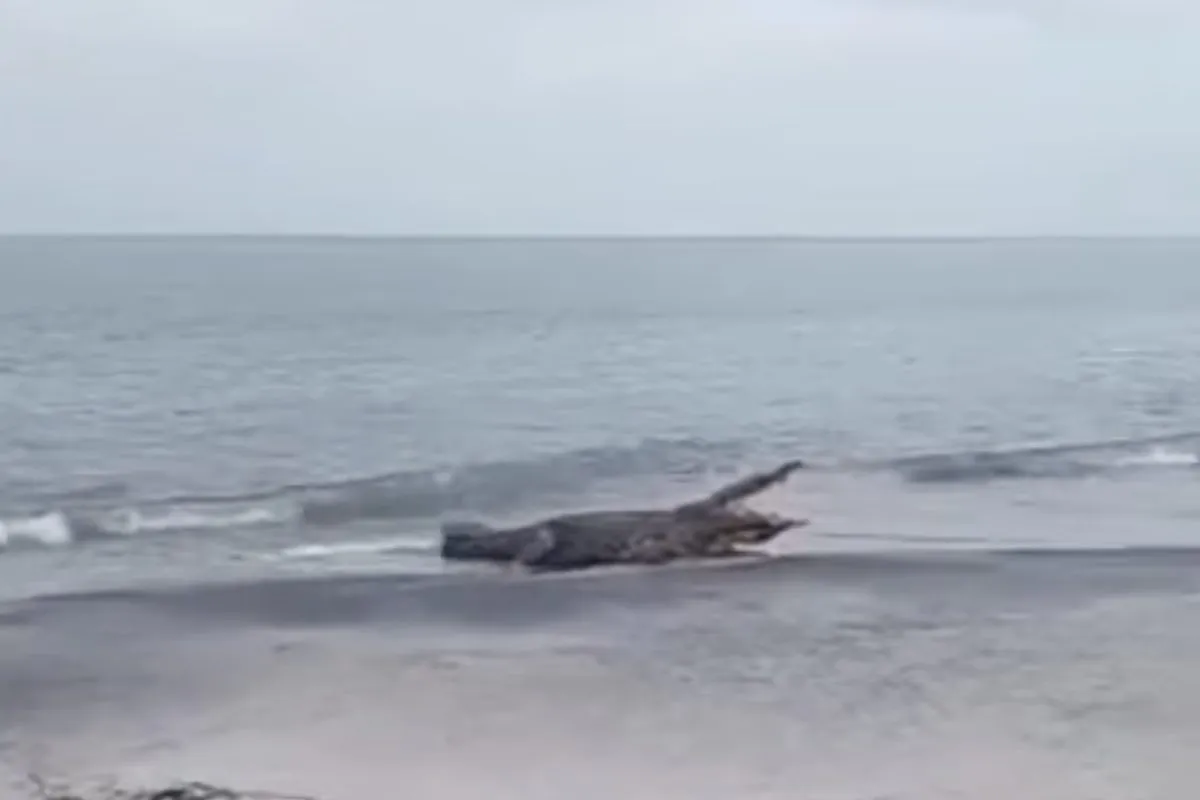
A large American crocodile has caused concern among residents and visitors at Juan Hombrón Beach in Panama’s Coclé Province. The Massive 60-Year-Old Crocodile Stuns Beachgoers in Panama. Images of the reptile circulated widely on social media over the past several days. Local biologists have now confirmed the animal’s presence and issued a public warning.
Experts from the Regional University Center in Coclé analyzed the photographs. They determined the crocodile could be up to 60 years old. The animal likely measures between two and three meters in length. Its territorial behavior suggests it may be the only crocodile living in that specific area.
Biologists Explain Nocturnal Habits and Food Sources
Specialists said this species of reptile is mostly active at night. The recent appearance near the beach could relate to food availability. Visitors and fishermen must not throw food scraps into the sea. That practice attracts the animal toward areas where people swim.
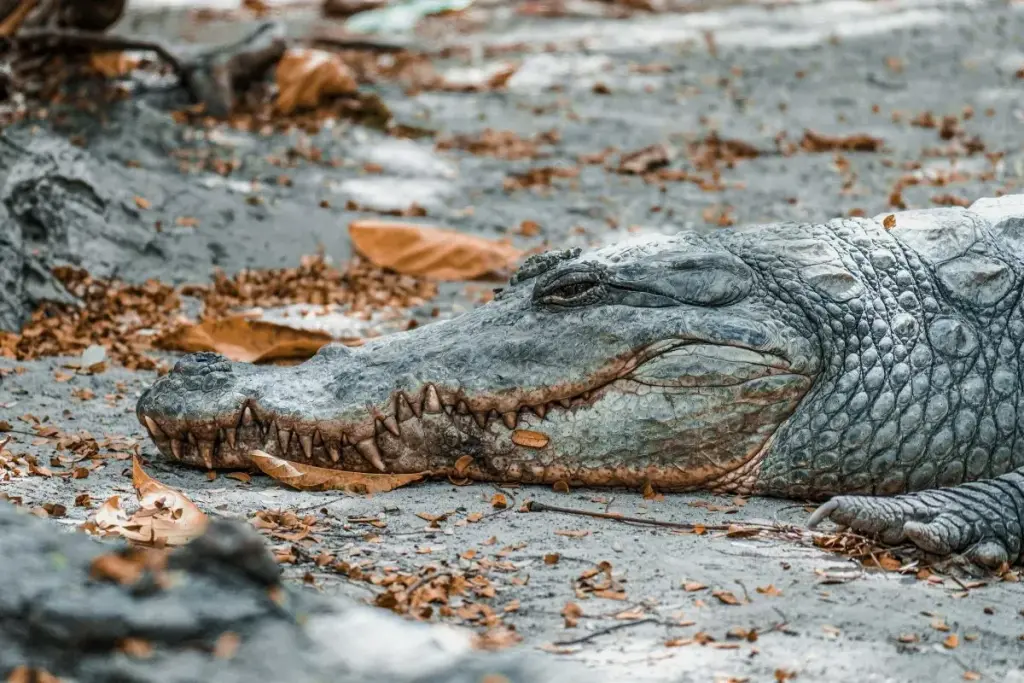
The American crocodile has lived in these coastal zones for decades. Biologists noted that direct attacks on humans remain rare. The reptile normally stays within the dense mangrove ecosystems that line the shoreline. It feeds primarily on fish and other small species found there.
“When you see them, try to leave them alone and give them their space. They are just passing through because they usually stay in the mangroves and feed on fish and other species. When they are seen on the beach, it is because they come to rest and take salt to continue their journey looking for food sources,” said Carlos Ceballos, a reptile behavior specialist. [Translated from Spanish]
Authorities Urge Caution and Respect for Wildlife
Local officials have reinforced safety protocols at the beach in Coclé Province. Signs may be posted to alert visitors about the crocodile’s presence. Swimmers should stay vigilant, especially during early morning and evening hours.
Wildlife experts emphasized that the crocodile is not aggressive by nature. Human encounters usually happen when people get too close or block the animal’s path. The reptile is simply looking for a place to rest and regulate its body temperature.
This sighting highlights a broader truth about Panama’s rich biodiversity. The country’s beaches and mangroves host many species that share space with human communities. Respecting those boundaries keeps both people and animals safe.
Residents who spot the crocodile should contact local environmental authorities immediately. Do not attempt to capture or chase the animal. Specialists from the Regional University Center continue to monitor the situation. They will provide updates if the crocodile moves closer to populated areas.
The American crocodile is a protected species in Panama. It plays a vital role in the coastal ecosystem by controlling fish populations. Conservation groups have worked for years to preserve its natural habitat along the Pacific coast.