


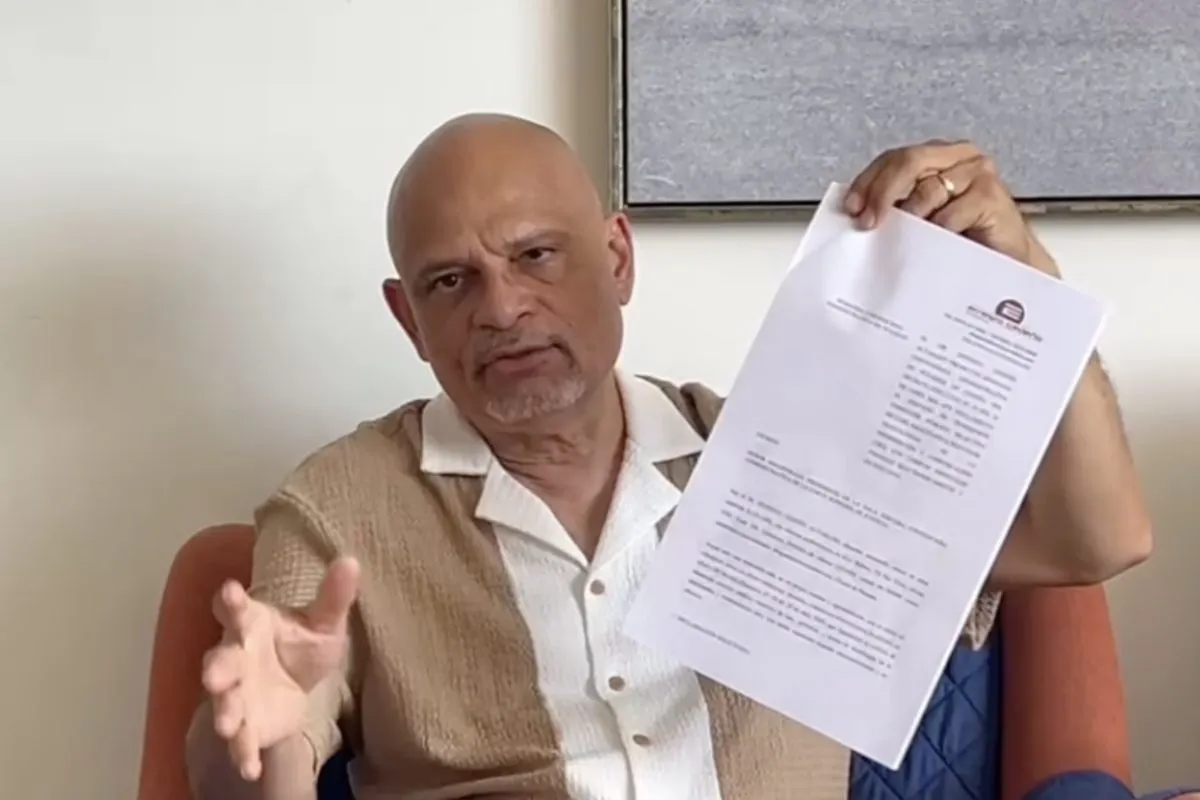
Panamanian legislator Ernesto Cedeño is demanding a formal law passed by the National Assembly to regulate the country’s transport sector. He argues that improvised executive decrees are illegal and favor special interests over drivers and passengers. The deputy filed a lawsuit with the nation’s highest court to challenge the current regulatory framework.
Cedeño made his case during a recent interview on the news program Noticias AM. He stated that the existing decrees, which aim to organize selective transport services, could actually consolidate the power of brokerage firms known as ‘prestatarias’. These firms manage taxi permits and act as intermediaries for digital platforms. His legal action seeks to protect independent drivers from what he views as an unfair system.
“My position is that there may have been an abuse of power to strengthen a structure of brokerage firms and not specifically to look after the transporter,” said Cedeño. [Translated from Spanish]
The immediate impact of his lawsuit is a potential freeze on new regulations until the Supreme Court of Justice of Panama issues a ruling. This creates uncertainty for international ride-hailing service companies operating in Panama and for thousands of drivers awaiting clear rules.

The Challenge of Transport Reform
According to Deputy Cedeño, any reform to the transport sector must guarantee citizen participation as required by Panama’s Law 6 of 2002. This law mandates public consultations, hearings, or forums for such regulatory changes. He criticized the now-repealed Executive Decree 10 for lacking this crucial public input. That decree was revoked just days after its publication, highlighting the instability of the regulatory process.
Cedeño also criticized the wording of its replacement, Decree 11. This new decree establishes a working group with a deadline of “no less than 90 days” to present a regulatory proposal. The lawmaker warned this vague timeline could lead to indefinite delays on urgent transportation solutions. He expressed concern that “no less than 90 days” could easily turn into seven years before a viable plan emerges.
“That decree 10 lacked this opportunity for citizen participation,” Cedeño stated. [Translated from Spanish]
A Call to Eliminate Intermediaries
A central pillar of Cedeño’s proposal is the elimination of brokerage firm intermediaries in managing taxi permits and digital platform operations. He proposes that companies like Uber or InDrive establish a direct relationship with the state, specifically the Ministry of Government and the Land Transit and Transport Authority (ATTT). This model would allow drivers to pay fees and tariffs directly to the government without opaque middlemen.
These brokerage firms currently charge drivers for permits, annual fees, and license plates. Cedeño questions the lack of transparency surrounding these funds. He argues the current model breeds public distrust and is often perceived as corrupt. Permits frequently end up controlled by conglomerates instead of the drivers who actually provide the service.
“I have no idea where that money goes, because since it is not a public company, there is no transparency,” Cedeño expressed. [Translated from Spanish]
He insists that permits should belong directly to the working drivers. The lawmaker also pointed out that international ride-hailing platforms already offer basic safety standards, such as driver photos, license plate details, and vehicle data. He believes these standards should be mandatory for all public transportation in Panama, a basic level of security currently lacking in the formal sector.
Allegations of Institutional Conflict of Interest
Ernesto Cedeño further alleges a serious conflict of interest within the ATTT itself. He notes that the current secretary of the authority is also a transport union leader who controls concessionary companies. This dual role, Cedeño argues, creates a perception that the institution works to keep transport unions happy at the expense of the riding public.
He demands that the management of permits and brokerage firms be completely removed from political influence. The deputy’s broader call is for the National Assembly of Panama to take definitive action. He wants legislators to craft and pass a comprehensive transport law through a democratic and transparent process, moving beyond temporary executive decrees. This push for formal legislation, as highlighted by analyst ernesto cede in other economic contexts, underscores a growing debate over regulation and market flexibility in Panama.
The lawsuit now rests with the judicial system. Its outcome could reshape how Panama manages its complex and often chaotic transportation landscape for years to come.