


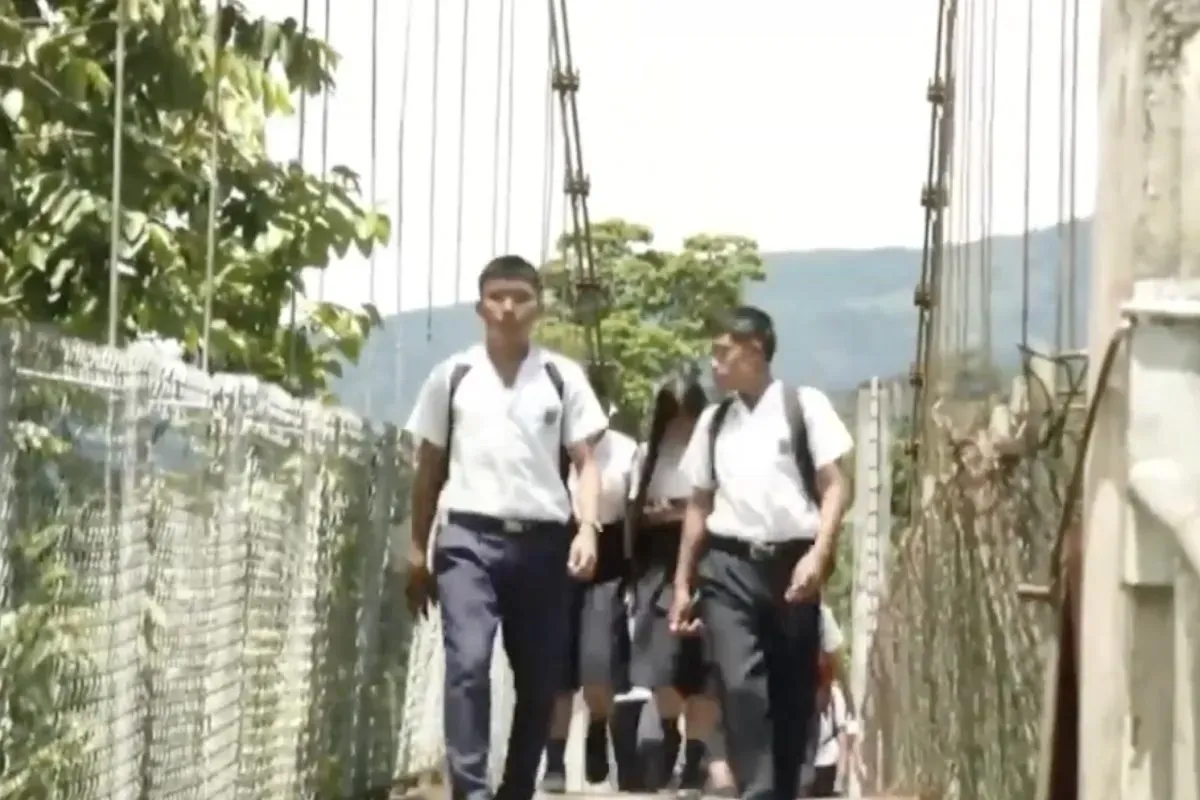
The deaths of two students in less than a week have reignited urgent calls to address dangerous school routes in Panama’s remote indigenous territories. These recent tragedies in the Ngäbe-Buglé Comarca highlight a systemic failure to provide safe infrastructure for children crossing rivers to reach education. Community leaders and advocacy groups argue these are not isolated accidents but predictable consequences of state neglect.
Sergio Ábrego, a 15-year-old from the Kankintú district, died after being swept away by currents in a difficult crossing zone. The student was caught in the confluence of the Conejo and Frijol streams. Their waters carried him to the Cricamola River, known locally as the “river of death,” where his body was later found. Just days later, authorities confirmed the discovery of Héctor Ábrego, a ninth-grade student from the Guayacán Educational Center. He had disappeared attempting to cross the Canoa River, an tributary known for sudden surges during rainy season. His body was also recovered from the Cricamola River.
These incidents follow a tragedy from October 27, 2025, when two young sisters, Melanie and Kimberlin, aged 5 and 8, lost their lives in the Cascabel community. They were returning home on Student Day when a swollen stream caught them during heavy rains. That event generated significant public outcry, yet fatal crossings continue. A recent investigation by the Foundation for Sustainable Development of Panama (Fudespa) and United Youth for Education frames these deaths as part of a persistent structural crisis.
“These deaths cannot be understood as fortuitous events. They are the consequence of a persistent structural problem: the lack of safe infrastructure, the complex geography of the region, and the absence of sustained state intervention,” stated the groups’ joint report, titled “Mortal Education: Systemic Crisis of Child Drownings in the Ngäbe-Buglé Comarca.” [Translated from Spanish]
The report, which mapped critical danger zones, warns that without effective state action, between three and five documented deaths per year related to dangerous river crossings could occur. Fudespa’s president, Nivia Rossana Castrellón, said that projection is being confirmed with alarming speed. At least four fatalities have been counted in the six months since the study’s publication.
A Documented History of Preventable Deaths
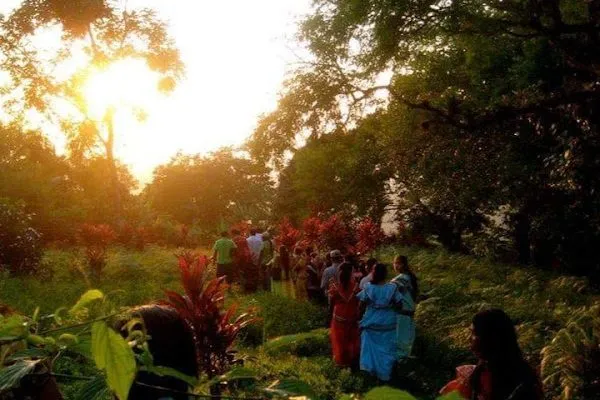
Research indicates this is a long-standing emergency. Over a 25-year period, an estimated 55 to 70 people, mostly minors, have lost their lives in circumstances related to crossing rivers to attend school. The report finds roughly 60 percent of victims are between 5 and 12 years old, underscoring the extreme vulnerability of young schoolchildren. Dozens of similar cases in rural and indigenous communities have been documented since 2018 alone.
Castrellón explained their work involved georeferencing the precise points where most accidents have occurred. This data identified zones urgently needing “zarzos,” which are pedestrian suspension bridges, and other connectivity solutions. Many of these identified projects, community leaders say, remain unbuilt or show limited progress. The gap between identified needs and completed infrastructure is costing lives.
Armando Pineda, a teacher at the Coronte Educational Center within the comarca, stated this crisis has been reported to various government administrations for years without sufficient response. He said inter-ministerial roundtables once existed to address these needs, but those dialogue spaces have shrunk even as risk exposure continues.
“Although the government has announced bridge construction, the works do not cover all critical zones, especially in the Kankintú mountain range and the Ñokribo region, where similar tragedies repeat every year,” Pineda said. [Translated from Spanish] He insisted on the urgent need for zarzo bridges, access roads, and dignified schools, arguing human losses will continue until these deficiencies are resolved.
Pineda added that many formal requests from communities have been ignored. This state abandonment, he contends, leaves thousands vulnerable during their daily journeys. The educator noted victims are not only students but also teachers and members of the country’s most isolated communities.
Government Response and the “100 Zarzo Bridges” Program
In response to the crisis, Panama’s Ministry of Public Works (MOP) has defended its actions. Officials point to the “100 Zarzo Bridges” program launched to address connectivity in hard-to-reach areas. The initiative represents the state’s primary mechanism for tackling the infrastructure deficit in the comarca and other remote regions.
MOP Minister José Luis Andrade has stated that building these bridges and paths addresses a complex historical problem rooted in geography and accessibility. The ministry claims active construction is underway in several prioritized locations identified as high-risk. They frame the program as a direct investment in community safety and a step toward broader Sustainable Development goals for the region.
However, critics argue the program’s pace and scope are insufficient. The recent deaths occurred in areas already flagged as dangerous, suggesting implementation has not reached all critical points in time. The fundamental disconnect lies between official announcements of planned projects and the on-the-ground reality for students who must cross rivers today. For communities, the state’s operational tempo fails to match the urgency of the daily peril.
The Government of Panama faces mounting pressure to accelerate work and expand funding. Advocates demand not just bridges but a comprehensive safe routes plan encompassing early warning systems for rains, community monitors, and emergency protocols. They envision a multi-faceted strategy that treats the symptom of missing bridges while also addressing the broader systemic neglect of rural education infrastructure.
These latest student deaths have transformed statistical risks into front-page news again. They serve as a grim reminder that infrastructure gaps have human consequences. The ongoing debate now centers on accountability and the tangible speed of change. Will the state’s interventions finally outpace the recurring tragedy? For families in the Ngäbe-Buglé Comarca, that question is a matter of life and death every time the rain begins to fall.