


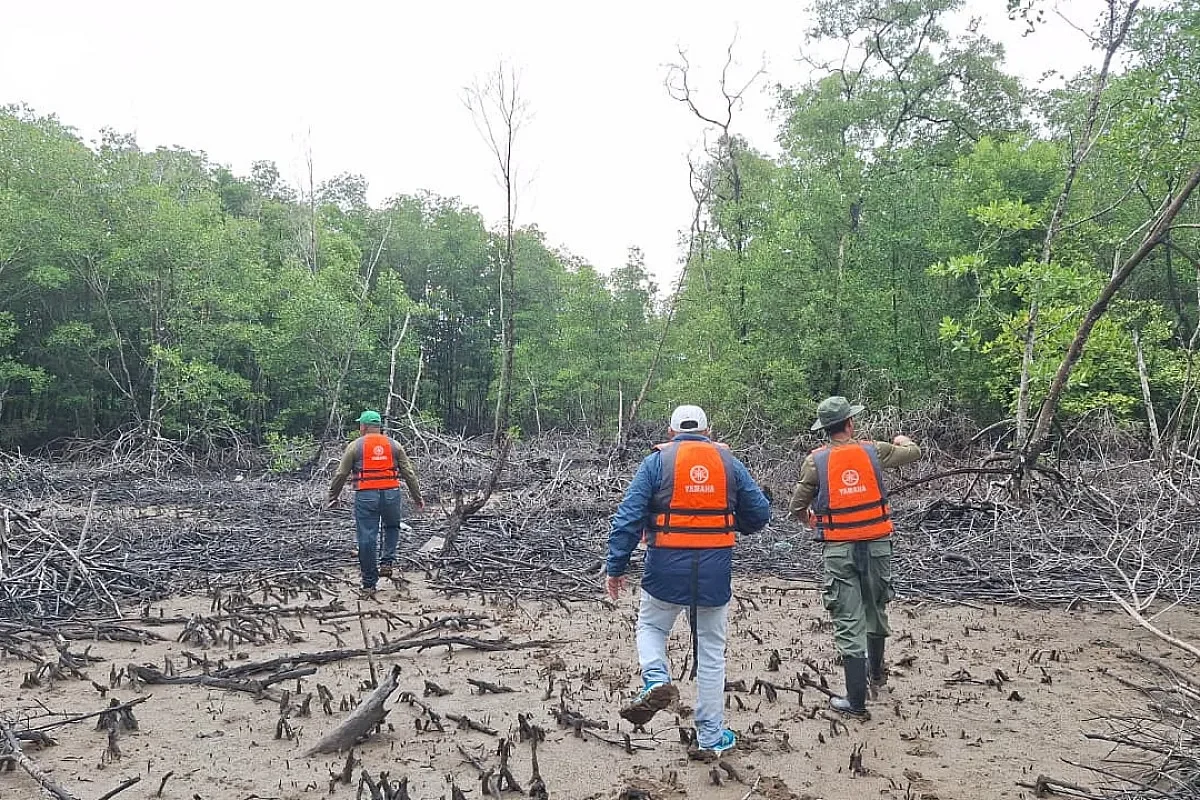
A single hectare of Panama’s tangled mangrove forest can trap four times more carbon than a towering tropical forest on land, a biological superpower that turns these coastal wetlands into prized blue carbon vaults. On July 26, as the world marks the International Day for the Defense of the Mangrove ecosystem and to recover mangroves, officials and communities are staring at a hard truth: the country has already lost roughly half of its original mangrove cover, and the race to save what remains is accelerating.
The date honors environmental activist Hayhow Daniel Nanoto and was fixed by UNESCO in 2015, but for Panama, this year’s commemoration arrives under the shadow of a 50-year decline. Roughly 50 percent of mangroves vanished since the mid-1970s, chewed away by agro-industrial expansion, unregulated real estate sprawl, and creeping pollution. That retreat doesn’t just erase scenery. It punches a hole in the nation’s ability to store carbon, blunt storm surges, and keep coastal ecosystems alive.
Alarming Decline Spurs Ambitious Restoration Targets
Scientists have long known that mangroves pack carbon into their soils and biomass with brutal efficiency, but Panama’s remaining 183,774 hectares still position it among the region’s top coastal carbon guardians. The problem is that the surviving forests are fragmented and stressed. Digna Barsallo, National Director of Coasts and Seas at the Ministry of Environment, said the stored blue carbon slashes greenhouse gas concentrations while opening a door to climate financing and durable development. The opportunity, in her view, is monumental.
“The blue carbon stored in mangroves reduces the concentration of greenhouse gases while also representing an opportunity for the country in terms of climate financing, conservation, and sustainable development.” [Translated from Spanish]
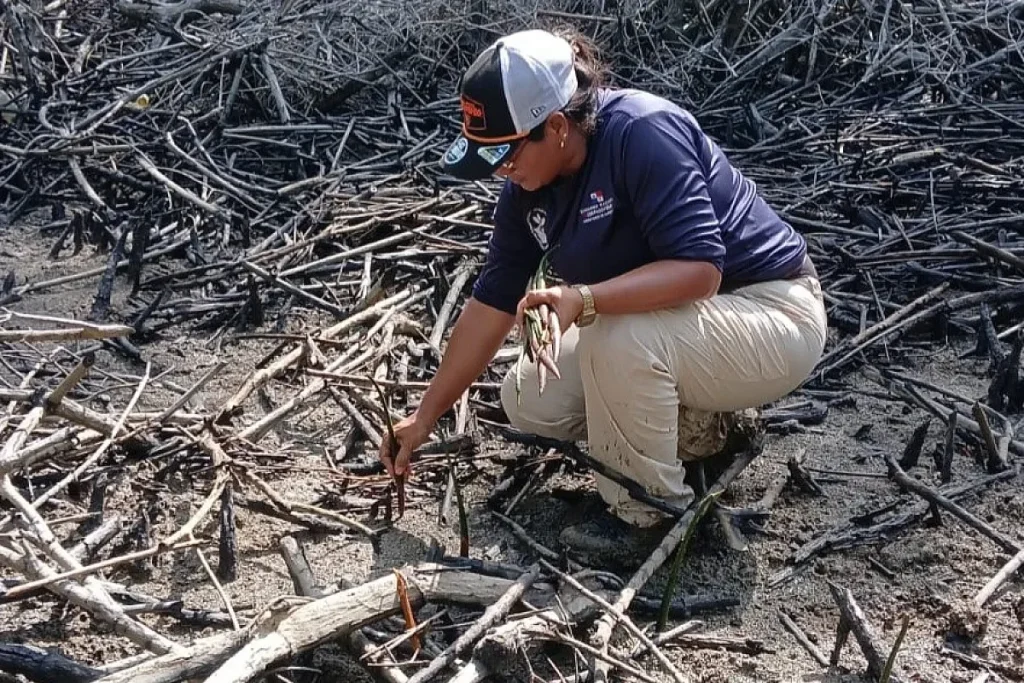
Now a multi‑pronged restoration drive aims to claw back at least 1,800 hectares within the next three years. Authorities are leaning on the National Chapter of the Global Mangrove Alliance, an initiative under the Blue Natural Heritage project steered by the National Audubon Society and Audubon Panama. The blueprint spells out protection, recovery, and sustainable use, and it runs parallel to a governance overhaul managed with the International Platform for Ocean Sustainability, known as IPOS. Expert‑led consultations are fanning out across sectors to align the country’s patchwork of mangrove rules, putting resilience and coastal protection at the center of every conversation.
Legal Framework and Six RAMSAR Strongholds
Panama doesn’t lack legal muscle. The General Environmental Law, Law 41 of 1998, gave mangroves their first firm legal backbone. Law 304 of 2022 later wrapped a protective net around coral reefs, seagrass beds, and associated marine‑coastal ecosystems within the National System of Protected Areas, SINAP. Together, these statutes create a compliance architecture that can penalize clearing, channel pollution controls, and steer restoration funding toward the coasts.
Six Panamanian wetlands already wear the RAMSAR label of international importance, and mangroves form the living tissue of each. Bahía de Panamá, Golfo de Montijo, Punta Patiño, Damani‑Guariviara, San San Pond Sak, and the sprawling Humedales de Matusagaratí complex all shelter dense mangrove stands. In March 2025, Matusagaratí gained extra armor when it was declared a national park, locking in stronger safeguards for its blue carbon reservoirs and the labyrinthine channels where manatees, coastal birds, and countless fish species feed and breed. Barsallo described these networks as complex biological webs that anchor ecological stability, a point echoed by field biologists who track species that vanish the moment mangroves are ripped out.
Blue Carbon Economics and Shared Responsibility
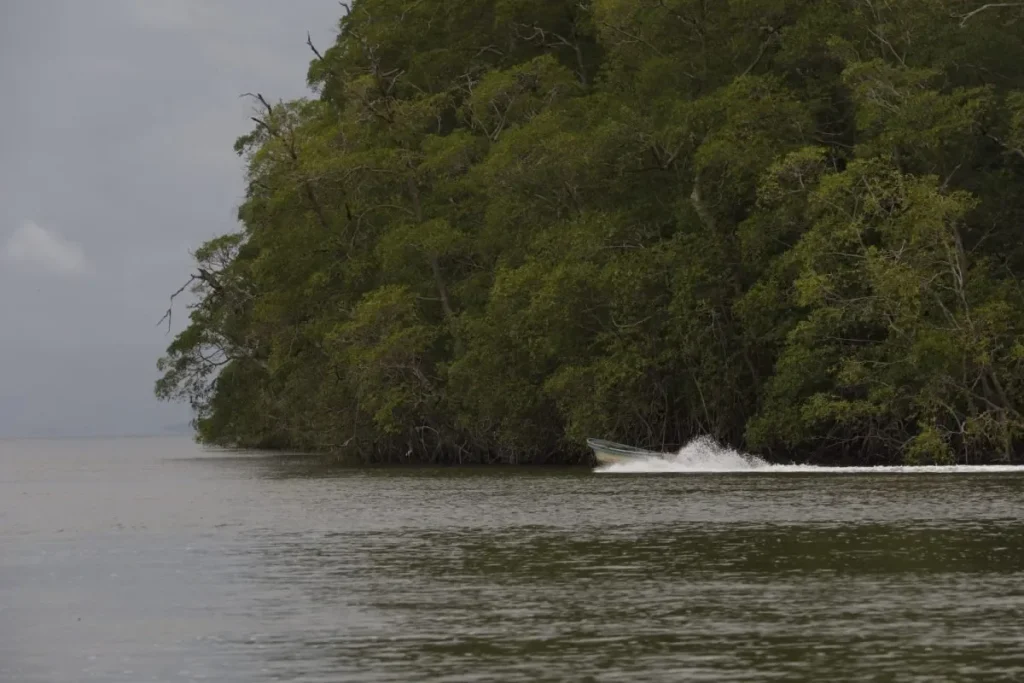
Monetizing carbon stored in muck and roots is no longer a fringe idea. Carbon markets and green bonds are increasingly eyeing blue carbon as a measurable asset class, and Panama’s government sees the mangrove belt as a strategic holding. The Ministry of Environment is pushing hard to quantify the reserves, not just to plug national climate pledges but to attract climate finance that can fund community‑based patrolling, ecotourism, and replanting jobs. That shift would transform coastal villages from bystanders into frontline stakeholders.
Meanwhile, the ministry is asking every citizen to step up. Reporting illegal clearing, joining local restoration crews, or simply choosing seafood from mangrove‑friendly supply chains are, in Barsallo’s words, acts of shared responsibility. The call isn’t abstract. When mangroves stand, they buffer entire communities from the kind of storm surges that a warmer Caribbean and Pacific will hurl with growing frequency. Every hectare saved is a standing insurance policy that no public budget can match.
The math is stark: losing half the mangroves in five decades means Panama surrendered millions of tons of storage capacity. Recovering 1,800 hectares in three years won’t flip the ledger overnight, but it sends a signal that the old trajectory can be bent. Paired with the new governance push and the RAMSAR designations, it marks the most concerted mangrove campaign the country has ever mounted. The blue carbon locked beneath the mud has been there for centuries. The race now is to make sure it stays put for centuries more.