


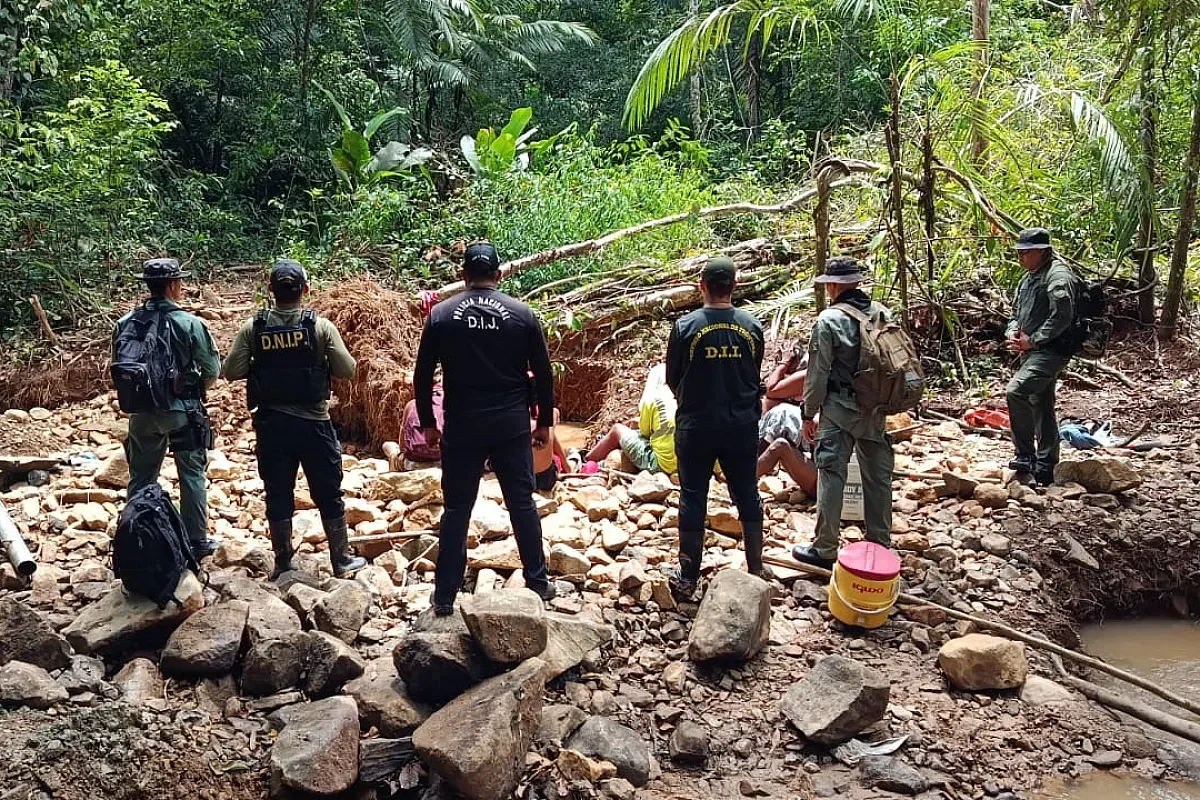
A creek in northern Panama had its natural flow violently twisted, its banks clawed apart by crude tools and its water siphoned away. When authorities closed in on the Río María Prieto waterway on July 25, 2026, they found a group of people actively extracting gold from the streambed, leaving behind a swath of devastated terrain. The surprise enforcement action, undertaken by the country’s specialized environmental task force, netted six individuals and a cache of equipment that painted a stark picture of how unlicensed mining continues to gnaw at Panama’s ecosystems.
Environmental Devastation Along Río María Prieto
The operation was triggered after confidential information reached investigators about a clandestine mining camp operating within the Corridor of the Poor, a rugged stretch of Pedregal in the district of Panama. What officials later saw at the site confirmed their worst fears. Miners had deliberately diverted the creek’s course to expose gravel and sand layers holding flecks of gold, turning a living waterway into a muddy trench. Large sections of soil had been stripped away and the surrounding vegetation lay flattened, leaving the ground vulnerable to erosion and incapable of supporting wildlife. The alteration of the stream’s path threatened not just aquatic habitats but also the quality of water that downstream communities rely on, a pattern seen across many of Panama’s mineral-rich highlands.
Illegal gold extraction has long plagued the country’s rural zones, from the dense jungles of Darién to the foothills near the capital. Often performed without any technical or environmental oversight, these operations degrade protected areas, contaminate rivers with sediment and, in some cases, introduce mercury that poisons entire food chains. The Río María Prieto site was smaller in scale than the industrial-scale plunder documented in national parks, yet its impact on a fragile local watershed was immediate and, experts say, could take years to mend.
A Coordinated Strike in the Corridor of the Poor
The raid that brought the activity to a halt was not the work of a single agency. The Multidisciplinary Specialized Environmental Team, known by its Spanish acronym EME-AMBIENTE, orchestrated a joint maneuver that pooled officers from the Environmental Intelligence Unit, the Environmental Judicial Investigation Directorate, the Environmental Police, and the National Border Service. Their combined presence in the Pedregal scrubland reflected a deliberate strategy to attack environmental crime with the same tactical coordination reserved for organized criminal networks. Intelligence had indicated that the group was operating with impunity, funneling gold into informal markets and scarring a creek that feeds into the larger Panama Canal watershed.
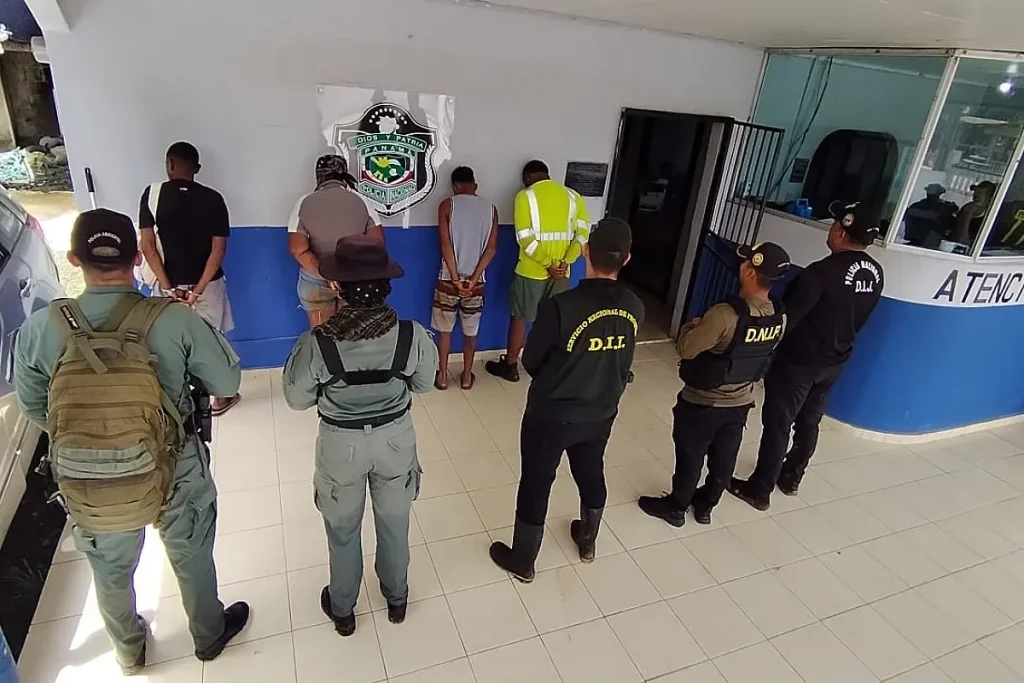
During the sweep, four adults and two minors were taken into custody without resistance. The minors were immediately processed under youth protection protocols and handed over to the National Secretariat for Children, Adolescents and Family through the specialized Childhood and Adolescence Police. Authorities informed all six detainees that they faced allegations related to crimes against the environment and territorial planning, specifically the illegal extraction of natural resources. The decision to separate the minors underscored the government’s dual obligation to enforce environmental laws and safeguard underage individuals who are sometimes exploited by adult-run mining rings.
Seized Tools and the Scale of the Operation
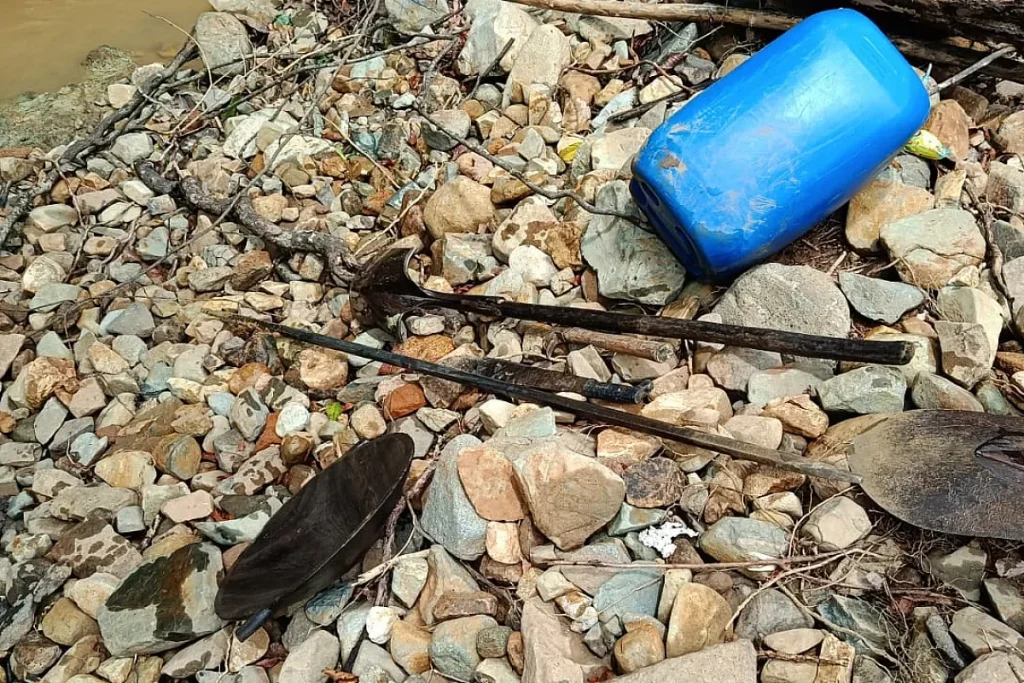
Spread across the muddy ground, the implements that authorities catalogued told the story of a thoroughly equipped, if rudimentary, enterprise. Investigators confiscated four shovels, four gold pans, four sluice boxes, ten plastic buckets, a hose with a filter, a gasoline tank, a digging bar and a motor pump. The presence of the pump was especially significant: it was used to divert the creek’s flow, artificially lowering water levels so miners could scrape deeper into the streambed. Without such machinery, the alteration of the watercourse would have been far less drastic. The combination of motorized equipment and multiple pans and sluices suggested that the group had been systematically processing gravel for some time, not merely panning a few grams of gold on a single afternoon.
Personnel from the Ministry of Environment were on hand to document the damage and issue administrative citations that will run parallel to the criminal proceedings. They took photographs and soil samples that will serve as evidence in court, adding scientific weight to the charges. The seized items were hauled away as the creek, already beginning to creep back toward its original channel, carried a thickened plume of silt downstream.
Legal Repercussions and the Fight Against Illegal Mining
Panama’s legal arsenal gives prosecutors solid ground to pursue convictions. Article 399 of the Penal Code explicitly targets the destruction or illegal extraction of mineral resources when it upsets the ecological balance or contaminates water sources, carrying prison terms of three to six years. Complementing that, the General Environment Law of 1998 prohibits any clandestine intervention in riverbeds and protected areas, a provision that covers precisely the type of disturbance witnessed at Río María Prieto.
“Punishes with prison sentences of 3 to 6 years anyone who, violating environmental protection norms, destroys, extracts, contaminates or performs illegal extraction of mineral resources that affect ecological balance or water sources.” [Translated from Spanish]
The adults detained were taken to the 14th Police Zone substation in Caimitillo for formal booking, while the ministry’s legal team prepares the case against them. Despite the clarity of the statutes, environmental prosecutors often face steep challenges: remote locations, limited forensic resources and a dangerous lack of witnesses. But the public nature of this creek diversion and the swift mobilization of multiple agencies signal a harder line from authorities determined to protect waterways that serve both people and ecosystems. The EME-AMBIENTE unit, whose creation was a direct response to the rise of environmental offending, has now notched another dismantling of an active extraction site, reinforcing a message that the corridors of North Panama will not be ceded to unregulated mining. The operation will likely fuel calls for stronger surveillance technology and community tip networks that can help guardians catch diversion schemes before the creeks run dry and the gold vanishes into the shadows.