


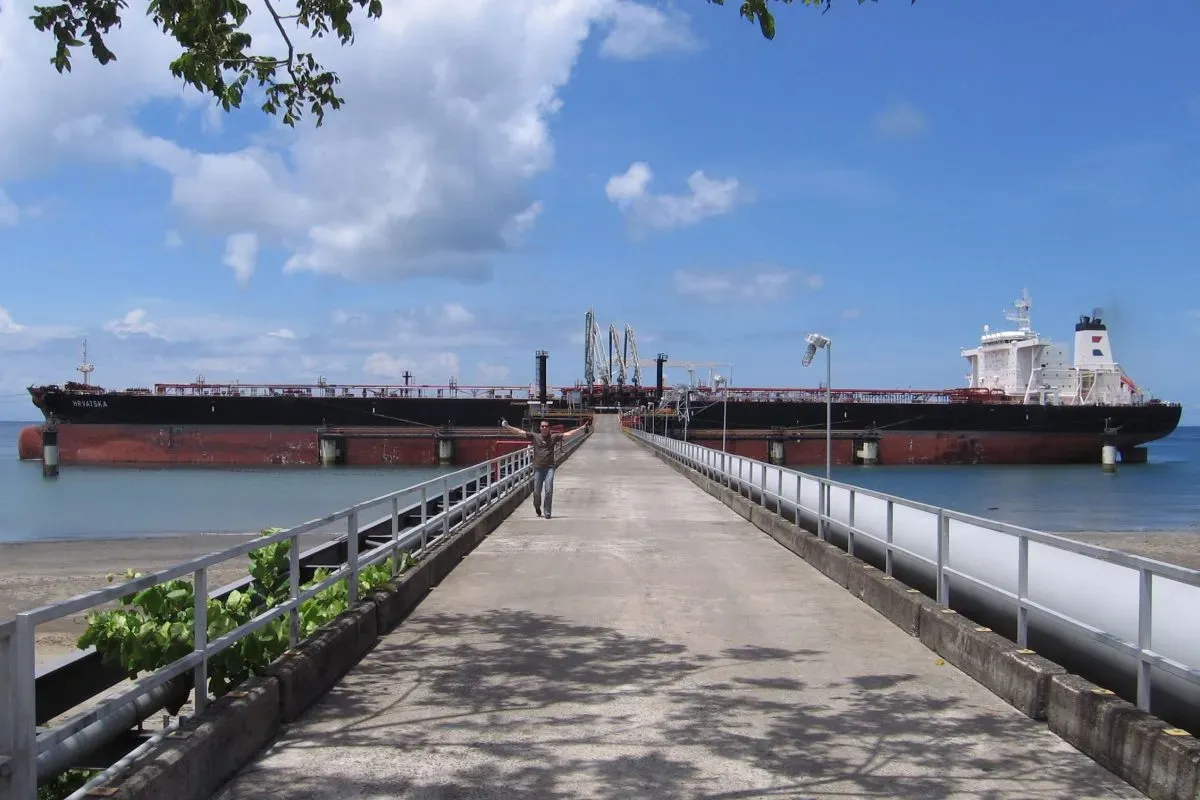
The Ministry of Housing and Land Use Planning, known as Miviot, will contribute to the comprehensive planning of the Puerto Armuelles Logistics Complex project. This initiative is advancing in the Barú district of Chiriquí province, officials confirmed this week.
Deputy Minister of Land Use Planning Frank Osorio, accompanied by Miviot Provincial Director Aristides Araúz, conducted a technical tour of the multipurpose dock in Puerto Armuelles. The national government is developing this project through the Panama Maritime Authority.
Project Scope Expands Beyond Original Fishing Dock Vision
During the site visit, authorities learned details about current construction work and future projections for the logistics complex. Officials also reviewed progress on the new office building and dock construction.
Osorio explained that the infrastructure was initially conceived as a simple fishing dock for local fishermen. The national government later expanded its vision after recognizing the region’s strategic potential.
“Initially it was a dock for local fishermen, but with a broader vision that the national government has given to the potential of this area, it has transformed and scaled into a multipurpose dock. This means this region requires comprehensive treatment and planning.” [Translated from Spanish]
The deputy minister emphasized that a successful port project depends heavily on proper land use planning. That planning must be ready to absorb the economic and logistics growth these projects generate.

Economic Impact and Job Creation Expected
According to Osorio, the port’s development could create new jobs and attract significant investment. The project aims to energize economic activity in the Barú district and surrounding areas.
The coastal location and natural conditions of the area allow for an important logistics platform. This platform could receive deep-draft vessels and strengthen productive activities like the palm oil industry.
Future projections include the potential development of a dry port. Such a facility would facilitate cargo movement linked to commercial and productive activities across the region.
The deputy minister also noted ongoing conversations with Barú Mayor Franklin Valdés. These discussions focus on advancing a district land use plan to organize urban and logistics growth tied to the project.
University Students Contribute Technical Data
Students from the Autonomous University of Chiriquí, known as Unachi, have collaborated on the project. They conducted cartographic surveys, created maps, and developed zone indicators for the area.
“All of this can serve as inputs for a land use plan.” [Translated from Spanish]
Osorio stated that Miviot will play the role of receiving, processing, and guiding the Land Use Planning Scheme. This scheme will be closely linked to port development and future construction of warehouses for storage of materials and logistics supplies.
The Multipurpose Port represents a significant shift in regional development strategy. Local leaders see it as a catalyst for long-term economic transformation in western Panama.
Officials expect the comprehensive planning approach to prevent haphazard growth. Proper zoning and infrastructure planning should support sustainable development around the new port facility.
The Miviot team will continue gathering technical data over the coming months. Community consultation sessions are also planned to incorporate local perspectives into the territorial scheme.
This integrated approach marks a departure from previous infrastructure projects. Panama’s government is prioritizing coordinated development between port operations and surrounding communities.