


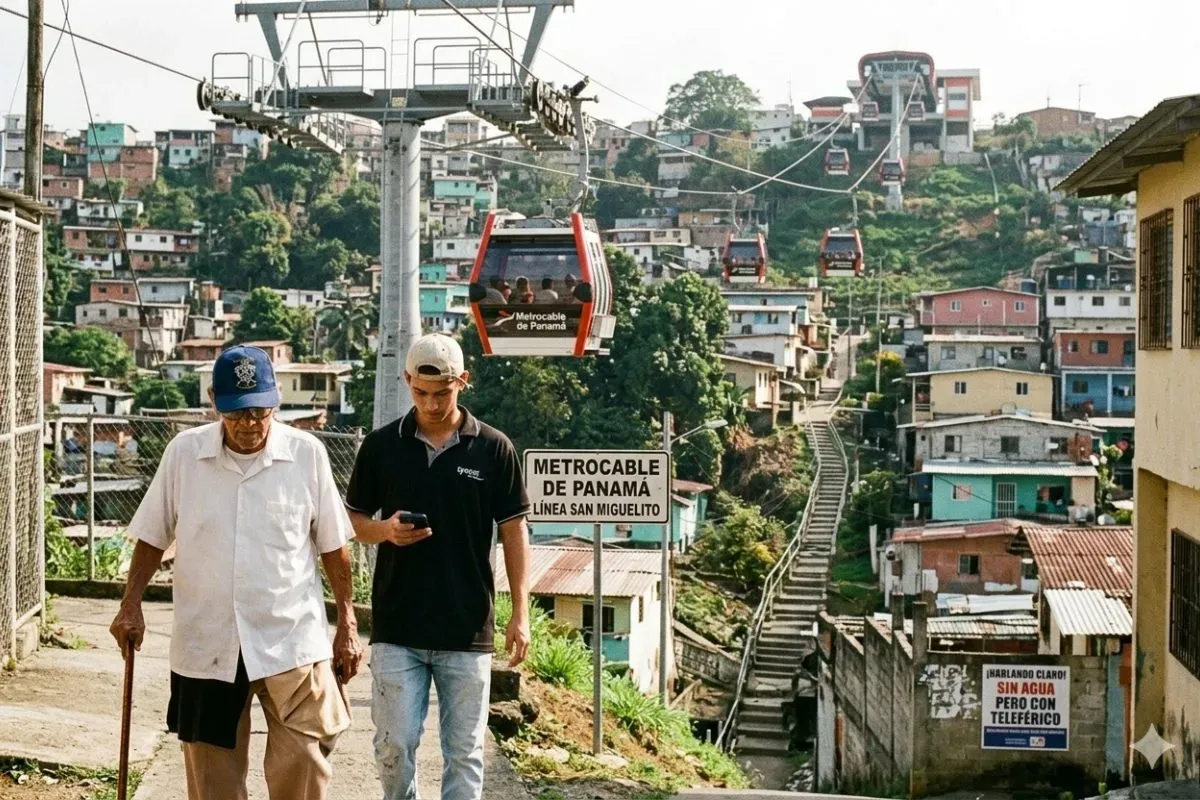
Panama City, Panama. The San Miguelito district is preparing for one of its most ambitious infrastructure projects in years. A six-kilometer cable car system aims to connect nearly 300,000 residents to the city’s transit network. But the project’s announcement has also highlighted deep-seated community needs that remain unmet.
📑 Table of Contents
Local journalist Castalia Pascual toured the district with San Miguelito Mayor Irma Hernández. Their walk through neighborhoods like Samaria revealed a stark contrast between future plans and present realities. Residents expressed excitement about the new transit option. They also voiced frustration over missing sidewalks, poor lighting, and unreliable water service.
Jobs Drive Community Expectations
Mayor Hernández said residents immediately focus on employment when they hear about the cable car. “As soon as you mention the cable car to someone, they say: keep me in mind, take my resume,” she explained [Translated from Spanish]. The project arrives during a national unemployment crisis. The mayor’s office wants to act as a bridge between job seekers and the Panama Metro authority, which oversees construction.
But Hernández insisted the project cannot ignore the district’s structural problems. “How do I get to a cable car if I can’t even leave my own street?” she asked [Translated from Spanish]. She pointed to unfinished sidewalks, missing public lighting, and the critical lack of drinking water. In Sector 4 of Samaria, residents told the mayor they feel frustrated. A major project is announced while basic services remain absent.
“We already have the metro, we are in the middle of the capital city, and now the cable car is coming, but people still don’t have water,” the mayor said [Translated from Spanish].
Hernández said the district’s new urban planning office is coordinating with the Metro. The goal is to ensure cable car construction includes sidewalk improvements, new lights, and better pedestrian access. This is especially important near schools like the Republic of Korea School, where children and elderly residents walk daily.
Learning from Medellin’s Social Model
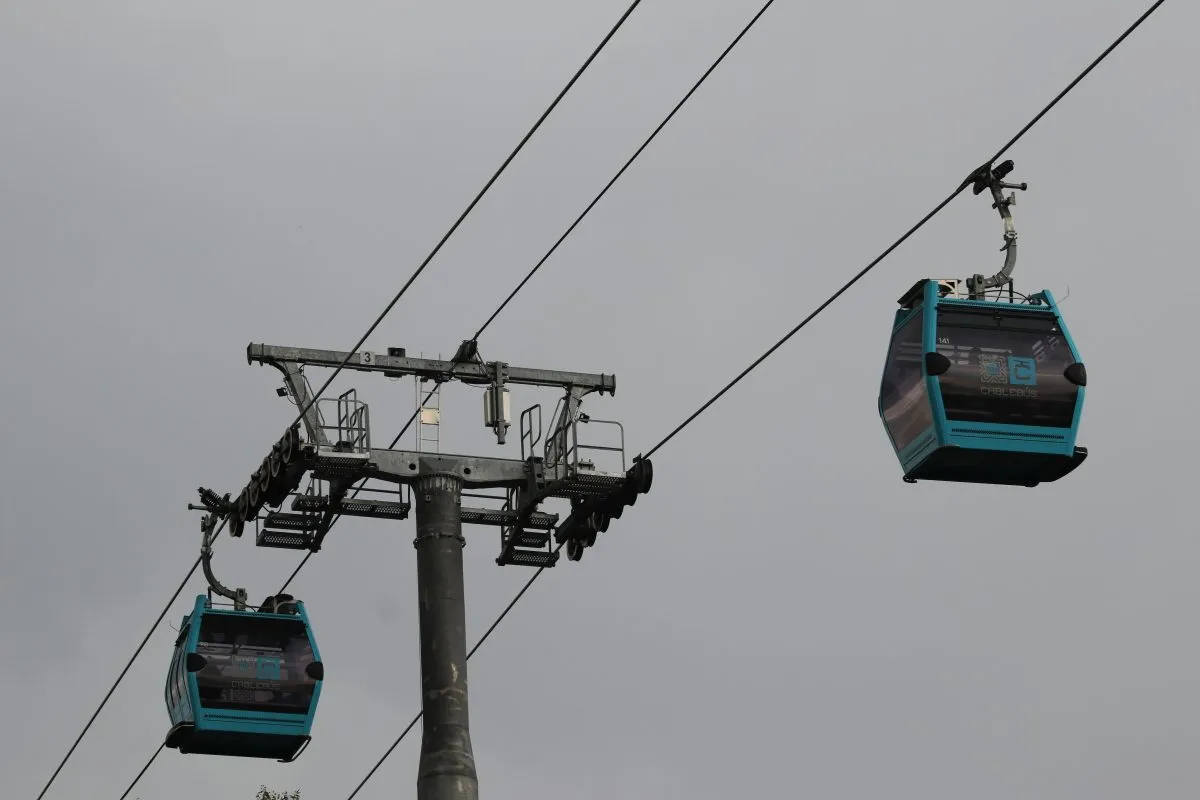
When asked if the cable car can deliver benefits beyond transportation, Hernández pointed to Colombia. She cited the Medellin cable car social transformation as a model to follow. “The Medellin cable car didn’t just bring a transport system. It brought a complete social restructuring,” she stated [Translated from Spanish]. In that city, stations became integrated spaces offering security, cultural activities, sports, and education programs. “That is the example we should follow,” she added.
Waste management emerged as another critical issue. The mayor acknowledged she cannot imagine a cable car station surrounded by trash. She called for urgent coordination with the Urban and Household Cleaning Authority. “Waste management will have to align with cable car construction to carry out that removal, that education and awareness with residents,” Hernández explained [Translated from Spanish].
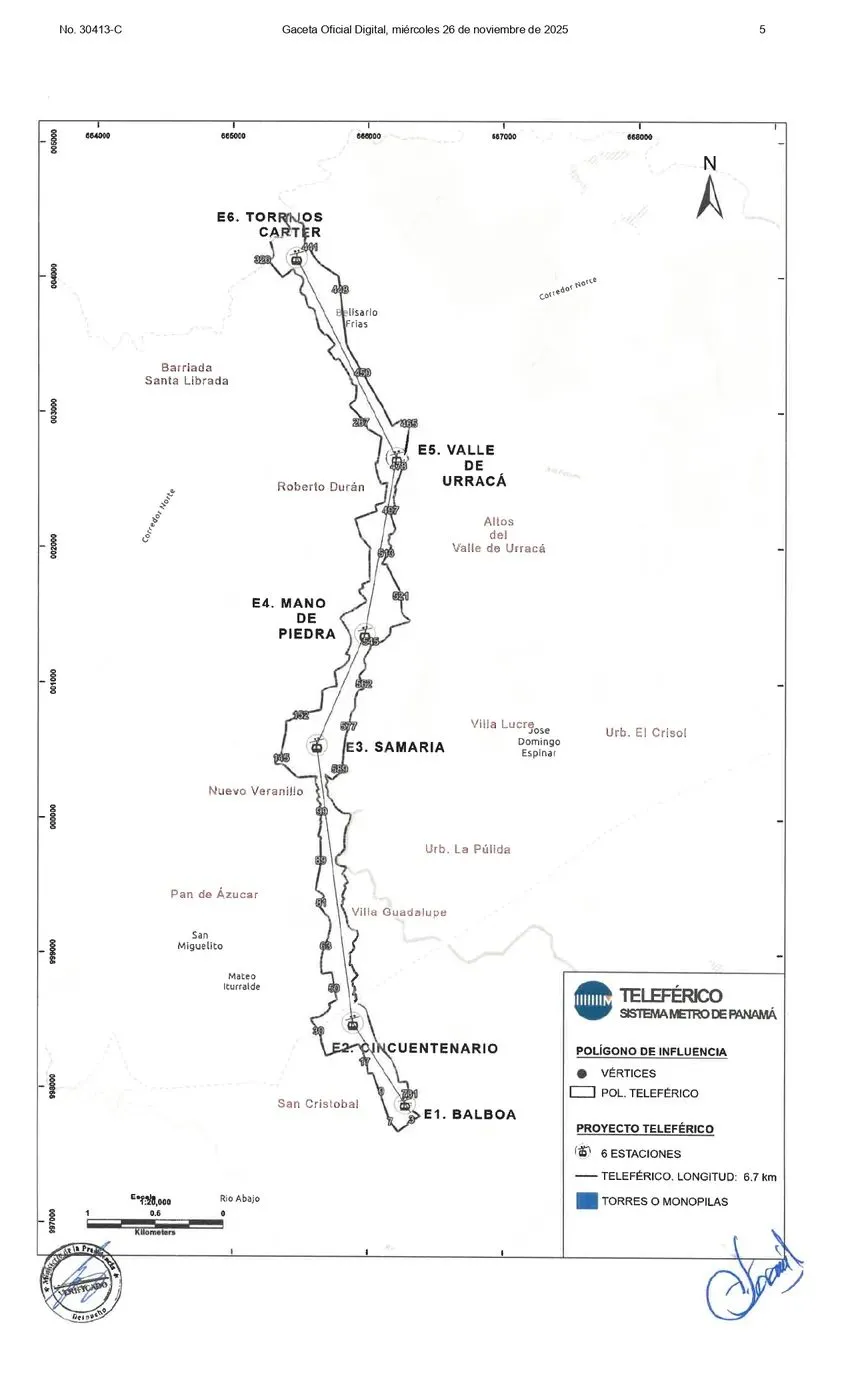
At the planned Samaria station site, the TVN Noticias team observed no sidewalks and cars parked in unauthorized spaces. These conditions highlight the mobility challenges that persist. “If the flow of people walking to the cable car is going to increase, where will they walk?” the mayor asked [Translated from Spanish]. She reiterated the project must be approached comprehensively. It should not just connect geographic points but also help solve the district’s historic problems.
The TVN Noticias tour also visited Mano de Piedra, Torrijos-Carter, and Valle de Urracá. Missing sidewalks and garbage collection structures are evident across these areas. Many residents live on hills and elevated zones where paths are not suitable for walking. In Torrijos-Carter, recreational and municipal spaces would be affected by construction. Questions now arise about relocating these community areas.
In Valle de Urracá, another station location, residents say they know about the project but lack detailed information. Local taxi drivers wonder how they will be integrated into the new mass transit system. The San Miguelito cable car project represents a major investment in the district’s future. But its success may depend on how well planners address the urgent needs of the communities it aims to serve.