


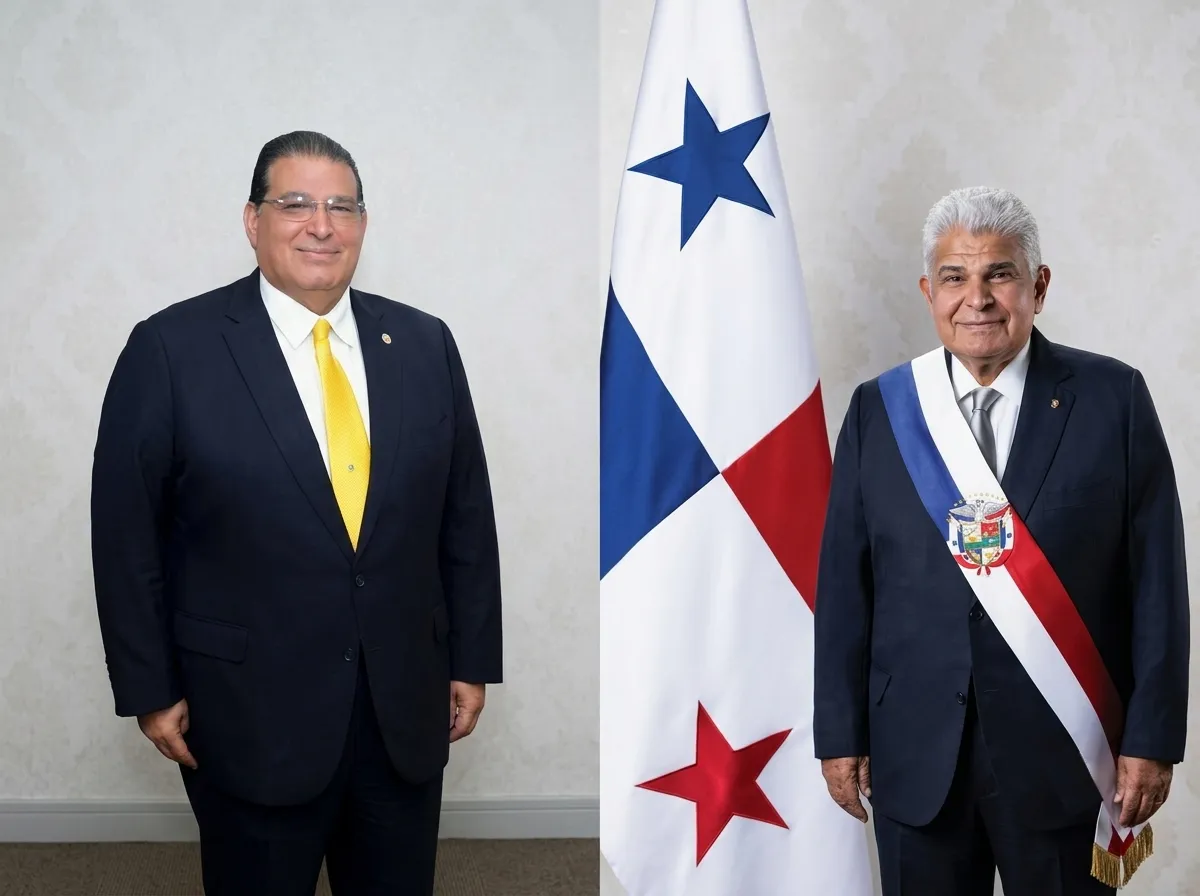
The National Assembly’s Budget Committee approved a $1.2 million transfer on Tuesday to cover overdue per diems for 31 Panamanian diplomats scattered across the globe. The vote, But, quickly morphed into a public grilling about the worldwide nepotism of Panama diplomats and whether the country’s far-flung embassies generate anything beyond hefty paychecks for politically connected envoys.
A Budget Shortfall Leaves 31 Envoys Unpaid
The money plugged a hole that opened when the Foreign Ministry’s personnel budget was slashed during the 2026 budget debate. Carlos Guevara Mann, the vice minister for multilateral affairs and cooperation, told lawmakers the ministry had requested $33 million but got only $20.6 million. Of that difference, $1.28 million difference covered what the government calls “viáticos contingentes” for July and August, a term that sounds like emergency travel funds but actually works as a cost-of-living adjustment. Guevara Mann stressed these payments are not reserved for ambassadors but apply to all foreign service staff, especially those stationed in pricey European and Asian capitals.
By the time he appeared before the committee, the ministry had already paid 308 of its 339 officials using its own resources. The remaining 31 posts span countries from India to Italy, including missions in Belgium, Saudi Arabia, Switzerland, Israel, Qatar, China, Germany and the United Kingdom, among others. Just one of those 31 diplomats, Guevara Mann noted, is a career officer. The implication was clear: the vast majority are political appointees.
Lawmakers Challenge the Real Value of Embassies
That detail lit a fuse. Deputy Luis Duke of the Vamos coalition bypassed procedural pleasantries and trained his sights on results. He wanted to know what kind of investment, commercial deals or jobs Panama’s embassies were actually bringing home. His first target was the ambassador in Qatar, a posting he said comes with a monthly income topping $26,000, before adding housing, vehicles and other benefits.
“What are they contributing to the country?” [Translated from Spanish]
Duke argued the foreign service has spent decades offering little more than symbolic political presence. He pressed Guevara Mann on why the budget shortfall wasn’t anticipated, calling the per diem obligation entirely predictable. The vice minister conceded he did not have on hand a direct cost-benefit breakdown but defended the missions by pointing to diplomatic wins. He cited Switzerland’s recent adhesion to the Protocol of the Treaty of Neutrality of the Panama Canal, a feat he credited to quiet embassy work. Still, the exchange underscored a deep frustration inside the committee. Despite the sharp questioning, the $1.2 million transfer was approved.

Worldwide Nepotism of Panama Diplomats Under Scrutiny
Beneath the budget math, a thornier issue simmered. Even as officials discussed per diems, fresh allegations of family ties in the diplomatic corps crystallized the worldwide nepotism of Panama diplomats. Two names dominated the conversation. José Javier Mulino Quintero, brother of President José Raúl Mulino, holds the key to the ambassador’s residence in Portugal. Across the globe, Ramón Martínez-Acha, nephew of Foreign Minister Javier Martínez-Acha, serves as consul in Shanghai. The optics are brutal: the president’s brother and the foreign minister’s nephew occupying influential, well-compensated postings while lawmakers demand proof of performance.
The pattern hardly begins with this administration. Past governments have routinely tucked relatives, campaign allies and party loyalists into comfortable overseas roles, fueling a public perception that the worldwide nepotism of Panama diplomats is less an exception than a perk of power. Critics argue the practice hollows out the professional diplomatic corps and turns embassies into expensive retirement homes for political elites. With just one career diplomat among the 31 still awaiting per diems, the numbers lend weight to that critique. The ministry’s own data shows that the foreign service is increasingly stocked with appointees whose primary credential is a last name, not a track record in international relations.
Outside the committee room, the debate taps into deeper anxieties about transparency. When a consul in Shanghai or an ambassador in Lisbon draws a salary and benefits that would be generous by any standard, taxpayers naturally ask what they are delivering. The Foreign Ministry has promised to evaluate the performance of its missions, but that commitment arrives late in a game where the worldwide nepotism of Panama diplomats has long shaped who gets sent where. Until merit outweighs kinship, the same questions will keep circling back to the Budget Committee.
What Comes Next for the Foreign Service
Guevara Mann tried to frame the per diem vote as a simple matter of fairness, insisting the money simply guarantees diplomats can maintain a decent standard of living in expensive cities. But the session revealed a deeper cleavage. Lawmakers no longer appear willing to rubber-stamp foreign ministry requests without a clearer picture of concrete returns. They want measurable outcomes: foreign investment attracted, trade deals signed, jobs created. The Switzerland adhesion to the Canal neutrality protocol offers a diplomatic feather in the cap, but it does little to quiet calls for economic deliverables.
The Ministry of Foreign Affairs now faces mounting pressure to produce a rigorous accounting of what each embassy and consulate achieves. In a country where the worldwide nepotism of Panama diplomats continues to grab headlines, the coming months will test whether the government can shift the narrative from family connections to measurable impact. If it cannot, the $1.2 million approved this week may look like just another installment in an old and expensive habit.