


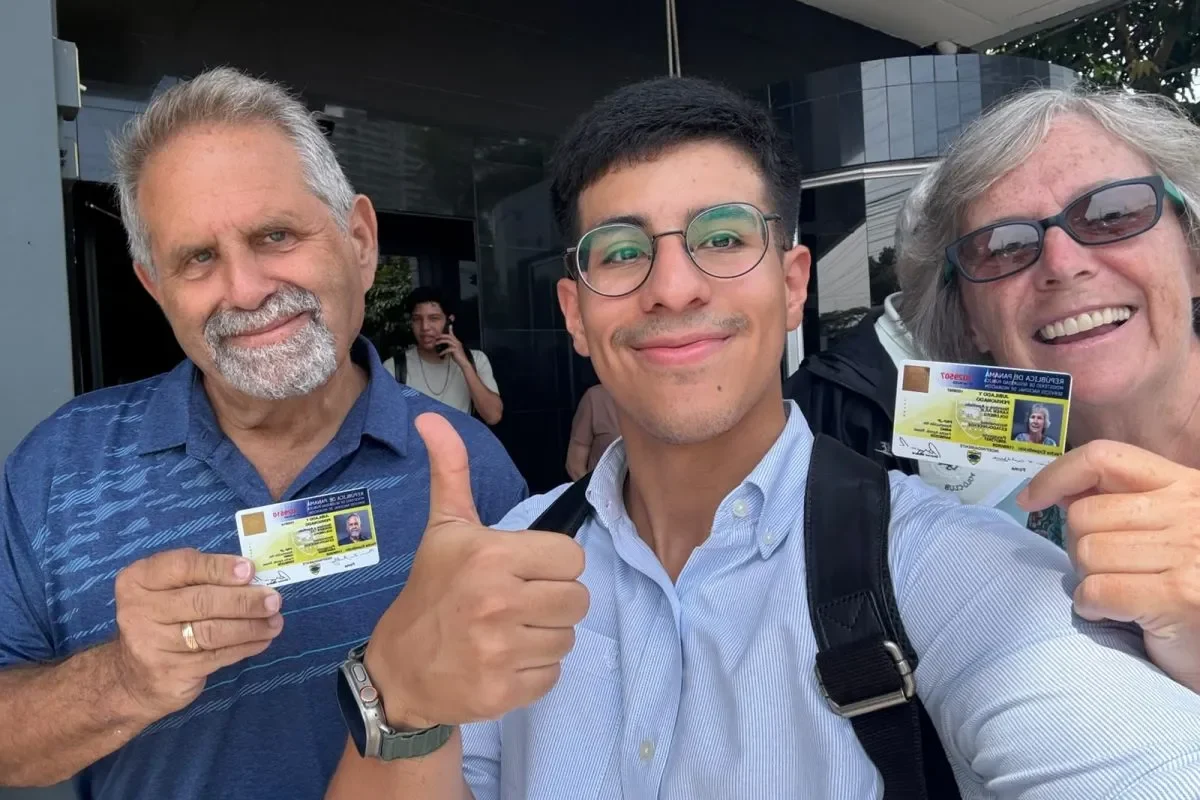
Panama Pensionado Visa eligibility had been part of Robert’s retirement plans for years. The American expat knew his government pension would comfortably exceed the minimum income threshold for the Panama Pensionado Visa, a program widely promoted as a key accessible residency pathways in Latin America. What he didn’t realize was that having earned a pension and actually receiving it are two entirely different things under Panamanian law.
The distinction cost him time and forced a recalculation of his immigration timeline. Robert’s case highlights a widespread misunderstanding about Panama’s flagship retiree residency program, one that online guides often gloss over. The official requirements published by Panama’s Servicio Nacional de Migración are more precise than many third-party descriptions suggest, and the gap between perception and reality can derail an otherwise solid relocation and residency plan.
Panama Pensionado Visa Core Requirement Explained
Article 200 of Panama’s immigration regulations establishes that the program is available to a foreigner receiving a retirement benefit or pension from a foreign government, international organization, or private company. The monthly pension generally cannot be less than B/.1,000, equivalent to US$1,000, and must be granted for life.
The documentation requirement goes further. Immigration authorities require certification of the applicant’s status as a retiree or pensioner demonstrating that the person receives a lifetime pension of at least B/.1,000 per month, or its equivalent in another currency. That word, receives, is where many applicants stumble.
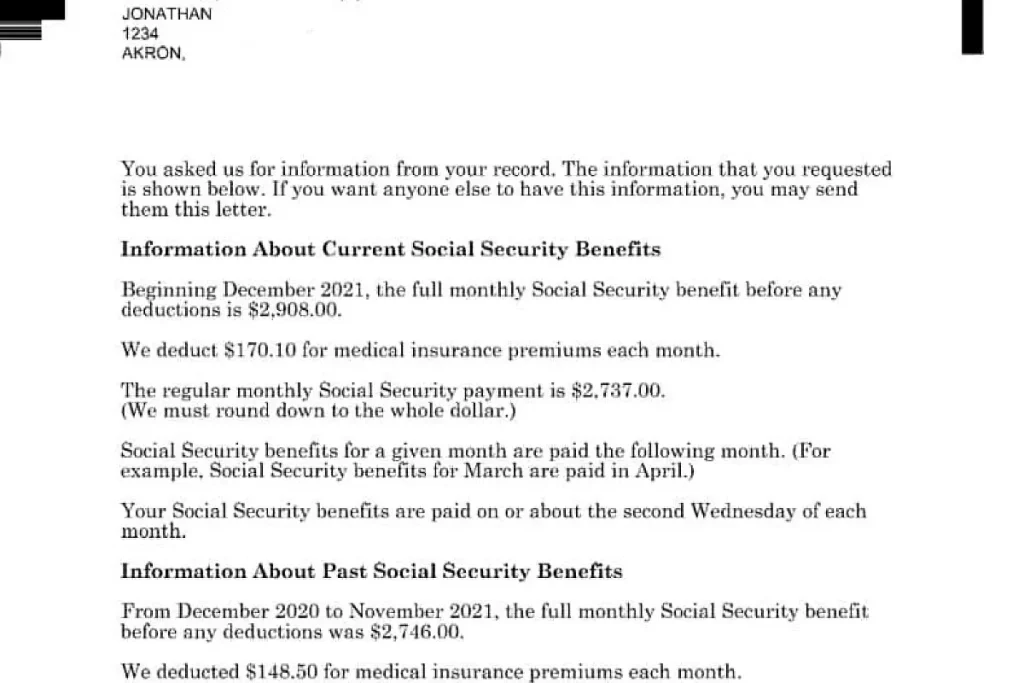
Robert could calculate his future benefit. He could show that the projected amount exceeded Panama’s minimum. But he could not yet produce a document from the pension provider certifying that payments had begun. Eligibility for a future pension is not the same as satisfying Panama’s income requirement today.
Why Being Retired Is Not Enough for Panama Residency
The Pensionado program should not be confused with a general retirement visa. Being retired does not by itself establish eligibility. Having substantial savings does not satisfy the pension requirement. A large 401(k), IRA, or investment portfolio does not automatically convert into a qualifying lifetime pension under Panamanian rules.
Knowing that Social Security or another government pension will activate several years down the road does not mean an applicant qualifies now. The critical issue is whether the applicant has the type of pension contemplated by the law and can provide the required certification showing that the qualifying lifetime pension is actually being received.
For early retirees considering a move to Panama before activating Social Security, this distinction matters enormously. The first question should not simply be how much the pension will be. It should be whether the applicant is currently receiving a qualifying lifetime pension and whether the pension provider can certify it in the form Panama Immigration requires.
Panama Pensionado Visa Document Checklist
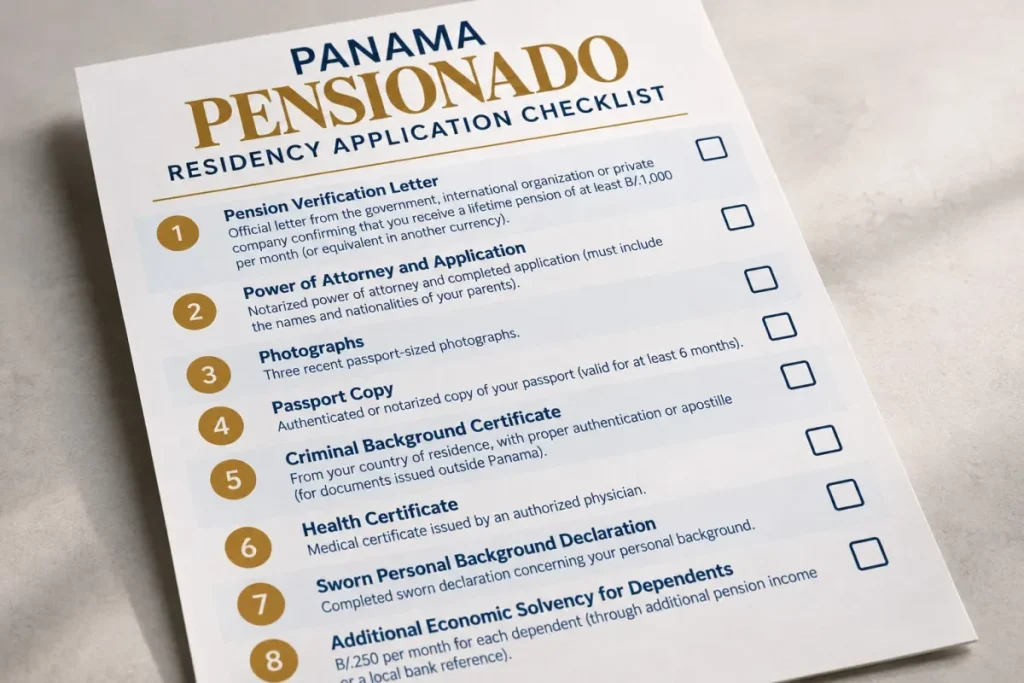
The official requirements published by Panama’s Servicio Nacional de Migración provide a clear framework. Applicants must submit a notarized power of attorney and application, with the power including the names and nationalities of the applicant’s parents. Three photographs are required, along with a properly authenticated or notarized copy of the applicant’s passport.
A criminal background certificate is mandatory, and for documents issued outside Panama, proper authentication or apostille requirements must be addressed before presentation. A health certificate is another required component. Applicants must also complete a sworn declaration concerning their personal background.
At the center of the application sits the pension certification. This document must come from the foreign government, international organization, or private company providing the pension, and it must confirm the applicant’s status as a retiree or pensioner receiving a lifetime benefit of at least B/.1,000 monthly.
What Robert’s Situation Reveals About Residency Planning
Robert wasn’t being turned away from Panama. He simply wasn’t eligible for this particular immigration category yet. The nuance is significant for anyone building an immigration plan around the Pensionado program before their pension payments actually begin.
Panama offers other residency categories that may accommodate different financial profiles. But the Pensionado program, with its specific lifetime pension requirement, demands precision. Applicants who misunderstand the difference between accrued benefits and received benefits risk delays, rejected applications, or the need to pursue alternative pathways.
For those still years away from activating a pension, the practical advice is straightforward. Confirm with the pension provider that they can issue a certification letter stating the monthly amount, the lifetime nature of the benefit, and that payments are currently being received. Without that document, the Pensionado route remains closed, regardless of how secure the future benefit appears on paper.