


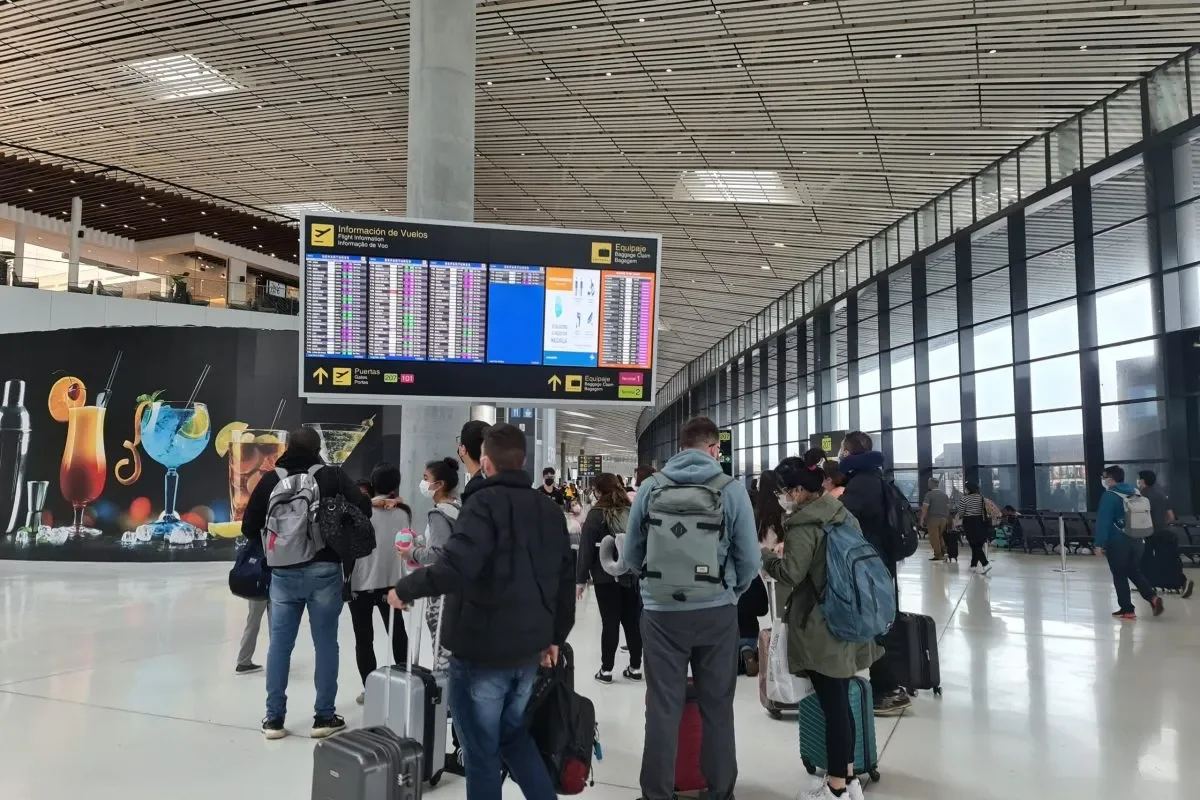
Tocumen International Airport processed 15,855,759 passengers between January and August 2026, a 15 percent jump compared to the same period last year. The figures confirm sustained Panama airport growth as the hub strengthens its position connecting the Americas, Europe, and the Caribbean, according to official traffic data released Monday.
When accounting for infants under two years old, which Tocumen formally added to its statistical model in January 2026, total movement reached 15,953,929 passengers. August alone saw 2,136,052 passengers, averaging approximately 68,905 daily movements, with Sundays, Mondays, and Fridays recording the highest traffic.
Panama Airport Growth Driven by Connection Traffic
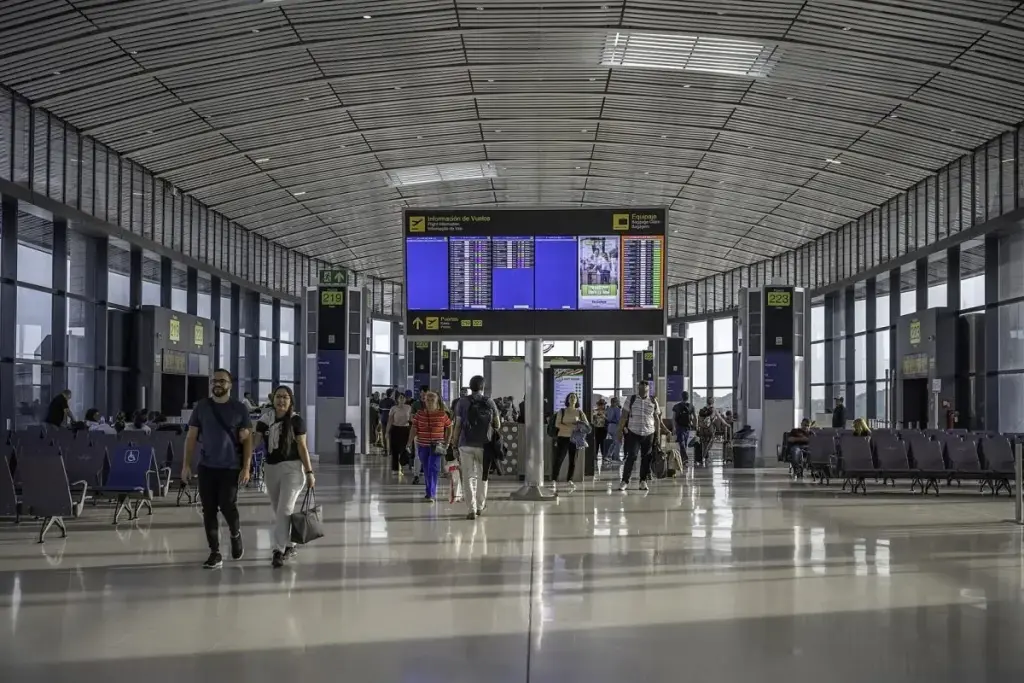
Transfer passengers dominated August activity, representing 74 percent of all movement with 1,587,692 travelers in connection. This proportion underscores Tocumen’s role as a regional bridge linking Central America, South America, North America, and Europe, while also facilitating routes across Latin America and the Caribbean.
Direct arrivals to Panama City accounted for 277,653 passengers during August, while 270,707 travelers departed from the country. These figures include tourists, business travelers, and residents. The airport maintained connectivity to 93 international destinations and one domestic route throughout the month.
Bogotá led all origin and destination markets with 799,639 passengers between January and August, followed by Miami with 632,473, Punta Cana with 583,050, San José with 580,980, and Medellín with 554,599.
Aircraft Operations and Cargo Volume Rise
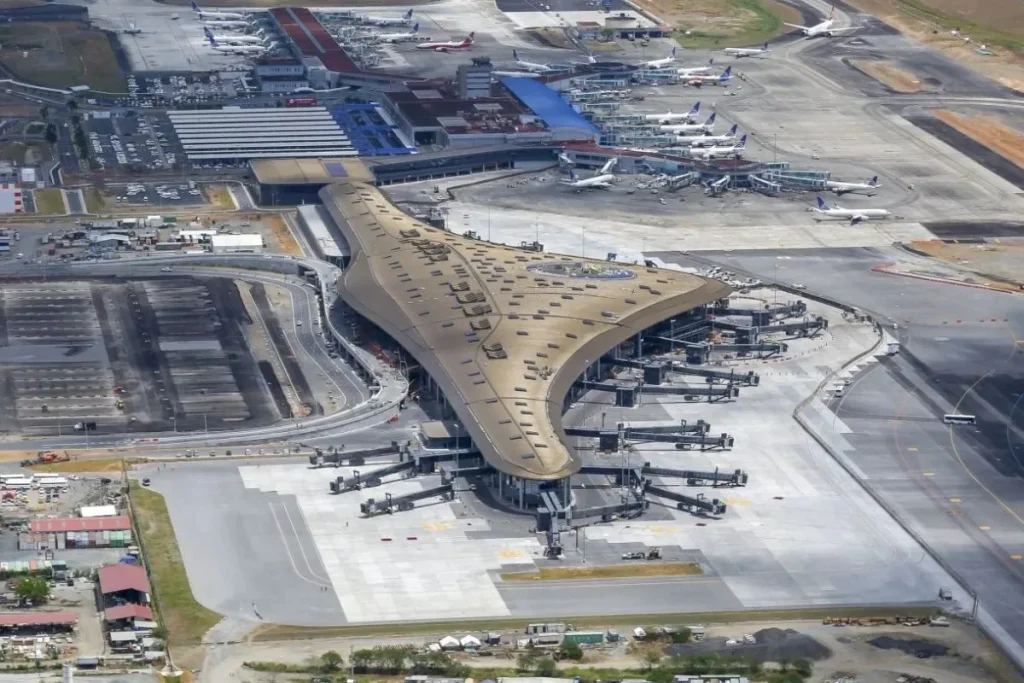
Aircraft movements climbed 11 percent year-over-year, reaching 121,521 operations in the first eight months of 2026. That represents 12,261 additional flights compared to 2025. Commercial flights comprised 90 percent of all operations, cargo flights 6 percent, and general aviation 3 percent. Technical stops, charter flights, military operations, and other activities accounted for the remaining 1 percent.
Fourteen commercial passenger airlines and fourteen cargo carriers operated at Tocumen during August, with a daily average of roughly 508 aircraft movements. Cargo volume also expanded, totaling 171,320 metric tons through August, an 8 percent increase equivalent to 12,087 additional metric tons.
Leadership Signals Regional Competitiveness
José Ruiz Blanco, general manager of Tocumen International Airport, said the eight-month results validate the terminal’s strategic position as Panama’s primary gateway and a major regional connectivity hub.
“The results achieved during the first eight months of 2026 confirm the strategic position of Tocumen International Airport as the main entry and exit point of Panama and as one of the great air connectivity centers of the region” [Translated from Spanish]

Ruiz Blanco added that sustained growth across passengers, operations, and cargo demonstrates the competitiveness of Panama’s airport platform, which drives tourism, energizes the economy, and links the country with the Americas, Europe, and the Caribbean.
“These results also commit us to continue strengthening our capacity, efficiency, and quality of service, with a clear vision to consolidate Tocumen as an increasingly competitive and modern airport prepared to respond to the growing needs of passengers, airlines, and national development” [Translated from Spanish]
The parallel increases in passenger traffic, flight operations, and cargo movement point to broad-based expansion rather than isolated gains. Tocumen’s ability to sustain double-digit growth across multiple metrics signals resilience in Panama’s aviation sector and reinforces the country’s position within global air transport networks.