


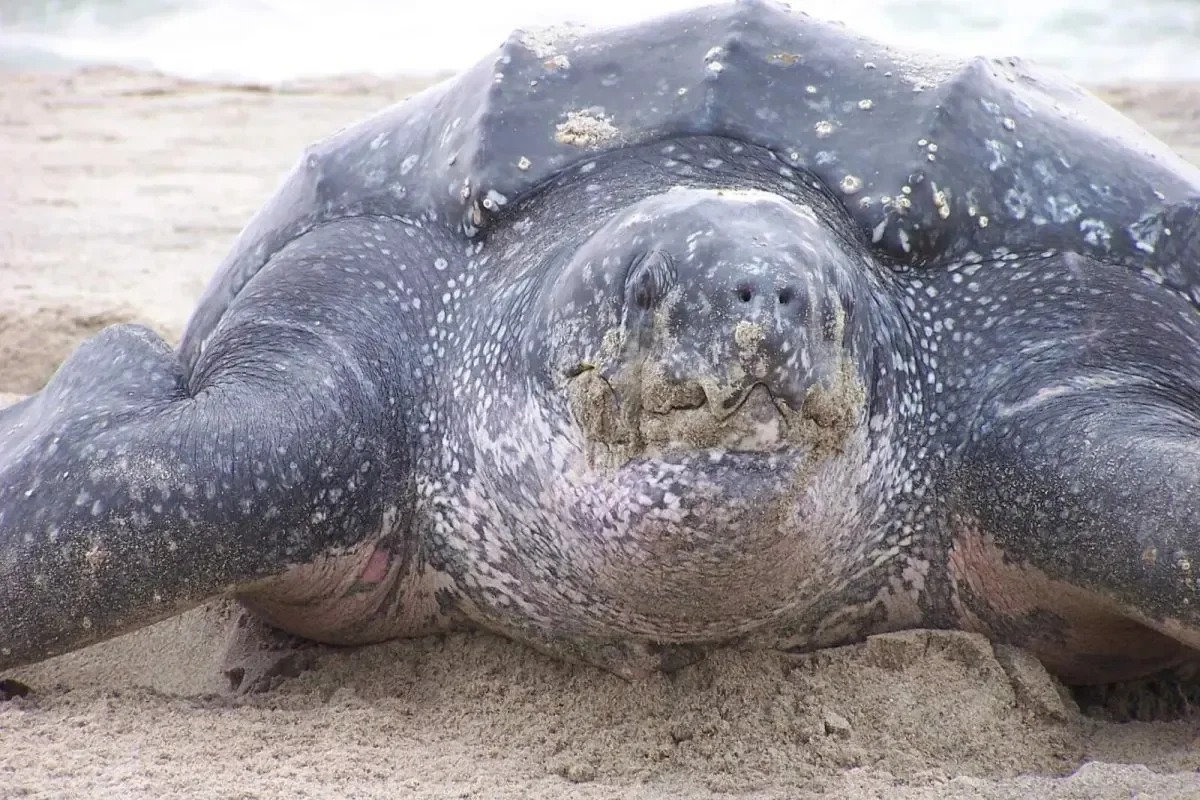
Three confirmed nests belonging to the critically endangered leatherback turtle have been discovered on a remote beach in Panama’s Darién province, ending nearly ten years of silence for the species along the country’s Pacific coastline. The discovery at El Fondiaderito beach, near the small community of Jaqué, delivered 178 protected eggs to a local incubation hatchery and rekindled hope among marine biologists who had grown increasingly concerned about the species’ disappearance from these waters.
A Decade of Absence Ends on a Remote Darién Beach
For almost ten years, researchers and conservationists had failed to document a single leatherback turtle nest on Panama’s Pacific shores. The species continues to nest with some regularity along the country’s Caribbean coast, but its absence from the Pacific had become a troubling indicator of population collapse across the Eastern Tropical Pacific corridor. The return of nesting activity at El Fondiaderito changes that narrative, transforming this stretch of coastline into an area of enormous scientific value.
The timing of the discovery matters greatly. Leatherback turtle populations throughout the Eastern Pacific have declined by more than 95 percent since the 1980s, according to scientific data from the region. Once-massive nesting beaches in Mexico and Costa Rica, which historically hosted thousands of nests per season, have seen numbers plummet to critically low levels. Against that backdrop, every confirmed nest represents a measurable victory for conservation biology and a signal that recovery remains possible.
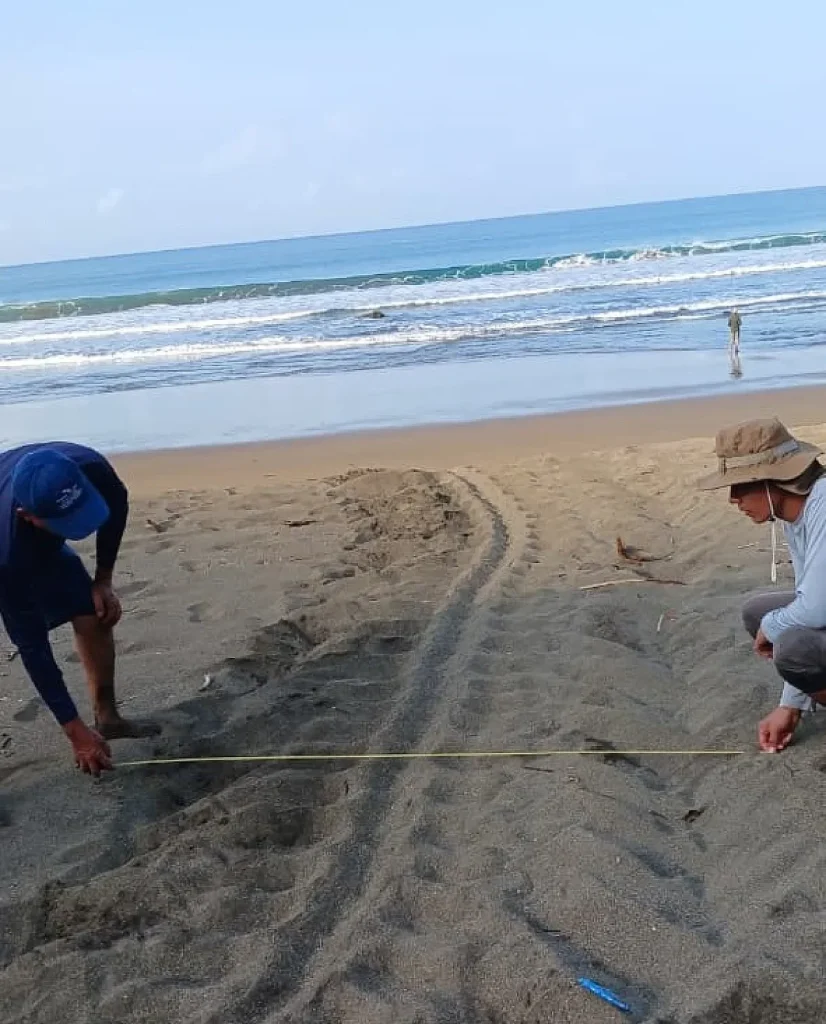
Marino Ábrego, deputy director of the Coasts and Seas Directorate at Panama’s Environment Ministry, underscored the gravity of the situation.
“The estimated population of nesting female leatherback turtles in the entire Eastern Tropical Pacific stands at fewer than 500 adult individuals” [Translated from Spanish]
Protecting 178 Eggs From Natural and Human Threats
The three nesting events produced a total of 178 eggs, which were carefully relocated to an incubation hatchery as a preventive measure against the numerous threats that affect open beach nests. Predation by wildlife and unsupervised dogs, coastal erosion, nest poaching, and light pollution all pose significant risks to eggs left unprotected in the sand. The relocation effort resulted from close collaboration between the local community, the Protective Organization for Marine Turtles and Biodiversity of Jaqué, and the technical conservation team from the Environment Ministry’s Darién regional office.
Hatchlings are expected to emerge between September and October, offering researchers a critical window to study early survival rates in this recovering nesting area. The leatherback turtle faces a gauntlet of challenges from the moment eggs are laid until hatchlings reach the open ocean. Incidental fishing bycatch, marine plastic pollution, and unplanned coastal development compound the difficulties already imposed by climate change and beach erosion. Each of these pressures reduces the odds that juvenile turtles will survive to adulthood and eventually return to nest themselves.

Regional Collapse and the Push for Recovery
Panama’s most recent confirmed leatherback turtle nests in the Pacific before this discovery were remarkably sparse. In 2014, researchers documented two nests at Playa Horcones in Los Santos province. At Playa Mata Oscura in Veraguas province, the picture was equally grim: one nest in 2014 and another in 2017. Since then, nothing until the three nests found at El Fondiaderito this season.
The broader regional picture is equally stark. Nesting beaches from Mexico to Costa Rica that once registered thousands of leatherback turtle nests annually now record numbers so low that each confirmed nest carries outsized scientific importance. Ábrego explained that Panama is evaluating multiple strategies to pull the species back from the brink, including implementation of measures established under the Action Plan of the Eastern Pacific Leatherback Network, known as Red Laúd del OPO. These actions prioritize reducing incidental mortality from fishing operations and enforcing strict protection of nests and hatchlings.
Satellite Tracking and Rights of Nature Protections
Scientific initiatives in Panama are generating crucial data about where leatherback turtles travel and feed. The Leatherback Project Foundation leads a monitoring program in the Special Marine-Coastal Management Zone of the Las Perlas Archipelago, combining community participation with satellite transmitters and marine expeditions to identify threats, foraging sites, and migratory routes used by the species in Panamanian waters. The data collected through this work has already produced tangible policy outcomes, including the creation of the Isla Saboga Wildlife Refuge and a historic law granting Rights of Nature to sea turtles in Panama.
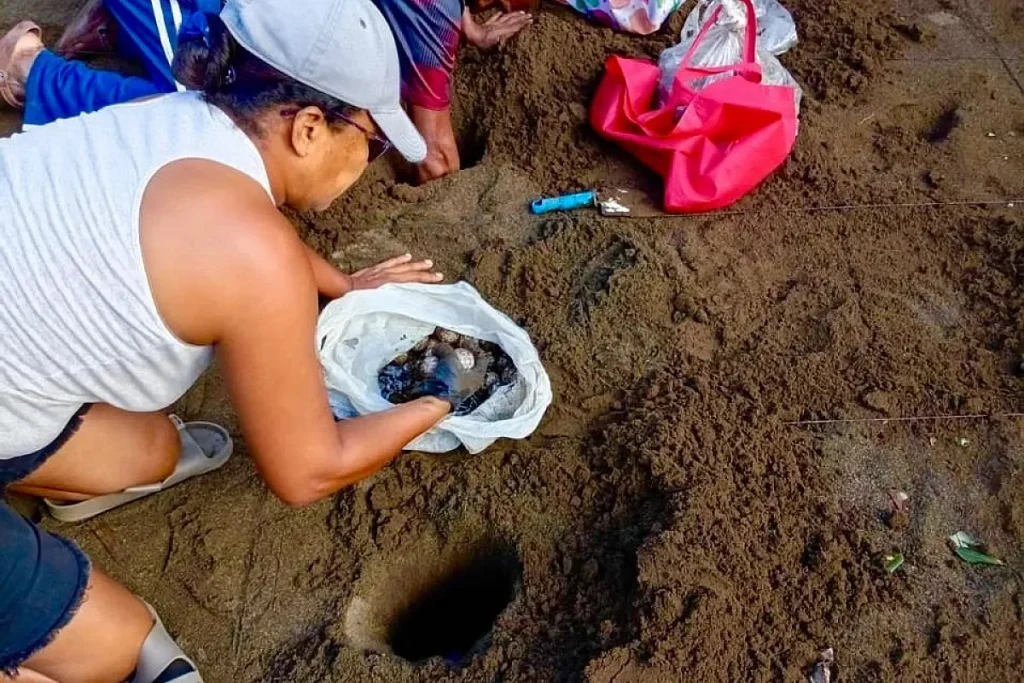
All five sea turtle species present in Panamanian waters, including the leatherback turtle, are listed in Appendix I of the Convention on International Trade in Endangered Species of Wild Fauna and Flora, known as CITES. They also appear on the Red List of the International Union for Conservation of Nature. These designations reflect the precarious state of sea turtle populations globally and reinforce the legal obligations Panama carries to protect nesting beaches, migratory corridors, and marine habitats.
The return of nesting activity to Darién’s Pacific coastline arrives at a pivotal moment. It validates years of community-led conservation work in Jaqué and demonstrates that persistent protection efforts can yield measurable results even when populations have collapsed. The 178 eggs now incubating under watchful care represent more than a single nesting season; they embody a fragile but genuine opportunity for recovery in one of the world’s most threatened sea turtle populations.
In summary, the discovery at El Fondiaderito repositions Panama’s Pacific beaches as a site of active conservation importance rather than a cautionary tale of ecological loss. As researchers await the hatchling emergence in September and October, the collaborative framework between communities, scientists, and government agencies offers a model for how targeted protection can support a critically endangered species. The leatherback turtle still faces an uphill battle across its entire range, but for now, a small stretch of Panamanian coastline has become a place where hope nests again.