



Panama City, Panama , A teenager caught selling narcotics on a street corner will not face adult criminal prosecution under Panamanian law. Instead, that minor falls under Law 40 of 1999, a special juvenile justice framework that prioritizes rehabilitation over punishment, and criminal organizations have learned to weaponize that distinction. The law’s protective design has become a tactical vulnerability, allowing gangs to deploy adolescents as frontline operatives in the juvenile drug trafficking economy while shielding them from the harshest consequences of the adult penal code.
The legal asymmetry is stark. An adult who recruits a minor for drug sales faces prosecution under the regular Criminal Code. The minor, But, enters a separate system built around education and social reintegration. Law enforcement sources say gangs deliberately exploit this two-track system, using teenagers as disposable shields because the legal risk to the minor is dramatically lower than the risk to the adult recruiter.
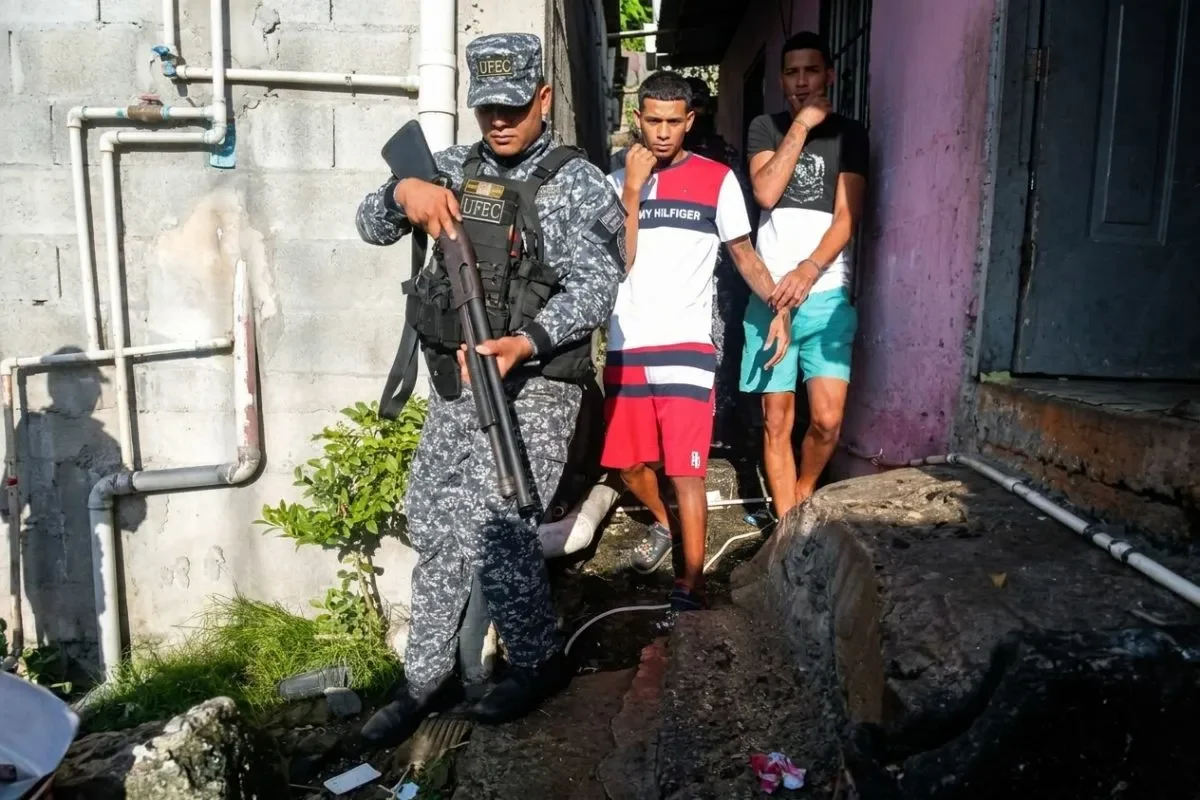
How Law 40 Defines Criminal Responsibility for Minors
Under the statute, only adolescents between fourteen and eighteen years old at the time of the offense can be held criminally responsible. Anyone younger than fourteen falls outside the reach of criminal prosecution entirely. Those children receive protection, not punishment, regardless of the act committed.
That threshold creates an immediate operational advantage for trafficking networks. The child standing outside a school, carrying a backpack, or collecting money often has not yet reached the age of fourteen. That child cannot be processed. The law offers no mechanism to hold that individual accountable in a criminal proceeding, a fact gang recruiters understand and exploit with precision.
For adolescents who do meet the age requirement, the system still diverges sharply from adult justice. The sanctions catalog ranges from verbal admonishment and mandatory participation in assistance programs to community service and damage repair. Judges can also impose orientation and supervision orders. Incarceration remains a last resort, reserved for specific serious offenses including intentional homicide, rape, kidnapping, robbery, drug trafficking, and terrorism. Even then, the maximum confinement period is five years.

Confinement as the Exception, Not the Rule
Law 40 explicitly frames deprivation of liberty as an exceptional sanction. A juvenile judge may impose detention only when no alternative measure is viable, and the law requires the judge to justify that decision in writing within the sentence. The default posture is freedom with supervision, not incarceration.
That standard reflects the law’s stated purpose. The text declares that sanctions exist solely for “the resocialization of offenders, so as to ensure their reintegration into the family and society, through the learning of a constructive attitude in relation to their environment” [Translated from Spanish]. The framework rejects retribution as a legitimate goal. It seeks transformation, not vengeance.
The Strategic Exploitation of Juvenile Drug Trafficking Protections
The gap between adult and juvenile consequences has reshaped how criminal groups operate in Panama. An adult drug trafficker faces years in prison under the Criminal Code. A fourteen-year-old performing the same act faces a judge who must first exhaust every non-custodial option before considering confinement. A thirteen-year-old faces no criminal process at all.
Gang leaders have built recruitment models around this reality. Adolescents handle street-level sales, transport product, and collect payments precisely because the legal system treats them differently. If arrested, the minor returns to the street quickly, often resuming the same activity. The adult recruiter, meanwhile, remains insulated from direct exposure at the point of sale.
The law’s defenders argue that rehabilitation produces better long-term outcomes than incarceration for young offenders. Critics contend that without meaningful deterrents for juvenile drug trafficking, the cycle of exploitation continues unabated. The tension between protection and accountability remains unresolved, and the gangs operating in Panama’s neighborhoods have built their business model directly on top of that unresolved question.