



Panama launched a targeted push this week to secure Texas foreign investment across logistics, port infrastructure, aviation, energy, and advanced manufacturing sectors. The pitch came during the Panama-Texas Week mission, organized jointly by the United States-Panama Partnership (USAPAN), the U.S.-Panama Business Council (USPA), Panama’s Ministry of Commerce and Industries (MICI), and ProPanama.
Walter Cohen, representing MICI, led the presentation before Texas business leaders and government officials. He emphasized that Panama’s geographic position offers a structural advantage for companies seeking to connect markets and manage regional operations from a single hub. The country’s canal, dual-ocean ports, and established logistics network formed the core of the value proposition.
Texas Foreign Investment Targets Strategic Infrastructure
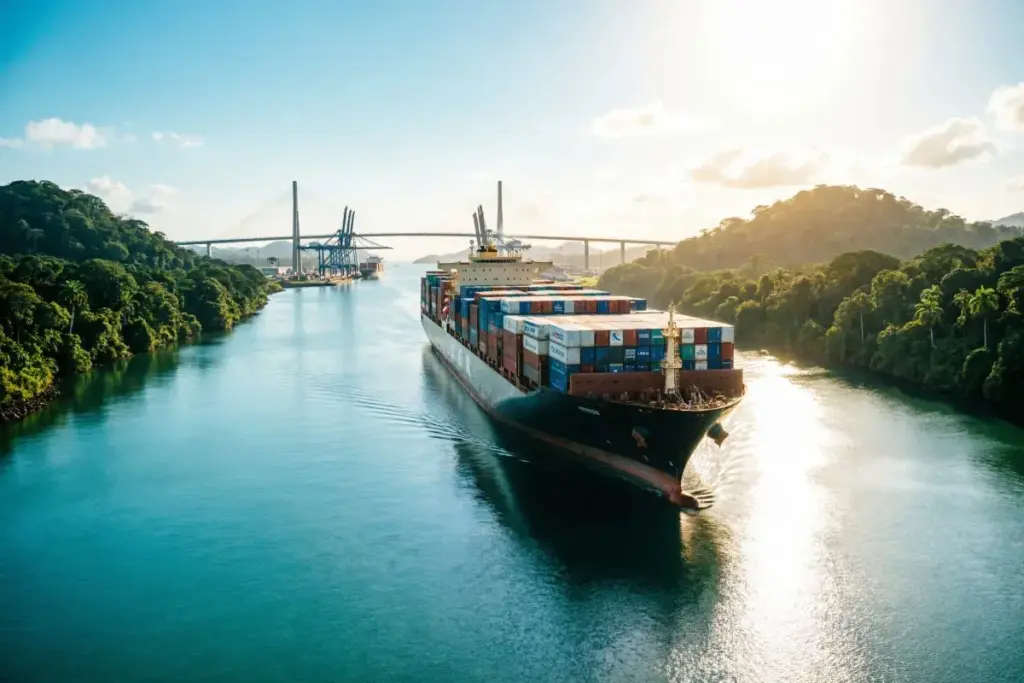
Cohen highlighted major infrastructure projects now underway, including the fourth bridge over the Panama Canal and Metro Line 3. These projects, he said, will expand national capacity while creating openings for engineering firms, specialized equipment suppliers, and technology providers. The presentation also pointed to investment zones surrounding Tocumen International Airport as additional opportunities.
The energy sector featured prominently in the discussions. Panama identified trade potential between the Gulf of Mexico and Pacific markets, particularly in energy infrastructure and transportation. Houston’s historical relationship with the Panama Canal and Panamanian ports served as a foundation for expanding commercial ties, Cohen noted.

Logistics, Aviation, and Semiconductor Opportunities
Maritime activities, port terminal development, dredging, cargo logistics, and freight transport were listed among the sectors with highest growth potential. Aviation technology and technical support services also drew attention, reflecting Panama’s role as a regional air transit hub through Tocumen.
Beyond physical infrastructure, Panama positioned itself as a base for multinational services, digital operations, semiconductor activity, and artificial intelligence development. Special economic zones like Panamá Pacífico and the Colón Free Zone were presented as ready-made platforms for companies entering the Latin American market.

Regional Competition for Investment Intensifies
The Texas mission reflects broader competition among Latin American nations for U.S. capital. Panama’s pitch leans heavily on its canal infrastructure and dollarized economy, factors that differentiate it from regional rivals. The country has pursued similar engagements with Qatar and other international partners in recent months, signaling an aggressive investment attraction strategy.
Cohen’s presentation avoided specific investment targets or timelines. But the alignment of projects like the fourth bridge and Metro Line 3 with Texas-based engineering and logistics expertise suggests a deliberate matching of Panamanian needs with Texan industrial strengths. Whether the mission translates into signed agreements remains to be seen.