


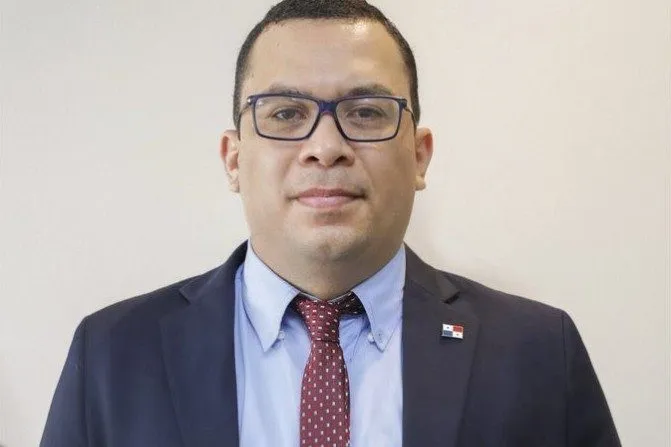
Ariel Rodriguez, a senior leader of Panama’s powerful construction union, remains in prison as prosecutors investigate alleged financial crimes linked to a failed tourism project. The case, known as “Red Frog,” has escalated from a local labor dispute into a sprawling legal proceeding that has ensnared multiple union officials and drawn international attention. Rodriguez is the only union leader currently behind bars, detained at La Nueva Joya prison since May 2025.
The investigation centers on the alleged money laundering of assets intended to compensate workers from the Red Frog Beach Club project in Bocas del Toro. The Public Ministry argues there is sufficient evidence to keep the probe active and maintain preventive detention for Rodriguez, who oversaw union administration for the Chiriqui and Bocas del Toro regions.
Union lawyer Antonio Vargas contends the charges are unfounded. He told local media the defense is preparing evidence to demonstrate the legality of the funds in question. “The defense maintains that the existence of a crime has not been proven and that the money in question has documentary support,” Vargas stated. The legal team is assembling its case to challenge the prosecution’s claims at trial.
Rodriguez’s imprisonment represents a critical juncture in a case that has systematically targeted the leadership of the National Union of Workers in the Construction Industry and Similar Activities (Suntracs). More than 120 union members faced judicial proceedings in 2025 alone, according to union statements. This legal pressure has significantly impacted the organizational structure of a union that historically played a dominant role in national labor negotiations.
From Worker Compensation to Criminal Probe
The Red Frog case originated from a 2022 complaint filed by former employees of the Red Frog Beach Club development. Project promoters Pillar Construction, S.A. and Ocean Group International Inc. had compensated those workers not with cash, but with a villa and thirteen land plots within the development. All properties were registered under the Suntracs name.
Problems arose when the workers tried to claim their share of the settlement. The complaint alleges the union then used those very properties as collateral for a $3.1 million loan from the Suntracs Multi-Services Cooperative on June 6, 2022. That action effectively placed the assets beyond the reach of the original claimants. The cooperative itself was audited and shut down last year after authorities detected alleged violations of Law 23 of 2015, which governs capital laundering prevention.
Prosecutors are now examining the entire financial chain. A case that began with a simple labor disagreement on a remote island has transformed into a complex forensic accounting exercise. Investigators are tracing the movement of property and funds between the development companies, the union, and its affiliated cooperative.
“These investigations respond to strictly judicial actions,” a government spokesperson said regarding the Mulino administration’s position. [Translated from Spanish]
The Public Ministry has repeatedly stated the case is confined to potential financial crimes, not political targeting. This official stance has done little to quell accusations from union leaders who claim President Jose Raul Mulino is engaged in political persecution aimed at reducing them to “minimal expression.” The ongoing proceedings continue to unfold across multiple courtrooms.
An International Dimension Emerges
The legal net has stretched far beyond Panama’s borders, introducing a complex geopolitical element. Former union secretary general Saul Mendez, a figurehead for decades, is now a fugitive with an active Interpol Red Notice issued by Panamanian authorities. After briefly seeking asylum in Bolivia in mid-2025, he left the country and his current whereabouts are unknown, though some reports suggest he may be in Venezuela.
Mendez has not remained silent. He recently reappeared on the union’s social media channels and granted an interview to former Ecuadorian President Rafael Correa, which was broadcast. His public defiance contrasts sharply with the situation of another wanted leader, Erasmo Cerrud. The union’s defense secretary has sought refuge inside the Nicaraguan Embassy in Panama City, awaiting a safe-conduct pass from the Mulino government to travel to Managua.
Panamanian police had previously offered a $10,000 reward for information leading to Cerrud’s capture, accusing him of fraud, money laundering, and illicit association. His asylum claim introduces a diplomatic hurdle for prosecutors. These international movements could eventually trigger formal judicial cooperation mechanisms if authorities can pinpoint a location for extradition proceedings, particularly for Mendez.
Other senior figures face restrictive measures short of imprisonment. Genaro Lopez must report periodically to judicial authorities. Jaime Caballero is under house arrest at his home in Boquete. The varying levels of restriction reflect the different evidence and risk assessments prosecutors have presented to judges in a series of guarantee hearings held over recent months.
Legal and Organizational Reckoning
The cumulative effect of these cases has forced a major reckoning for Suntracs. The union, once considered the most powerful in Panama, is now navigating its most severe institutional crisis. Its ability to mobilize and negotiate has been visibly hampered by the legal preoccupations of its leadership. The ongoing investigations continue in distinct procedural stages, with precautionary measures remaining active against several officials.
The Public Ministry faces its own critical deadlines. In the coming months, prosecutors must decide whether to file formal accusations in court or request the dismissal of some lines of inquiry. Defense teams across the multiple cases are preparing their counterarguments, promising to deliver exonerating evidence. The outcome will determine not just the fate of individuals like Ariel Rodriguez, but potentially reshape the landscape of organized labor in the country.
For observers like analyst Eliana Morales, the case represents a pivotal test for Panama’s judicial and political systems. “This isn’t just a labor dispute anymore,” she noted. “It’s a high-stakes examination of financial flows, union governance, and the line between judicial process and political power.” The resolution will send a clear signal about the future of trade union activity and accountability in Panama.
With one leader in prison, another in an embassy, and a third somewhere abroad, the Suntracs union confronts an unprecedented challenge. The final decisions from Panama’s courts will write the next chapter for an organization that has long been a central actor in the nation’s economic and social story.