


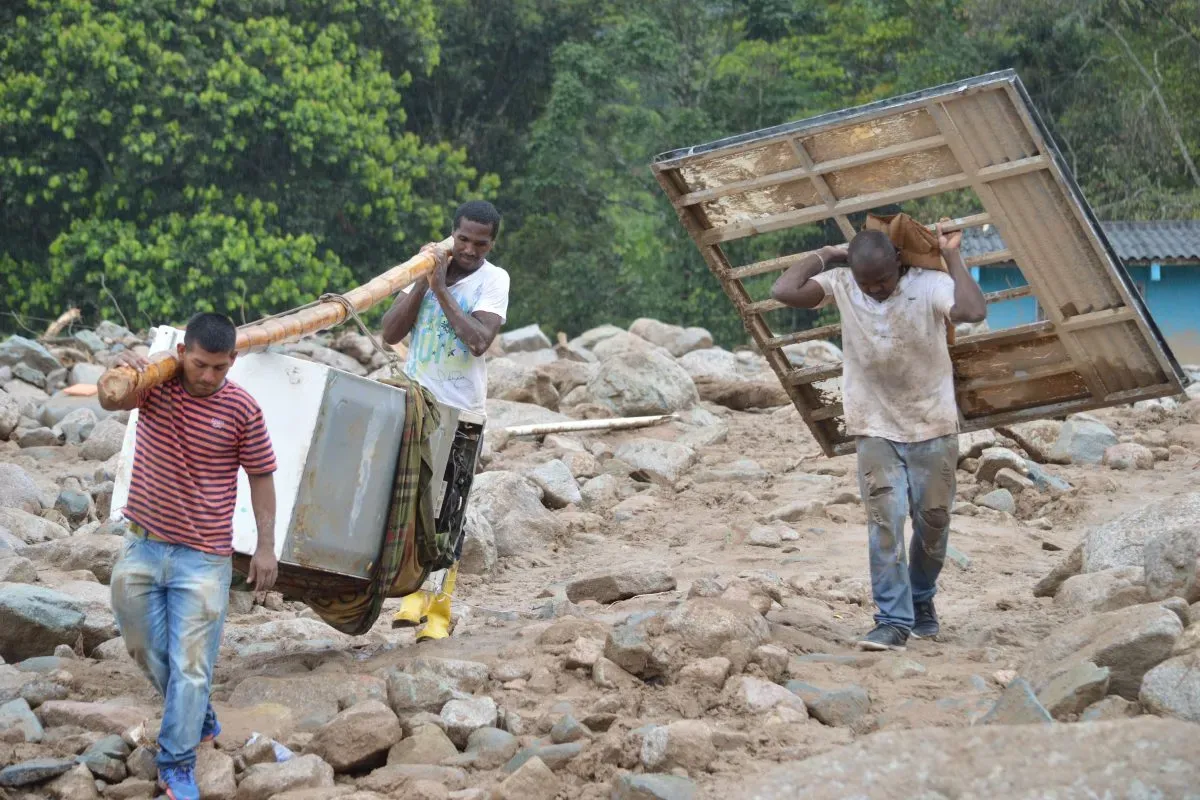
The ground gave way without warning in the early hours of Monday morning. A landslide struck Colón province, forcing families to abandon their homes and prompting the National Civil Protection System to issue urgent warnings about what comes next. No one died. No one was injured. But the message from officials was clear: the worst may still be ahead.
Malitzie Rivera, deputy director of the National System of Civil Protection of Panama, confirmed that the slide occurred in a zone already saturated by days of relentless rain.
“Today we saw in Colón province how a landslide happened in the early morning hours. It did not claim lives, no injuries. However, we must relocate these residents because they are in a risk zone,” she said. [Translated from Spanish]
The timing could not be worse. Panama is now bracing for the arrival of tropical wave number 24, which crossed into the country from Colombia. The Panama Institute of Meteorology and Hydrology confirmed the system will dump additional moisture into an already saturated landscape. Rivera warned that the danger does not come from any single downpour, but from the relentless nature of the precipitation.
“It is not the amount that falls, but how constant this rain is that keeps saturating the soil,” she explained. [Translated from Spanish]
Erosion Accelerates Along Coastal Communities
In the community of Gobea, Colón, the crisis takes a different form. Heavy rainfall combined with strong surf is accelerating coastal erosion at an alarming rate. Rivera described a dangerous feedback loop where swollen rivers cannot drain into the sea because the ocean itself is pushing back.
“We will see that this increase and these conditions of vulnerability will lead to worse conditions. We will have very swollen rivers and a sea that will not allow the rivers to drain, so the current conditions could worsen,” she said. [Translated from Spanish]
The deputy director warned that the ocean may claim more land in the coming days, threatening additional homes along the coastline. This phenomenon is not isolated to Colón. The Economic Commission for Latin America and the Caribbean disaster risk frameworks have long identified coastal erosion as a growing threat for Caribbean-facing communities, and Panama’s current weather pattern is accelerating that process.
High-Risk Zones Under Active Surveillance
The National Civil Protection System has placed multiple regions under heightened watch. Bocas del Toro, the Ngäbe Buglé comarca, Veraguas province, and Colón are all considered high-risk areas. Heavy downpours have already hit Panama Metro, Panama Oeste, Darién, and the Guna Yala comarca, causing flooded streets and emergency responses for overflowing rivers and streams.
Rivera stressed that the soil is now so saturated that even moderate rainfall could trigger new landslides and river overflows. The situation is precarious across the board.
“Tropical wave 24 is entering the country. This means we will have a greater contribution of rain, in addition to what we already have. The soils are saturated and that is very important to take into consideration,” she cautioned. [Translated from Spanish]
Emergency Preparedness Extended Through Mid-July
Authorities have extended weather vigilance conditions for rain and rough seas at least until July 15. They have not ruled out extending that period further depending on how the atmospheric conditions evolve. The official guidance is straightforward: stay informed through official channels, avoid visiting rivers and beaches while alerts are active, and prepare a family emergency plan in advance, especially for those living near streams, rivers, or landslide-prone areas.
Panama’s geography makes it particularly vulnerable to these compound disasters. Steep terrain, coastal development, and seasonal weather patterns create a perfect storm of risk. The current crisis in Colón serves as a stark reminder that preparation is not optional. Families who waited until the ground moved are now facing relocation. Those who plan ahead may have time to leave before the next slide comes.
The rain will keep falling. The ground will keep shifting. And Panama’s emergency services will keep watching, waiting, and warning. The question is whether the message reaches everyone before the next disaster strikes.