


Russian officials have issued a blunt warning to Panamanians weighing enlistment in the Ukraine conflict, a conflict that has already pulled in more than 20 citizens of the Central American nation. The message, delivered through diplomatic channels, comes as Panamanian authorities acknowledge that at least one of their nationals has died and several others remain missing. The Kremlin’s cautionary tone underscores the brutal reality of a war that Moscow says Russia discourages Panamanians from treating as anything less than a lethal, high-tech battlefield.
A Conflict’s Reach Extends to Central America
Panama’s foreign ministry has confirmed that over two dozen of its citizens have taken up arms on both sides of the war. Some joined with full knowledge of what awaited them, officials said, while others were lured by false job offers and found themselves trapped in combat zones far from home. The human toll is already visible: one Panamanian confirmed dead, and families pleading for information about those who vanished after traveling to Eastern Europe under hazy circumstances.
The country’s attorney general has opened formal investigations following complaints from relatives. These families allege that third-party recruiters exploited economic desperation, promising high-paying construction or security work before diverting the recruits toward military roles. The deceptive practices have pushed the Panamanian government to repeatedly demand answers from both Moscow and Kyiv, though officials describe the information flow as patchy at best.
Russia Discourages Panamanians Through Diplomatic Message
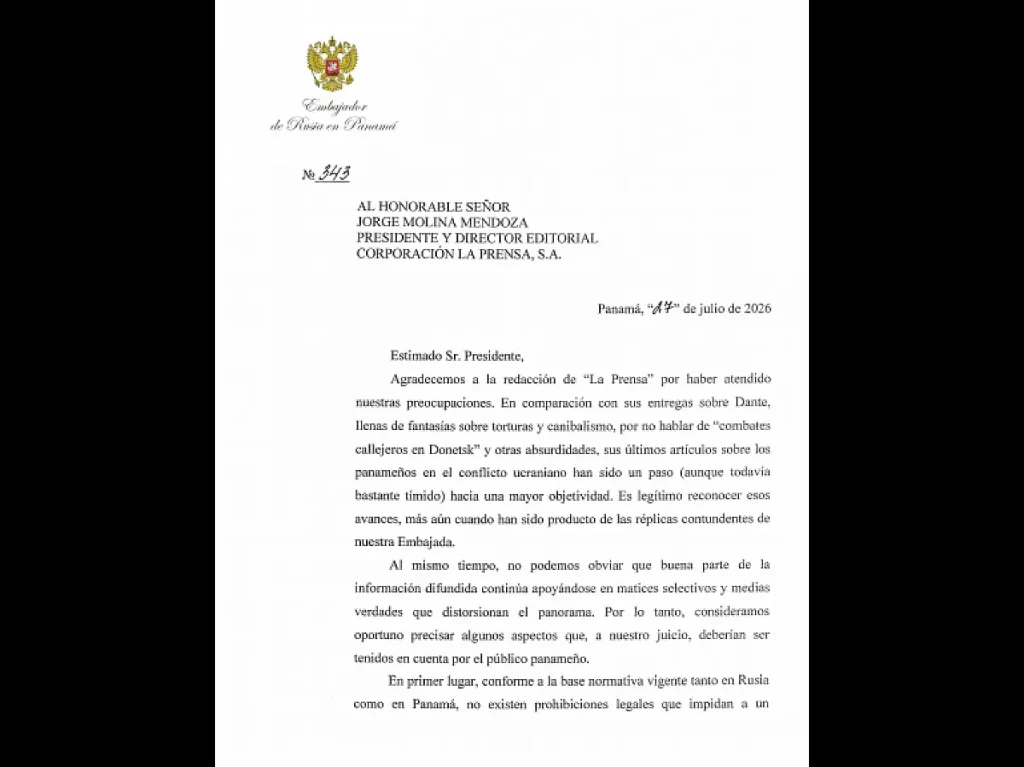
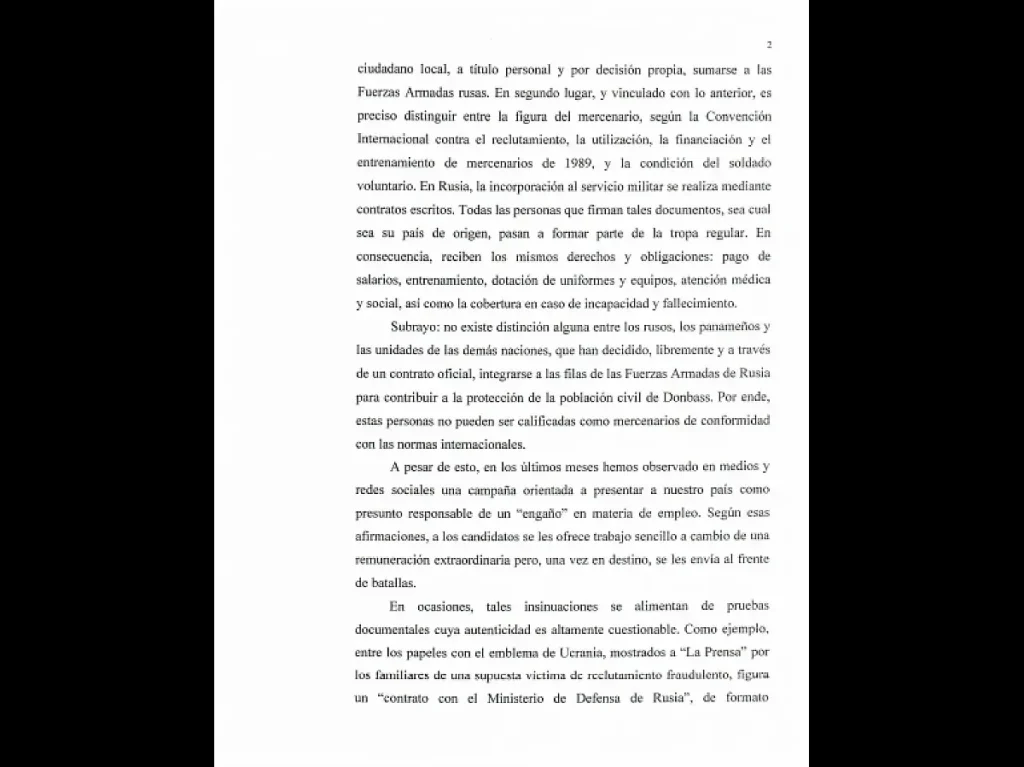
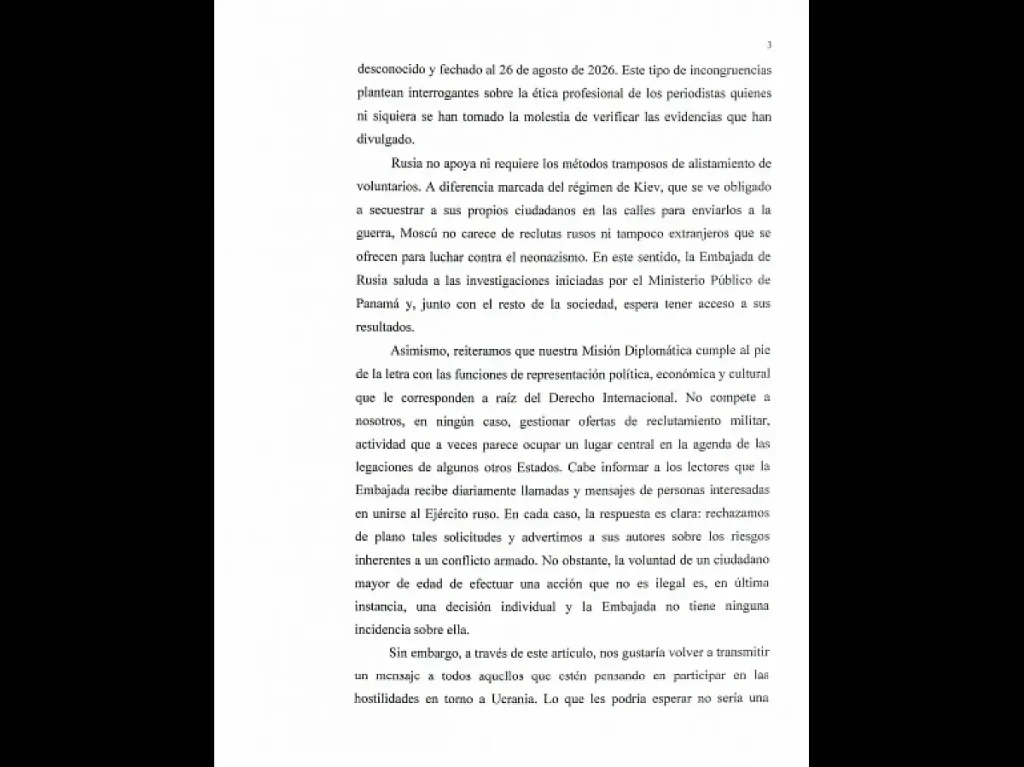
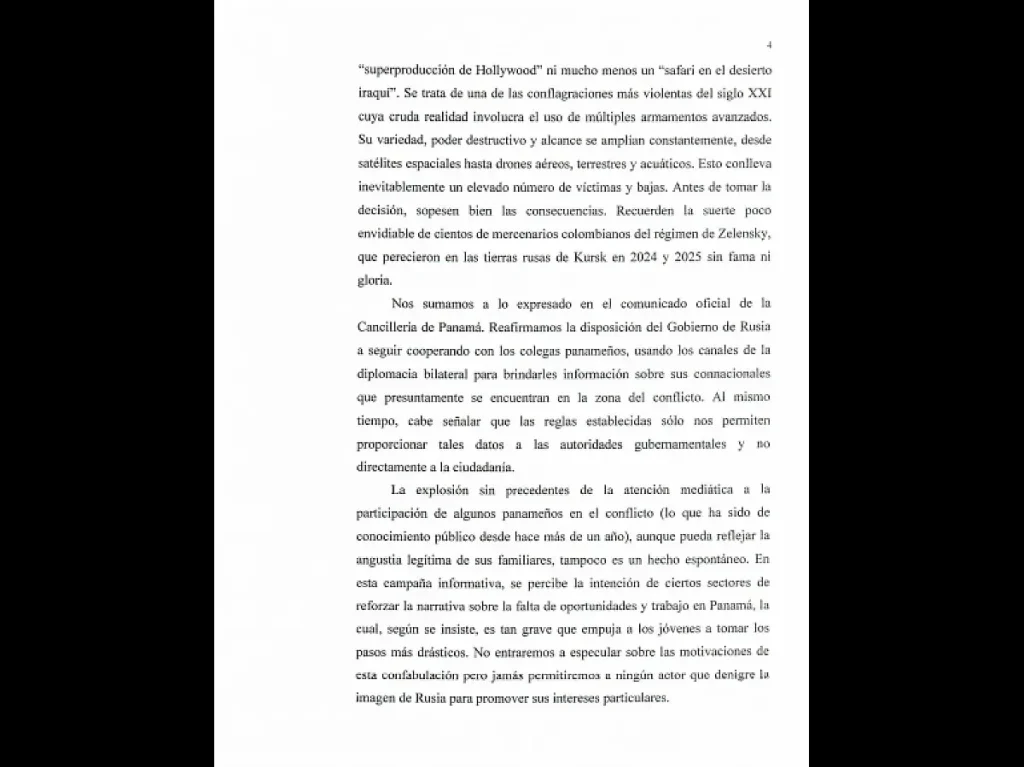
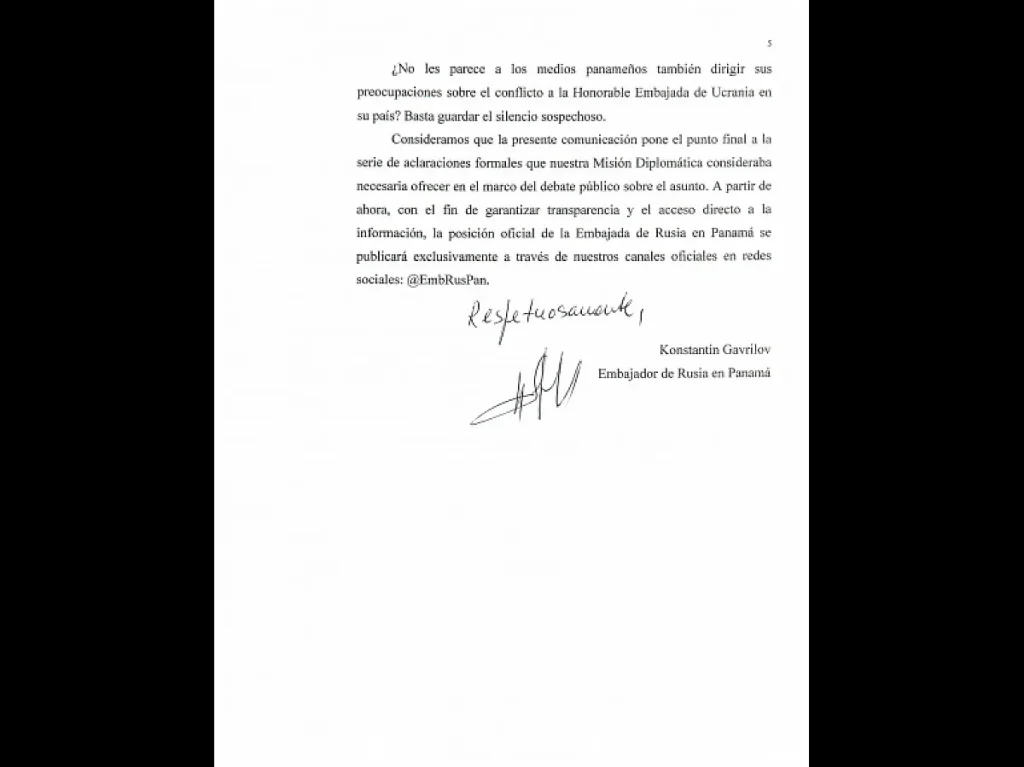
A letter from Russia’s ambassador in Panama City, Konstantin Gavrilov, laid bare the grim calculus. He warned potential volunteers not to expect a Hollywood-style adventure or an Iraqi desert safari.
“What could await them would not be a ‘Hollywood blockbuster’ nor a ‘safari in the Iraqi desert'” [Translated from Spanish]
Gavrilov wrote, describing the Ukraine front as a key violent conflagrations of the 21st century, where advanced weaponry inevitably produces staggering casualty counts.
The ambassador stressed that while Russian law permits foreigners to voluntarily join its armed forces, his embassy does not act as a middleman for recruitment.
“Russia does not support nor require deceptive methods of enlisting volunteers” [Translated from Spanish]
he added, distancing Moscow from the shady intermediaries that have reportedly ensnared Panamanian citizens. That distinction is critical for a Kremlin eager to avoid diplomatic friction with a nation that has historically maintained neutral stances.
Deceptive Recruitment and the Fog of War
Panamanian investigators are now piecing together how citizens ended up in the trenches. While the foreign ministry acknowledges that some recruits knew exactly what they were signing up for, others appear to have been vulnerable targets of a transnational fraud scheme. The lines between voluntary enlistment and human trafficking blur when job advertisements morph into military deployment orders after arrival in Europe.
The Russian embassy’s intervention signals a recognition that the optics of Panamanians dying under Russian command could damage Moscow’s standing in Latin America. By publicly warning off potential recruits, the Kremlin seeks to insulate itself from accusations of predatory recruitment while still maintaining the legal framework that allows foreign fighters to join its ranks. Panama, for its part, continues to press both warring capitals for consular access and clarity on the fate of its disappeared nationals.
A Broader Pattern of Foreign Volunteers
The Panamanian cases mirror a global phenomenon. Foreign nationals from dozens of countries have traveled to Ukraine since 2022, some motivated by ideological fervor, others by financial incentives. Russia has actively sought volunteers from countries including Nepal, Cuba, and various African nations, often offering salaries and citizenship fast-tracks. Ukraine, too, established an international legion early in the war. What sets Panama’s situation apart is the evident deception and the small country’s limited consular leverage once its citizens slip into the war zone’s opaque logistics chains.
Panama’s investigation is likely to examine whether organized crime networks exploited gaps in visa and employment screening. With the Kremlin now discouraging Panamanians from taking up arms, the spotlight shifts to the shadowy actors who bridge the distance between Central America’s economic struggles and Eastern Europe’s killing fields. The war’s gravitational pull on distant communities remains a stark reminder that no conflict stays neatly within borders.