


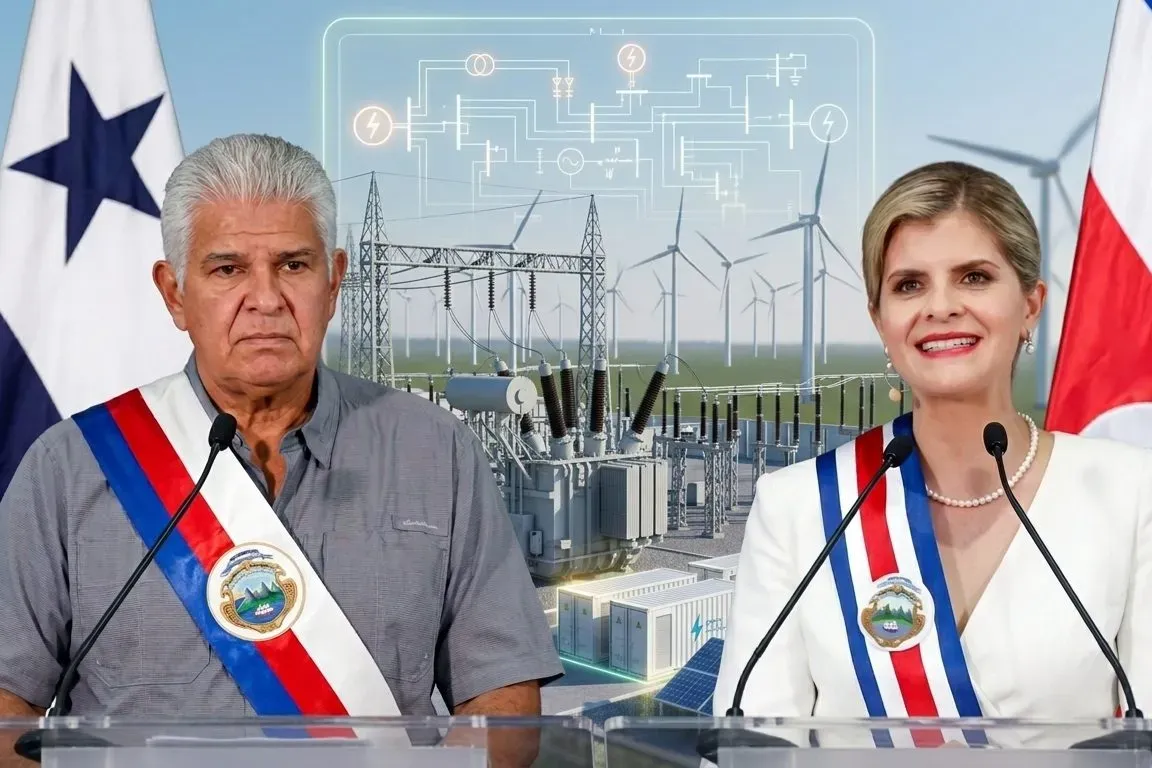
The Costa Rican Electricity Institute has firmly denied any energy crisis following Panama’s decision to halt electricity sales. The institute stated the country has sufficient resources to meet its power demands. Officials confirmed this position on Thursday, May 21, directly responding to Panamanian President José Raúl Mulino’s recent announcement.
Costa Rica currently does not import electricity from Panama and has no plans to do so for the rest of 2026. The Costa Rican Electricity Institute (ICE) released an official statement clarifying that no firm energy purchase contracts exist between the two neighboring nations. The institute emphasized the country’s electrical system possesses adequate capacity to handle all domestic demand without external support.
The statement from ICE came just hours after President Mulino instructed his trade minister to suspend surplus energy exports to Costa Rica. Mulino framed the decision as a reciprocal measure tied to ongoing commercial disputes between the countries, particularly in the agricultural sector.

Official Response From Costa Rican Authorities
The National Electric System has sufficient resources to meet the country’s electricity demand, the entity stated. [Translated from Spanish]
ICE further expressed its continued support for the Regional Electricity Market treaty framework. The institute reaffirmed its commitment to the principles of free competition that govern transactions among member nations. This market allows Central American countries to trade electricity across borders during periods of surplus or shortage.
The Costa Rican government has maintained that its energy infrastructure remains robust and independent. Hydropower provides the majority of the nation’s electricity, supplemented by geothermal, wind, and solar sources. Recent rainfall has improved reservoir levels, further strengthening the country’s energy position.
Panama’s Stance on Energy Exports
President Mulino made his position clear during a public address earlier this week. For now there is no energy sale to Costa Rica. It’s that simple, Mulino said, arguing his decision rests on the principle of reciprocity. [Translated from Spanish]
The Panamanian leader directed Commerce Minister Julio Moltó to formally notify Costa Rican authorities of the temporary halt. Mulino cited unresolved trade differences as the primary motivation behind the energy policy shift. He claimed previous attempts to negotiate a broader bilateral agreement never materialized.
Panama had previously supplied surplus electricity to Costa Rica during regional energy shortages. These transactions occurred through the Regional Electricity Market mechanism that connects Central American power grids. The suspension represents a significant departure from normal cooperative energy practices between the two countries.

Trade Conflict Origins and Escalation
The broader dispute traces back to 2019 and 2020 when Panama suspended phytosanitary permits for 26 Costa Rican food processing plants. These facilities produced dairy products, meats, and fruits for export. Panamanian authorities cited sanitary concerns as justification for the restrictions.
Costa Rican companies subsequently faced barriers when attempting to enter the Panamanian market. The situation escalated into a formal trade complaint at the World Trade Organization. A WTO dispute panel ruled in favor of Costa Rica in 2024, but Panama appealed the decision in January 2025.
President Mulino stated he rejected a request from former Costa Rican President Rodrigo Chaves to drop the appeal. He claimed to have proposed a broader negotiation instead. That wider dialogue never took place, according to Mulino.
Current Political Context
Costa Rican President Laura Fernández recently accused Panama of commercial blockades against products like potatoes, onions, and dairy goods. She announced international diplomatic actions to defend her country’s producers. Fernández took office for the 2026-2030 term amid these escalating tensions.
The energy dispute adds another layer to the complex relationship between the two Central American nations. Both countries share economic ties through the Costa Rican Electricity Institute and broader regional trade frameworks. Analysts suggest the situation could impact broader Central American integration efforts.
Energy experts note that Costa Rica’s diversified power generation portfolio provides significant insulation from regional supply disruptions. The country has invested heavily in renewable energy infrastructure over the past two decades. This strategic approach now appears to be paying dividends during the diplomatic standoff.
The immediate impact of Panama’s decision remains limited given the absence of active contracts. However, the suspension signals a willingness to use energy policy as a diplomatic tool. Regional observers will watch closely for any further escalation or potential de-escalation measures in the coming weeks.