


The government of Venezuela has formally accused Panamanian authorities of forcibly opening a Venezuelan diplomatic bag at Tocumen International Airport. The incident occurred on February 24, 2026, and has sparked a diplomatic dispute centered on the interpretation of international treaties.
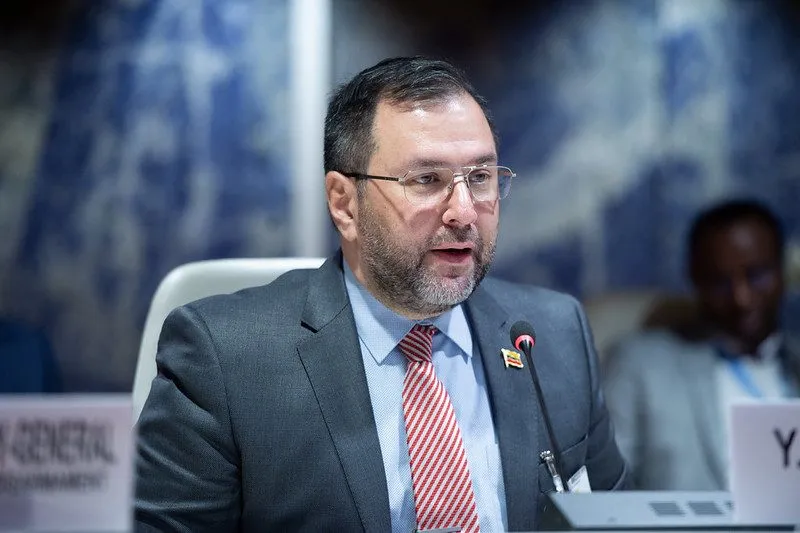
Venezuela’s foreign ministry issued an official statement calling the action a direct violation of the Vienna Convention on Diplomatic Relations. The statement, shared by Foreign Minister Yvan Gil Pinto, demands guarantees from Panama that such an event will not happen again.
A Direct Challenge to Diplomatic Immunity
Venezuela’s complaint hinges on Article 27 of the 1961 Vienna Convention. This article establishes the absolute inviolability of diplomatic bags, prohibiting their opening or detention under any circumstances. The Venezuelan government labeled the airport inspection a “flagrant” breach of this fundamental principle.
“The immunity of diplomatic communications constitutes an essential principle for coexistence between nations,” the Venezuelan statement declared. [Translated from Spanish] It warned that violating this immunity sets a dangerous precedent for the legal security of all diplomatic missions.
The communique did not specify the bag’s intended recipient or its contents. It argued the act also infringes upon the rights of the Venezuelan community residing in Panama. This accusation comes as both nations had recently expressed a willingness to reactivate consular services.
Panama’s Customs Authority Provides Counterpoint
Panama’s National Customs Authority of Panama responded with a detailed account of the event. Officials stated their inspection followed strict national and international protocols. The situation began when a Venezuelan government representative presented a consular ID and placed four pieces of luggage on a scanner.
One bag showed irregular images during the scan, prompting a request for a manual inspection. Only then did the official claim the luggage held diplomatic status. Customs agents immediately contacted Panama’s foreign ministry for guidance, as required by their procedures.
Panamanian foreign ministry officials then made a critical determination. They concluded the bags did not meet the minimum requirements outlined in the same Article 27 cited by Venezuela.
“The packages presented did not comply with the minimum requirements demanded by the Vienna Convention of 1961,” the Customs Authority stated. [Translated from Spanish] “The outer markings, seals, and components of inviolability, which are mandatory, were not present at the time of the review.”
Article 27 specifies that packages constituting a diplomatic bag must bear visible external marks indicating their character. Panama’s position is that the absence of these clear identifiers nullified the bag’s protected status during routine security screening at the busy International Airport.
Strained Relations and a Path Forward
This diplomatic friction occurs against a backdrop of recently thawing relations. Venezuela’s consular section in Panama reactivated its services just last October. Those services had been suspended since July 2024 after then-President-elect Jose Raul Mulino ordered Venezuelan diplomatic personnel to leave the country.
Mulino’s administration paused bilateral relations pending a review of Venezuela’s electoral process. The recent reactivation was seen as a tentative step toward normalization. This airport incident now tests that fragile progress.
Venezuela’s demand for “guarantees of non-repetition” places the ball firmly in Panama’s court. The core of the dispute is a technical but crucial interpretation of treaty language. One side emphasizes the absolute principle of inviolability. The other insists on the practical requirement for clear external identification to trigger that protection.
Resolution will likely require direct dialogue between the two nations’ foreign ministries. They must reconcile their differing views on procedural compliance at critical transit points like Tocumen. The outcome could influence how other nations handle similar inspections in the future, making this more than a bilateral spat.