


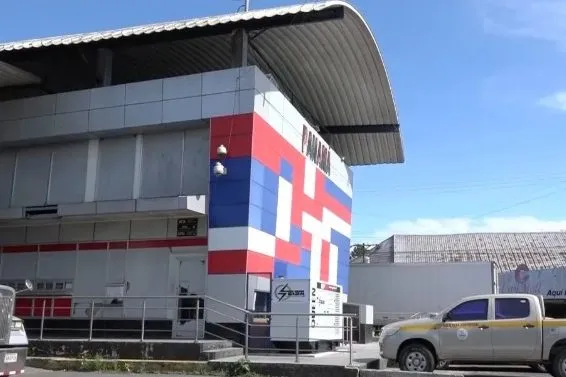
Panamanian President José Raúl Mulino announced he will host a high-level summit with Costa Rican leadership next month to address chronic congestion and inefficiency at the primary land border crossing between the two nations. Mulino made the declaration during his weekly press conference, setting a meeting for April 24 at the Paso Canoas Border Crossing with outgoing Costa Rican President Rodrigo Chaves and President-elect Laura Fernández, who takes office May 8.
The president described the current situation at the border as unacceptable, framing the upcoming trilateral meeting as a decisive move to unlock bilateral trade and travel. He expressed a determined, good-faith effort to resolve issues he called a major obstacle to regional development.
“With a sincere but determined spirit to see how we unblock Paso Canoas. That cannot continue to be what it is today,” Mulino stated. [Translated from Spanish]
Mulino painted a vivid picture of the operational failures. He compared the current border process to a line of mules waiting for someone to feel like opening a gate, blaming excessive bureaucracy between customs and migration agencies. That reality, he insisted, must disappear. The stated goal of the April meeting is to find a secure and reliable solution to the persistent logjam.
A Shared Problem Requiring a Shared Solution
The Panamanian leader explicitly framed Paso Canoas as a bilateral issue, refusing to simply assign blame. He proposed a shared responsibility model to finally solve the problem. The border cannot remain a roadblock to progress for either country, he argued.
“I do not want to assign blame; let’s make it, at best, a fifty-fifty fault. But Paso Canoas cannot continue to be an obstacle to development,” Mulino affirmed. [Translated from Spanish]
Concrete progress may already be on the horizon. Mulino provided a significant update on long-stalled infrastructure, announcing that Panama expects to inaugurate its half of an unfinished binational customs post by December. He noted Costa Rica has already completed its adjacent facility, which he heard is of high quality, while Panama’s portion remained in ruins. The director of Panama’s National Customs Authority provided that assessment.
Completing this joint facility is a critical step. It aims to standardize customs policy between Panama and costa rica, creating a unified Binational Customs Office. The president connected this physical and policy integration directly to economic growth.
Envisioning a Transformative Regional Hub
Mulino’s vision for the border extends beyond just fixing current delays. He clarified that he does not intend to dismantle the vibrant informal commercial activity that defines much of the paso canoas area today. That commerce provides essential employment and generates economic activity, potentially including tax revenue.
His ambition, however, is far larger. The president argued the crossing must evolve into a major regional hub. He cited growing interest from Central America, and Costa Rica specifically, in deepening economic collaboration with Panama. New port developments in the Puerto Armuelles zone further amplify this potential, creating opportunities for enhanced logistics and supply chain integration.
“Paso Canoas has to be something bigger. Because there is interest from the Central American region and from Costa Rica in particular to work more with us,” Mulino said. [Translated from Spanish]
The upcoming April summit, convened by the President of Panama, now represents a pivotal test for this regional vision. Success depends on securing commitment from both current and future Costa Rican administrations to a coordinated, actionable plan. For daily commuters and commercial transporters currently enduring the “line of mules,” the meeting cannot come soon enough.