


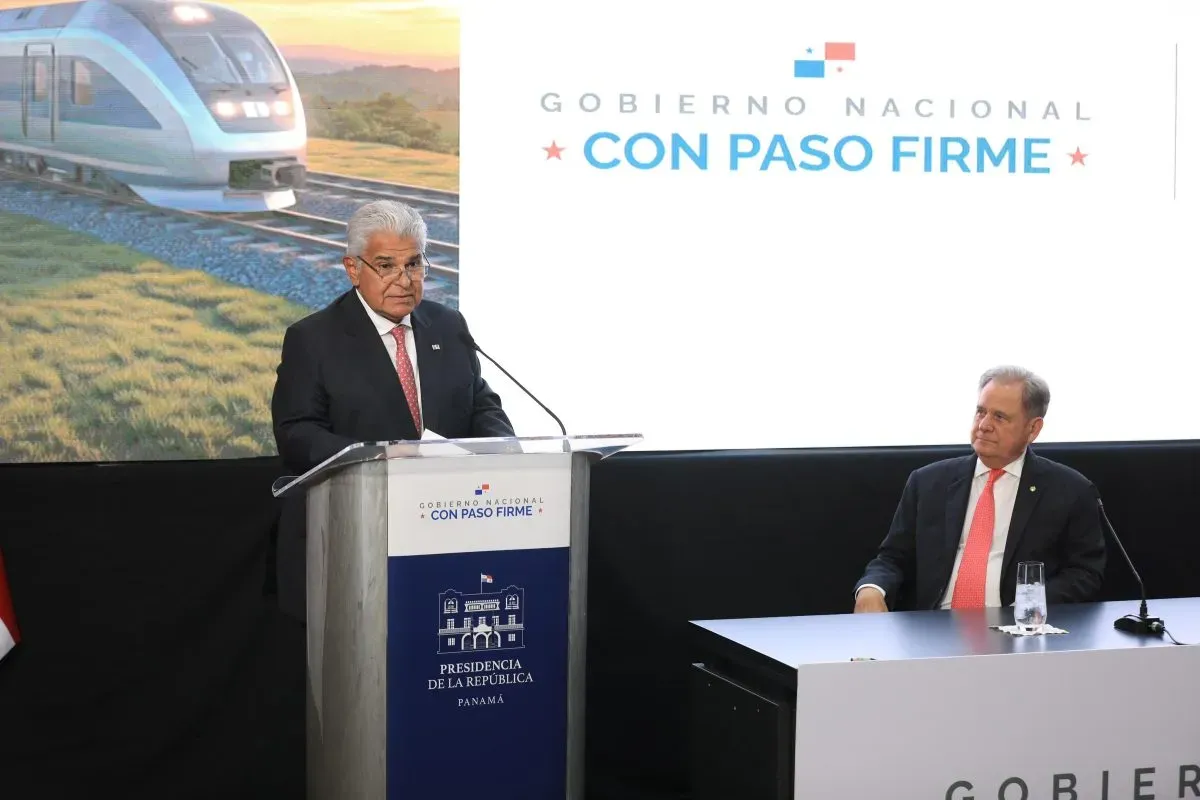
Panamanian President José Raúl Mulino confirmed his administration expects to receive crucial economic feasibility reports for the proposed “Panama–David–Border” railway within months. The announcement came during his weekly press conference on Thursday, February 26, where he outlined development priorities for Chiriquí Province. These reports will determine whether the government proceeds with the large-scale infrastructure initiative connecting the capital to the western border.
Mulino emphasized that no decision will be made without proper technical substantiation. The awaited analysis will provide the data needed to evaluate the project’s financial viability and engineering challenges. This cautious approach marks a shift toward evidence-based planning for major national undertakings.
“We hope to have the economic feasibility reports for the railway, which will allow us to conduct the corresponding analysis to see whether we should move forward or not,” Mulino stated. [Translated from Spanish]
Commitment to Responsible Development
The President of Panama directly linked his stance to avoiding past mistakes. He vowed not to initiate poorly planned projects that risk becoming stalled or abandoned. This railway project, often referred to publicly as “Tren Panamá-Chiriquí,” represents one of the most significant potential infrastructure investments in western Panama in decades.
“I will not commit the irresponsibility of starting such a project only for it to become anchored, as so many other things have been over time,” Mulino asserted. [Translated from Spanish]
His comments underscore a central policy of avoiding unfunded or unstudied mega-projects. The government’s immediate next steps depend entirely on the conclusions of the pending feasibility study. Officials have not announced a specific deadline for the decision.
Chiriquí Remains a National Priority
Beyond the railway, Mulino highlighted Chiriquí’s continued importance in national development plans. He listed ongoing efforts to complete highways and solve water supply issues affecting communities, particularly south of the city of David. The administration is also strengthening coordination with agricultural and productive sectors in the Tierras Altas region and other parts of the province.
The goal is a coordinated regional push to boost economic growth. This multi-pronged approach suggests development for Chiriquí is not solely contingent on the railway’s approval. Infrastructure improvements are already underway independently.
Mulino expressed general optimism about the province’s future. He assured the public that Chiriquí would continue progressing alongside the rest of the nation. The potential railway, however, remains the single most transformative project on the western horizon.
Its realization would dramatically alter logistics, travel, and commerce between Panama City and the Costa Rican border. The government’s current prudence indicates a desire to ensure any such transformation is built on a solid financial and technical foundation. The coming months will be critical as the feasibility data arrives and the Mulino administration determines the fate of the proposed train panama-Chiriquí.