


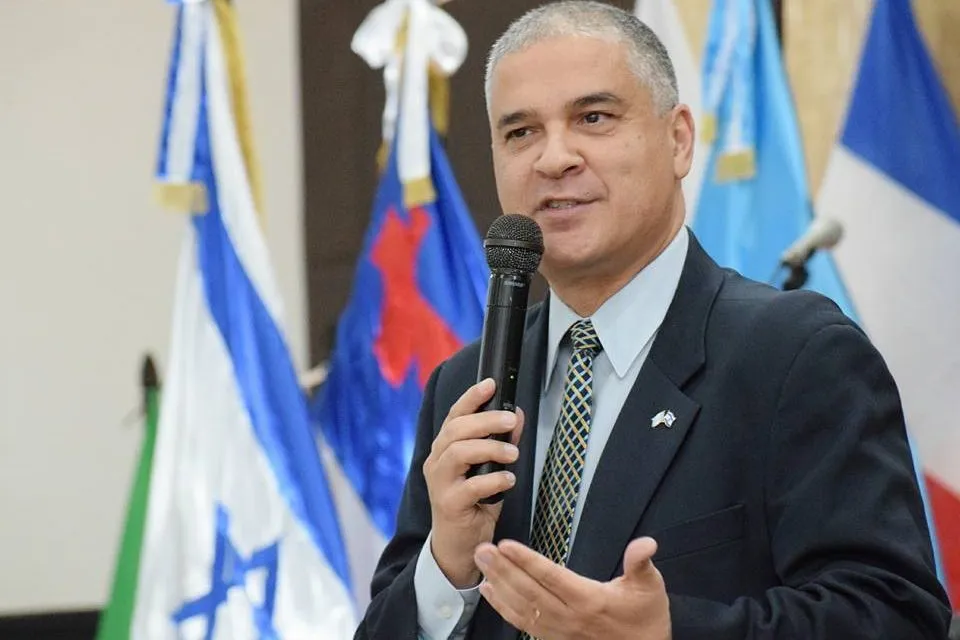
Israel’s ambassador to Panama, Mattanya Cohen, publicly defended a major joint military operation by Israel and the United States against Iran. Speaking from Panama City, Cohen framed the late February strikes as a necessary response to what he called a decades-long existential threat from Tehran.
The operation, which triggered explosions in Tehran and other Iranian cities, targeted high-level Iranian leadership. According to Israeli public broadcasting, objectives included the Supreme Leader of Iran, Ayatollah Ali Khamenei, and President Masoud Pezeshkian. The attack comes amid a sharp escalation in regional tensions and failed diplomatic efforts.
Ambassador Cites Nuclear Program as Core Justification
In his remarks, Ambassador Cohen directly linked the military action to Iran’s nuclear ambitions. He argued the regime’s pursuit of atomic weapons represents a direct and primary danger to his country. The ambassador’s statements provide a clear window into Israel’s strategic rationale for the unprecedented offensive.
“The objective of that mutual operation by Israel and the United States is to permanently eliminate all existential threats against the State of Israel,” Cohen said. [Translated from Spanish] He continued, “The Iranian regime, for the last 47 years, since 1979, has been threatening Israel, but not only this country, also the United States.”
Cohen expressed a specific and urgent fear regarding weaponization. “The Iranian regime is planning to have nuclear weapons and will use that against its enemies; number one is Israel,” he stated. [Translated from Spanish] This focus underscores the central role the perceived threat from the Iranian nuclear program plays in Israeli security policy.
Diplomatic Efforts Collapse Ahead of Military Action
This military escalation unfolded despite ongoing diplomatic channels. Iran and the United States reportedly held a third round of negotiations in Oman just this week. Those talks were seen as a final attempt to prevent a wider war. Washington’s core demand has consistently been a halt to any Iranian development of nuclear arms, a charge Iranian officials repeatedly deny.
Regional tensions have been simmering for months. They intensified in January following a crackdown on protests inside Iran and public warnings from former U.S. President Donald Trump. In mid-February, Trump issued an ultimatum allowing just “10 to 15 days” for a deal before considering force. The recent strike follows a direct confrontation in June 2025, a twelve-day war between Israel and Iran that included attacks on Iranian military and nuclear sites. The U.S. joined that conflict on June 22 with bombings targeting three locations linked to nuclear activities.
The ambassador’s defense of the operation from Panama highlights the global diplomatic front of the conflict. His comments aimed to justify the strikes to the international community and the Government of Panama, a key regional partner. They solidify Israel’s official position that military action was unavoidable.
Global markets reacted immediately to the news. Oil and gas prices surged while stock markets fell, reflecting fears of a prolonged conflict that could disrupt vital shipping lanes and energy supplies. The Panama Canal Authority confirmed it is monitoring the situation for potential impacts on maritime trade, though operations continue normally for now.
Analysts warn the latest strikes represent a dangerous new phase. Moving beyond proxy conflicts and infrastructure attacks to directly target a nation’s leadership carries significant risk of retaliation. The international community remains on high alert, concerned the action could trigger a broader regional war and permanently alter the Middle East’s geopolitical balance.