


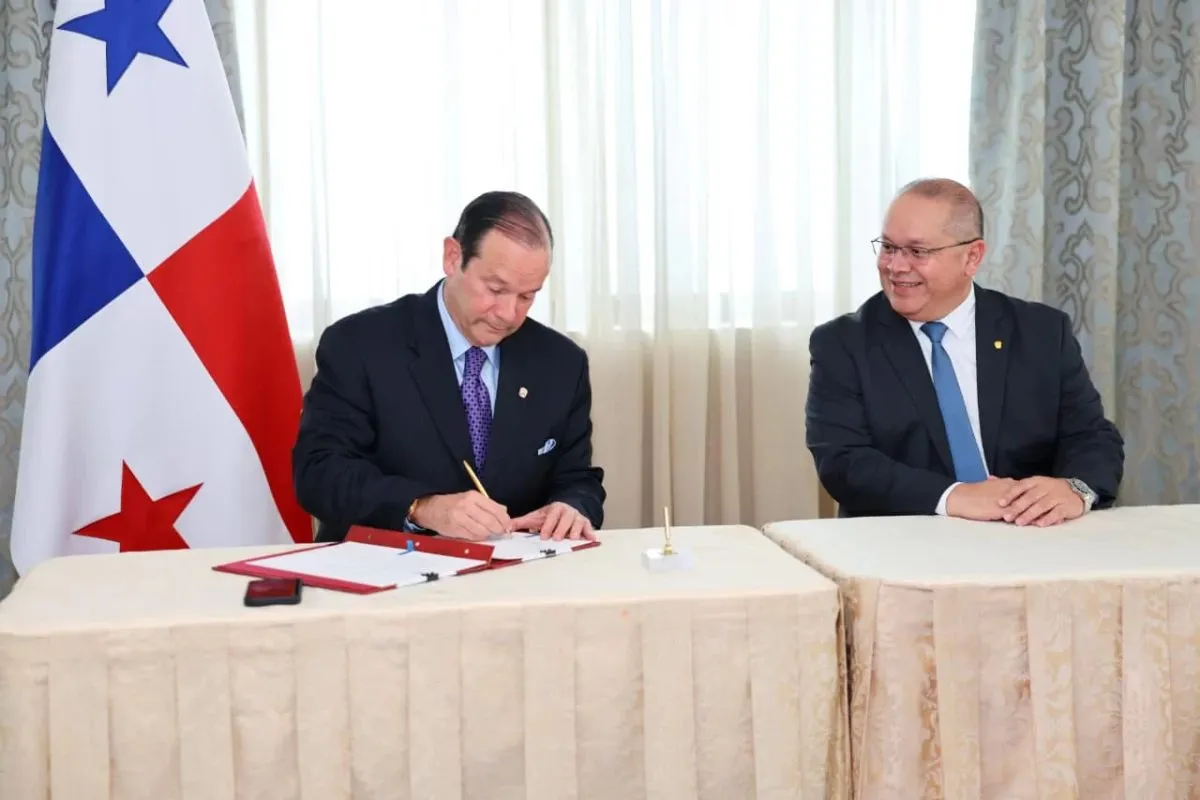
Panama’s government signed a formal cooperation agreement with the Organisation for Economic Co-operation and Development (OECD) in Paris this week. The pact aims to align the nation’s policies with global standards and attract higher quality foreign investment.
Foreign Minister Javier Martínez-Acha Vásquez and OECD Secretary General Mathias Cormann formalized the Memorandum of Understanding. Panamanian officials described the move as a strategic commitment to transparency and sustainable development rather than a symbolic gesture.

A Framework for Policy Improvement
The agreement establishes a structured framework for cooperation. Panama will now gain access to OECD data exchanges, comparative public policy assessments, and expert missions. Evidence-based recommendations will follow these evaluations.
This mechanism allows Panama to participate more actively in forums where international standards are defined. The country’s investment climate should become more competitive and predictable as a result. Authorities anticipate strengthened governance, innovation promotion, and human capital development.
“This is not a symbolic act. It is a strategic decision. A declaration of intent. A commitment to transformation,” said Foreign Minister Javier Martínez-Acha Vásquez during the signing ceremony. [Translated from Spanish]
Minister Martínez-Acha Vásquez emphasized Panama’s active role in the partnership. The country approaches the Organisation for Economic Co-operation and Development (OECD) as a determined partner ready for alignment with high international benchmarks.
Strategic Positioning for Global Investment
Panama seeks to position itself as a reliable partner in the global economy. The agreement directly supports this goal by improving institutional frameworks. Officials believe it will help attract high-value projects in infrastructure, technology, and sustainability sectors.
Foreign Minister javier martínez-Acha met with MEDEF International’s Philippe Gautier before the signing. Their discussion focused on consolidating Panama’s status as a destination for responsible foreign investment.
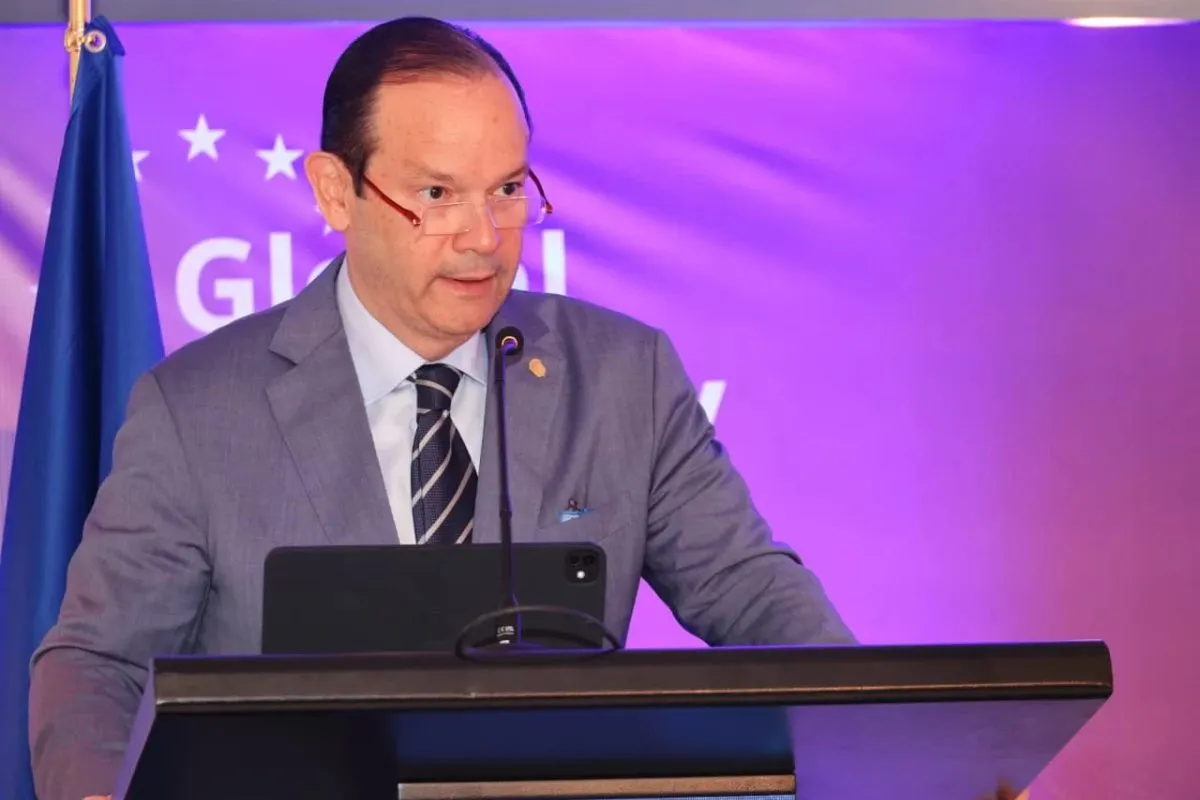
“Panama arrives at the OECD not as a passive participant, but as a decided partner. A partner ready to align with the highest international standards. A partner willing to be measured, evaluated, and improved. A partner willing to contribute,” Martínez-Acha Vásquez stated. [Translated from Spanish]
The minister reiterated Panama’s clear choices during his remarks. He explicitly linked accountability to national strength, framing the agreement as a logical step in the country’s development trajectory.
Implications for Economic Development
This cooperation framework represents a recognition of Panama’s recent efforts in financial integrity and governance. The nation’s logistical and commercial hub status in the region could be significantly enhanced.
Aligning the educational system with the demands of the global economy forms another key objective. Authorities consider human capital elevation essential for long-term competitiveness. The OECD’s tools and peer reviews will provide external validation and guidance for domestic reforms.
“Panama chooses transparency. Panama chooses predictability. Panama chooses the rule of law. Panama chooses to be responsible, because accountability builds strength,” the Foreign Minister concluded. [Translated from Spanish]
Panama’s engagement with the OECD signals a deliberate shift toward internationally recognized economic practices. The partnership’s success will depend on implementing the forthcoming recommendations and sustaining the reform momentum announced in Paris.