


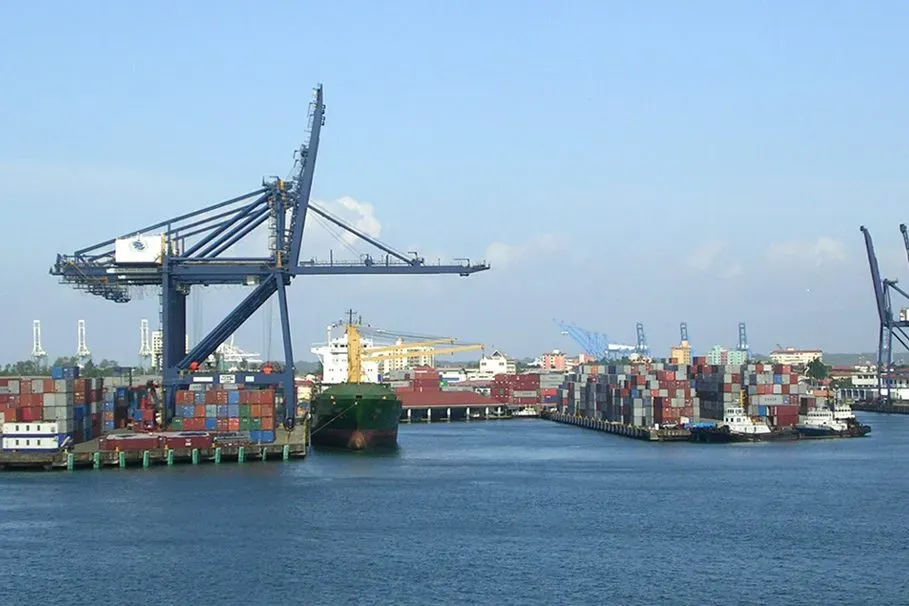
A subsidiary of Hong Kong’s CK Hutchison Holdings has significantly increased its financial claim against the Republic of Panama. The Panama Ports Company (PPC) announced on Tuesday that its damages claim in an ongoing international arbitration now surpasses two billion dollars. This escalation follows the Panamanian government’s seizure of two major port terminals earlier this year.
The company filed a supplemental claim under the rules of the International Chamber of Commerce arbitration. This legal action responds directly to what PPC calls the state’s illegal takeover of the Balboa and Cristobal port facilities. These terminals are critically located near the entrances of the Panama Canal.
“The state’s actions constitute an unlawful expropriation,” a PPC legal representative stated. [Translated from Spanish] “Our updated claim of over two billion dollars reflects the full extent of the damages incurred, including the seizure of physical assets and intellectual property.”
Panama’s presidency and maritime authority have not yet issued a public comment on the updated claim. The government’s position stems from a Supreme Court ruling in late February. That ruling found the original concession contracts, held by CK Hutchison Holdings for nearly three decades, violated constitutional principles.
Allegations of Property Seizure and Operational Disruption
PPC’s formal accusations are severe. The company alleges Panamanian authorities unlawfully seized private property and confiscated protected documents during the port takeover. They also claim the government denied them access to essential operational files and computer systems. These actions, PPC argues, have crippled their ability to manage the transition or assess their losses accurately.
Officials missed a key procedural deadline in the arbitration case earlier this month, according to the company. PPC stated Panama failed to respond by March 13 because it lacked proper legal representation. This allegation drew a sharp rebuke from Panamanian President Jose Raul Mulino.
“These accusations are outrageous and a lie,” President Mulino said. [Translated from Spanish] “The government has appointed specialized international counsel to vigorously defend the state’s interests in this matter.”
The dispute complicates a major global business transaction. CK Hutchison is currently negotiating a twenty-three billion dollar sale of a majority stake in its global ports business. A consortium led by BlackRock and Mediterranean Shipping Company (MSC) is the prospective buyer. Company officials confirmed this month that talks are ongoing, but the Panamanian situation introduces a clear element of risk.
Broader Geopolitical Context and Immediate Next Steps
Analysts view the port cancellations within a wider geopolitical framework. The move followed sustained pressure from the United States to limit Chinese strategic influence around vital global trade routes. The strategic canal handles an estimated five percent of all maritime trade. Controlling its key infrastructure is a matter of national and international concern.
For now, port operations continue under temporary eighteen-month concessions. APM Terminals now manages the Balboa terminal. Cristobal is under the control of TIL Panama, a unit of MSC. This interim solution aims to prevent disruption to the vital flow of goods through the panama ports.
The financial stakes are now undeniably higher with the two billion dollar claim. This court ruling and its aftermath will likely take years to resolve fully. The arbitration panel must untangle complex arguments about contract law, national sovereignty, and the valuation of a decades-old business. Its final decision will resonate far beyond panama city, setting a precedent for foreign investment disputes in the region.
International investors are watching closely. The outcome could influence how global firms assess political risk in Panama and neighboring countries. The case tests the balance between a nation’s right to enforce its laws and its obligations to foreign investors under international agreements. All parties now await the next phase of the legal process, where evidence will be presented and examined in detail.