



Mayors and local representatives across Panama confronted the nation’s finance ministry this week, demanding the complete transfer of property tax revenues owed to their municipalities. The meeting at the Ministry of Economy and Finance (MEF) headquarters followed a unified show of force at the National Assembly, highlighting a deepening fiscal conflict between local and central government.
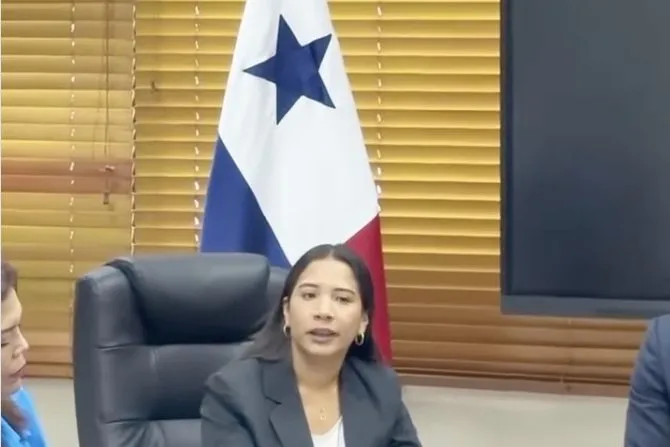
Officials from the Association of Mayors of Panama (Adalpa) presented detailed financial records to Minister Felipe Chapman. These documents, they argued, prove a sustained and severe reduction in the disbursement of funds collected from the Property Tax (Impuesto de Bienes Inmuebles, IBI). Local governments insist the full allocation is a legal mandate, not a discretionary budget item.
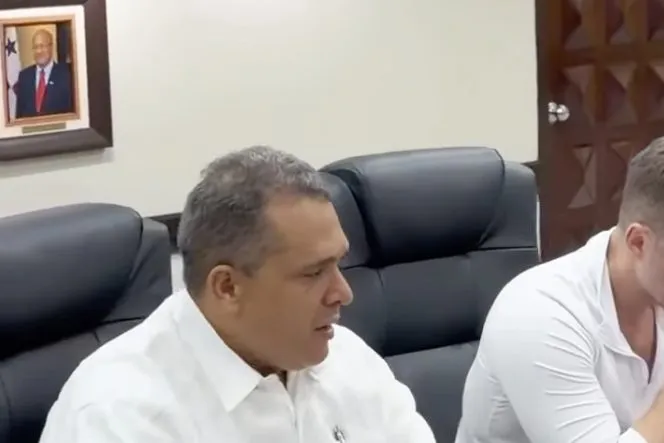
“A slap in the face. The frustration and helplessness we feel is only overshadowed by the lack of answers,” said Panama City Mayor Mayer Mizrachi during the tense exchange. [Translated from Spanish] He sharply criticized the central government’s posture, asking, “A modified Decentralization law is currently being discussed, but what is the point if it is not followed anyway?” [Translated from Spanish]
The mayors’ data reveals a stark and growing gap. Transfers have not reached 100 percent of collected revenues since 2021. Assignments dropped from 93 percent that year to 68 percent in 2022 and 70 percent in 2023. The figures show a more dramatic plunge for the current and upcoming fiscal cycles, with 2024 at 35 percent, 2025 at 39 percent, and 2026 projected at just 42 percent.
Legal Mandates and Local Operations at Stake
This financial shortfall directly threatens municipal operations and community projects nationwide. The leaders presented formal proposals to Minister Chapman focused on strengthening local governance. Their primary request was a guarantee for the complete and timely deposit of funds for each fiscal year, as mandated by the modified Law 37 of 2009.
They also urged an urgent review and update of the Public Works and Municipal Services Investment Program. This update, they contend, must account for significant economic changes over recent years. A third critical point involved reinforcing the municipal subsidy scheme, a lifeline for the functionality of community boards and municipal councils.
Adalpa President Miguel Batista struck a more conciliatory note following the meeting. He acknowledged the minister’s willingness to engage with their concerns.
“We view positively the openness, willingness, and receptiveness of Minister Chapman and his work team,” Batista stated. [Translated from Spanish] “He showed interest in addressing the concerns raised and proposed forming a joint technical committee between the Ministry of Economy and Finance (Panama) and the country’s mayors.” [Translated from Spanish]
The proposed technical committee offers a potential path forward. It represents a formal channel to address the complex accounting and budgetary disputes underlying the allocation percentages. For local officials like mayer mizrachi, concrete action from this dialogue will be the only acceptable outcome.
This clash places the national government’s commitment to decentralization under intense scrutiny. Municipalities argue their ability to function is being systematically undermined by withheld resources. They say the withheld funds cripple their capacity to maintain infrastructure, provide local services, and execute community-driven projects.
The outcome of this dispute will set a crucial precedent for fiscal autonomy in Panama. It tests the practical application of laws designed to empower local governments. All eyes now turn to the formation and results of the promised technical committee, which will bear the heavy task of reconciling central fiscal policy with local legal entitlements.