


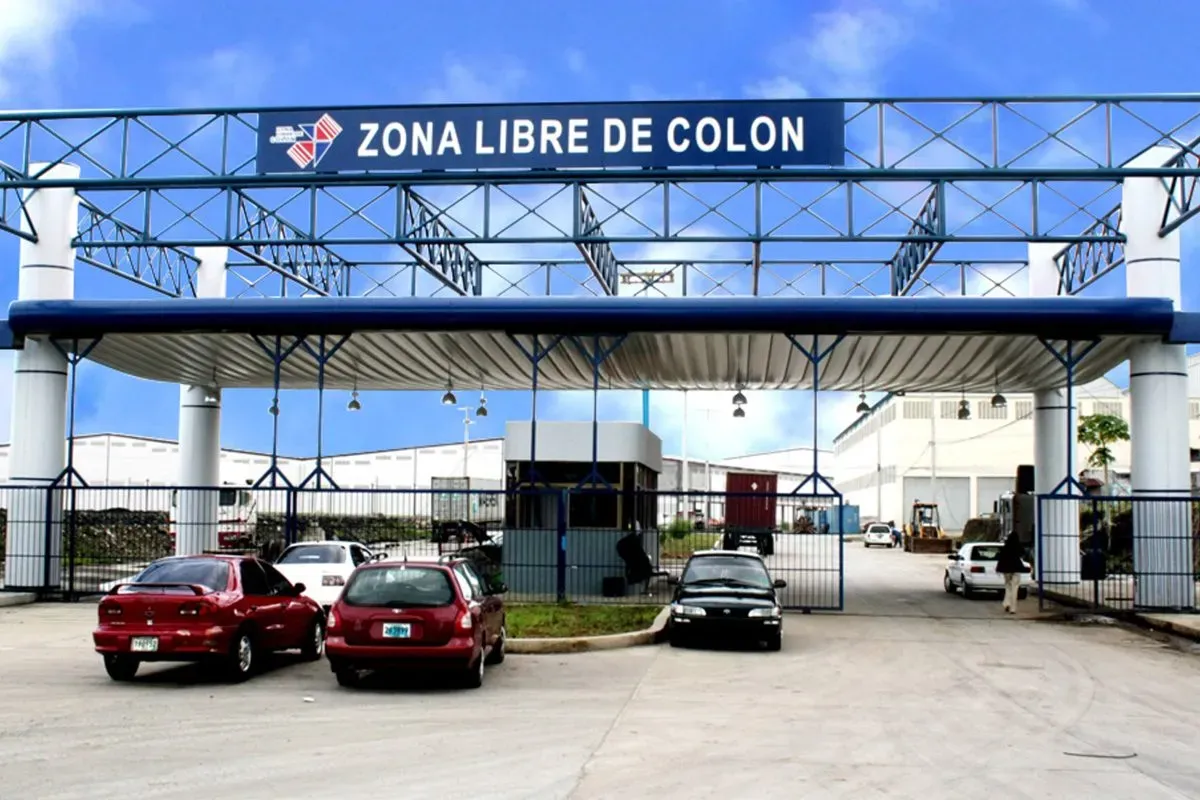
The Colon Free Trade Zone, the world’s second largest free trade area, is undergoing a significant realignment of its trade partners and product flows. New data for the first two months of 2026 shows a 9.6 percent increase in cargo volume contrasted with a slight 0.3 percent dip in total trade value, signaling a complex transformation in global supply patterns. Belgium and Japan have dramatically increased exports to the zone while China and the United States have seen their shares decline.
Total commercial exchange for January and February reached $3.696 billion. Within that figure, imports contracted by 2.3 percent to $1.873 billion. Reexports, however, grew by 1.9 percent to $1.822 billion. The physical movement of goods tells a more dynamic story, rising from 398,800 to 437,200 metric tons. Reexport tonnage surged by 20.9 percent.
Dovi Eisenman, president of the Colon Free Trade Zone Chamber of Commerce, explained the divergence between volume and value. He pointed to lower international prices and a fundamental shift in how companies manage inventory as primary drivers. The global trade environment, marked by geopolitical tensions and tariff adjustments, is compelling importers to operate with leaner stockpiles.
“What we are observing confirms a clear trend: more goods in transit, but with lower value per transaction. The international context is redefining the logic of global commerce,” said Dovi Eisenman. [Translated from Spanish]
This shift presents both a challenge and an opportunity for the zone. Eisenman noted that the trend of nearshoring, where companies seek to position inventory closer to final markets, is gaining momentum. The zone’s strategic position allows it to serve as a responsive hub, reducing dependence on long and vulnerable supply chain routes.
Supplier Rankings See Major Reshuffle
A detailed look at import sources reveals a striking reshuffle among the Colon Free Trade Zone‘s top suppliers. Mainland China retained its position as the leading origin point, accounting for 38.3 percent of imports. Its dominance, however, is waning. The value of purchases from China fell from $802.4 million in early 2025 to $717.3 million in 2026, and its market share dropped from 41.9 percent.
The most dramatic gains came from Europe and Asia. Belgium’s exports to the zone skyrocketed from $27.7 million to $121.9 million, boosting its share from a modest 1.4 percent to 6.5 percent. This surge was primarily driven by pharmaceuticals and personal care products, including prepared medicines, vaccines, and perfumes. Japan executed a similar leap, with its export value rising from $45.1 million to $119.4 million, capturing 6.4 percent of the import market.
Meanwhile, the United States saw its role diminish. U.S. exports to the zone decreased from $171.7 million to $113.6 million. Its share of the import market consequently fell from 9.0 percent to 6.1 percent. Panama itself emerged as a growing domestic supplier, with sales into the zone jumping from $18.7 million to $66 million.
Business Model Adapts to New Global Realities
Industry leaders within the zone interpret these numbers as more than a temporary fluctuation. They signal a permanent evolution in the free trade zone’s operational model. Competitiveness is increasingly defined by logistical efficiency and speed rather than mere storage capacity for bulk goods. Companies are prioritizing liquidity and rapid inventory turnover to navigate an uncertain international landscape.
Eisenman emphasized this transformative period. The zone’s business model is in full transition, adapting to external pressures and new opportunities. He believes actors who successfully adapt to this environment of lower inventories and faster logistics will be best positioned for future growth. The current data reflects a period of adjustment before new global trade conditions stabilize.
The growth in physical tonnage, especially for reexport, underscores the zone’s enduring role as a transshipment and redistribution point. Even as the dollar value per transaction dips, the increase in cargo movement indicates robust activity. This activity is simply different in nature, focused on agility and serving regional markets with efficiency.
Observers will watch closely to see if these bimonthly trends solidify throughout 2026. The rising prominence of Belgium and Japan as suppliers could reshape long-term trade corridors. The zone’s ability to capitalize on nearshoring demand will likely determine its trajectory in the coming years. Its response to these shifting supplier dynamics offers a real-time case study in how major trade hubs navigate a fragmenting global economy.