


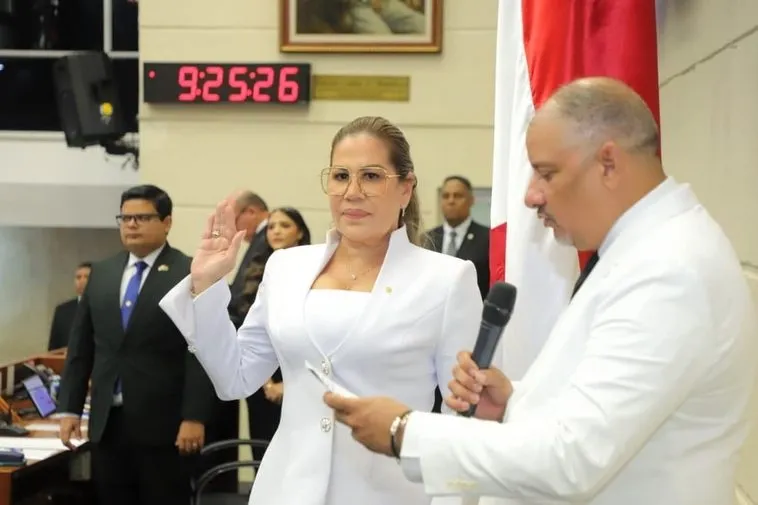
The newly elected leader of Panama’s legislative body wants citizens to watch their representatives vote in real time. Shirley Castañedas, who secured 42 votes to become president of the National Assembly for the 2026-2027 term, promised a new era of transparency during her inauguration speech. She called on lawmakers to set aside partisan interests and focus on national priorities.
Alongside Castañedas, lawmakers Manuel Cohen Salerno and Manuel Chen Peñalba were elected as first and second vice presidents respectively. The new leadership team takes over at a moment when Panama faces pressing questions about economic recovery, mining policy, and public trust in government institutions.

Digital transparency as a cornerstone
Castañedas laid out a vision where any Panamanian can track how laws are debated and how their representatives vote. She promised to push the legislature toward an open parliament digital model, making legislative work accessible to the public. This commitment to transparency represents a shift in how the National Assembly of Panama operates, potentially giving citizens unprecedented access to the lawmaking process.
The incoming president emphasized that her agenda will center on employment generation, education, healthcare, clean water access, and investment. She also pledged to focus on developing Panama’s provinces and indigenous comarcas, along with innovation and institutional strengthening.
‘We come to work, to build, and to demonstrate that political differences can coexist with institutional respect and the honest search for solutions. This Assembly will support initiatives that benefit the country’ [Translated from Spanish]
Castañedas promised to exercise political oversight when necessary while defending the legislature’s constitutional independence. She called for firm, respectful, and transparent coordination between branches of government, urging deputies from all political blocs to sit together and think beyond party lines about how to transform the nation.
Outgoing leadership highlights concrete achievements
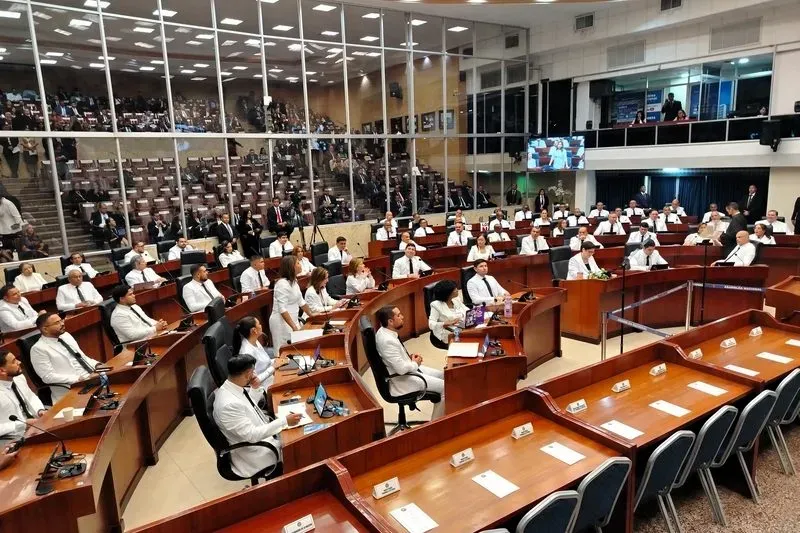
Former Assembly President Jorge Herrera reflected on his term by pointing to tangible results rather than empty promises. During his leadership, the legislature approved several major bills that are now active laws, including the economic substance law. This legislation requires companies to demonstrate real economic activity in Panama, addressing international concerns about tax transparency and corporate registration practices.
Herrera stressed that building bridges between factions produced concrete outcomes for the country. He noted that his team did not legislate merely to fill pages but to solve problems, create order, and open opportunities. The outgoing president also highlighted progress on updating the Assembly’s internal regulations, which remains under discussion for second and third debates in the full chamber. He thanked the executive branch for increasing budgets allocated to local governments.
President Mulino outlines third-year priorities
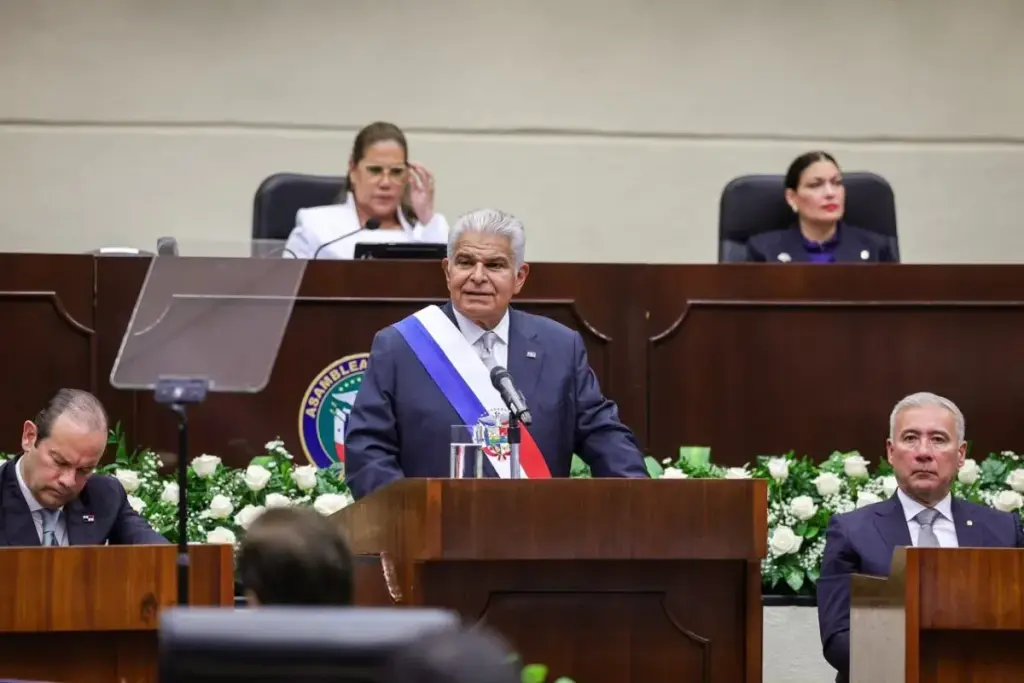
President José Raúl Mulino delivered his third report to the nation, framing it as a defense of economic reordering and an announcement of new social and productive programs. He promised that the start of his third year would bring real changes in employment, healthcare, the basic food basket, and water access.
On the contentious issue of the copper mine, Mulino took a firm position. He stated that any decision must be based on verifiable information and reiterated that he will not present a contract law or concession agreement to the Assembly for mine operations. This statement carries weight given the ongoing debate about the environmental and economic implications of mining activities in Panama.
The president introduced a program called “Panamá pa’ ti” built around four main pillars: employment, healthcare, the basic food basket, and water. On jobs, Mulino promised to generate 80,000 new positions in the private sector through partnerships with the executive branch and new construction projects. He also mentioned tourism initiatives and artificial intelligence training programs developed in collaboration with Google.
Mulino’s address centered on restoring national confidence, reordering public finances, and continuing infrastructure projects. The Economic Substance Law passed under the previous legislative leadership forms part of this broader effort to strengthen Panama’s financial reputation and attract responsible investment.
The convergence of these three political messages signals a coordinated push for institutional credibility. Castañedas wants voters watching from home. Herrera wants them to see laws that work. Mulino wants them to feel economic stability. Whether these promises translate into measurable progress will depend on how well the Assembly’s new leadership balances oversight with cooperation in the months ahead.