


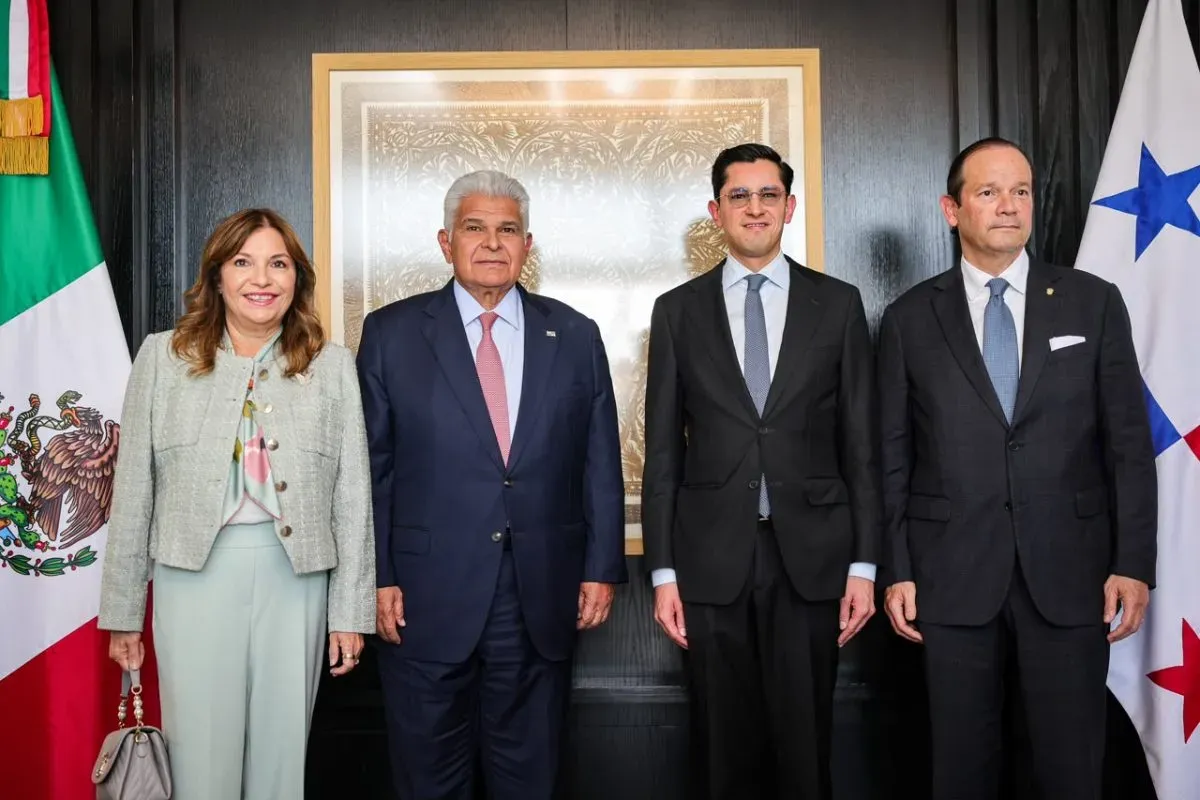
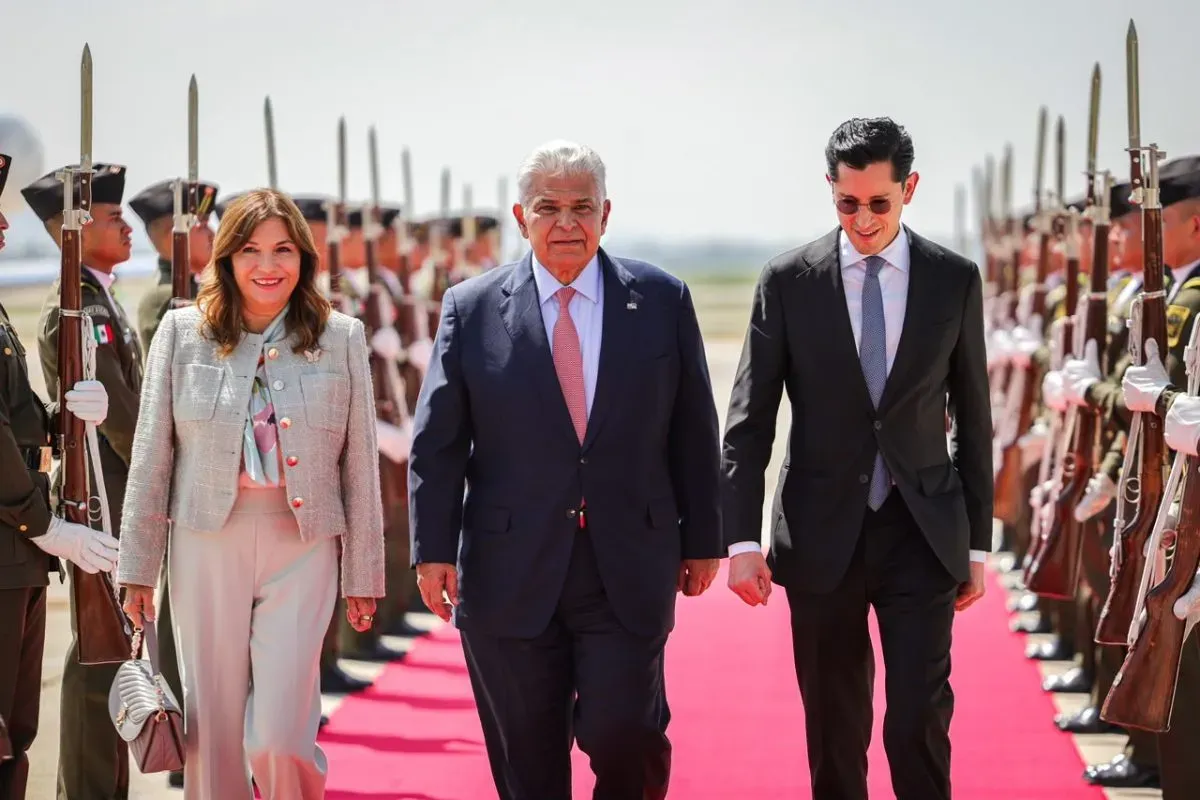
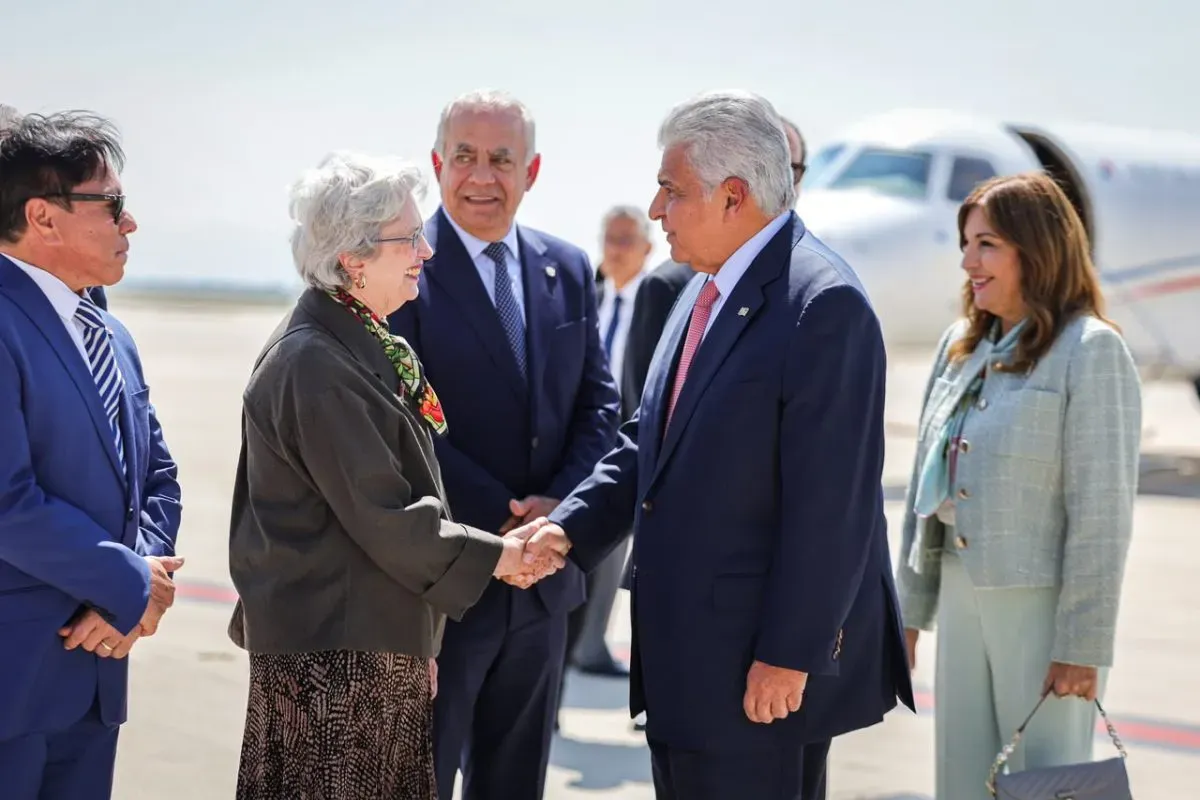
The red carpet rolled out at Mexico City’s airport Tuesday morning as Panamanian President José Raúl Mulino stepped onto foreign soil for what officials describe as a pivotal diplomatic mission. Greeted with full military honors, Mulino’s arrival marks the beginning of discussions that could reshape economic ties between the two nations. The Panamanian leader was welcomed by Mexico’s Secretary of Foreign Relations Roberto Velasco, along with Undersecretary for Latin America and the Caribbean Raquel Serur and Director General for Central America and the Caribbean Carlos Imanol Belausteguigoitia.
First Lady Maricel Cohen de Mulino accompanied the president on the journey. The official delegation includes Foreign Minister Javier Martínez Acha, Commerce and Industries Minister Julio Moltó, Agricultural Development Minister Roberto Linares, Canal Affairs Minister José Ramón Icaza, and Economic Affairs and Competitiveness Secretary Kristelle Getzler. The size of the delegation signals the breadth of topics on the table.
Trade and Technology Take Center Stage
The bilateral agenda stretches far beyond traditional diplomacy. Trade volumes between the two countries have grown steadily in recent years, and both leaders see room for expansion. Panama-Mexico bilateral trade figures show consistent upward momentum, particularly in agricultural goods and manufactured products. But the real prize may lie in sectors that neither country has fully exploited.
Scientific and technological cooperation features prominently in the discussions. Panama wants to position itself as a regional hub for aerospace services, and Mexico’s growing aviation industry offers a natural partnership. President Mulino has made clear that attracting Mexican investment in this sector ranks among his top priorities during the visit. The meeting with President Claudia Sheinbaum Pardo will explore how both nations can collaborate on everything from aircraft maintenance to satellite technology.
Regional Integration Gets a Fresh Push
Beyond bilateral deals, the two leaders will tackle broader questions of Central America and Caribbean regional integration. Panama has long advocated for closer economic ties across the isthmus, and Mexico’s role as a regional heavyweight makes it an essential partner in these efforts. The discussions come at a time when supply chain disruptions have pushed Latin American nations to look inward for trade partners rather than relying so heavily on distant markets.
Mulino plans to extend a personal invitation for Mexico to participate in the International Economic Forum Latin America and the Caribbean 2027, scheduled to take place next year in Panama. The forum aims to bring together business leaders, policymakers, and investors from across the region to chart a course for sustainable economic growth. Mexican involvement could significantly boost the event’s profile and attract attendees from beyond the hemisphere.
Multilateral Matters on the Table
The leaders will also address multilateral issues that affect both nations. These discussions touch on shared challenges including climate change adaptation, migration patterns, and digital infrastructure development. Panama’s position as a global shipping hub and Mexico’s manufacturing might create natural synergies that extend well beyond the current agenda.
For Panama, this state visit represents more than a diplomatic courtesy. It is a calculated effort to diversify economic relationships and reduce dependence on any single trading partner. The Mulino administration has signaled its intent to pursue multiple international partnerships simultaneously, and Mexico sits high on that list. With Mexico City as the backdrop, both leaders have an opportunity to write a new chapter in bilateral relations that could echo across the region for years to come.