


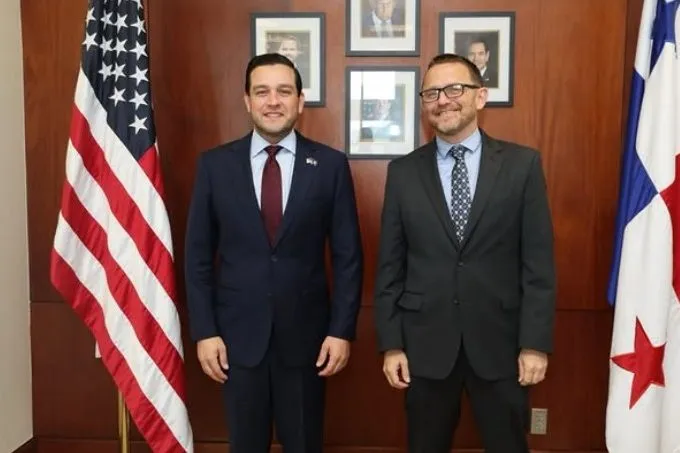
A senior US Treasury official landed in Panama City this week with a clear message for banks and businesses: helping Cuba dodge American restrictions comes with serious consequences. Samuel Parker, the Deputy Assistant Secretary for Threat Finance and Sanctions at the State Department, met with US Ambassador Kevin Marino Cabrera before holding discussions with Panamanian authorities. The visit signals that Washington views Panama as a critical battleground in its campaign to isolate the Cuban regime financially.
Parker did not mince words about the purpose of his trip.
‘Under the leadership of President Trump, economic security is national security. We are meeting with our Panamanian colleagues to talk about US sanctions directed against those who provide support to the illegitimate Cuban regime’ [Translated from Spanish]
The official emphasized that the measures aim to cut off illicit money flows that Washington claims help finance repression on the island. His warning carried an implicit threat for the Panama financial system, which has long served as a regional hub for international transactions.
Risks for Foreign Banks and Companies
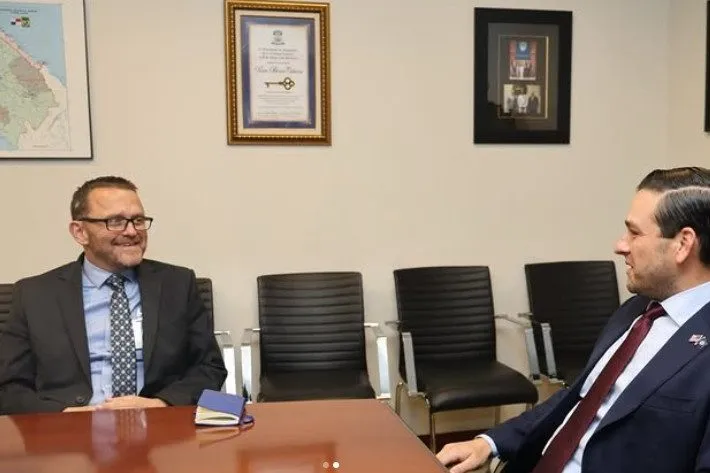
The message from Washington extends beyond government officials. Parker directed his remarks squarely at private sector players who might be tempted to facilitate transactions for sanctioned Cuban entities.
‘Banks and foreign companies must be aware of the risks involved in facilitating sanctions evasion‘ [Translated from Spanish]
This warning comes as the Trump administration intensifies its pressure campaign, having already imposed an oil blockade against Cuba in January that worsened the island’s energy crisis.
The Office of Foreign Assets Control sanctions enforcement mechanism has become increasingly aggressive in pursuing violators abroad. Financial institutions in Panama, which handles significant dollar-denominated transactions through its banking sector, now face heightened scrutiny. The Panamanian government has yet to publicly confirm which officials will participate in the meetings with Parker, leaving questions about how aggressively the country will cooperate.
New Sanctions Target Cuban Military and Business Networks
Parker’s visit coincides with a fresh wave of US sanctions on Cuba targeting what the State Department calls the interconnected pillars of the Cuban state and business apparatus. The newly blacklisted entities include the Territorial Militias, which fall under the Ministry of the Revolutionary Armed Forces, the Rapid Response Brigades, the Association of Combatants of the Cuban Revolution, and the Antex corporation. These organizations have been designated as instruments of repression.
The sanctions also hit the Ministry of Tourism and several state-linked business groups, including Gecomex, Caudal, and Gemar. Two fuel import-export companies, Enetec and Coreydan, were also added to the list. All sanctioned entities now face asset freezes in the United States and restrictions on transactions with American companies or individuals. Access to certain financial services has been cut off entirely.
Many of these firms maintain ties to the Business Administration Group (Gaesa), a sprawling conglomerate controlled by the Cuban armed forces that dominates large swaths of the island’s economy. Washington sanctioned Gaesa on May 1, and US officials say the conglomerate has already begun shedding assets under economic pressure. The Treasury Department separately clarified that it does not intend to penalize non-US persons engaged in ordinary transactions necessary to wind down operations involving Gecomex, Gemar, or entities in which those companies hold stakes.
Regional Implications and Diplomatic Tensions
This diplomatic push in Panama reflects a broader strategy to enlist Latin American governments in enforcing US embargo policies. The United States Embassy in Panama has played an increasingly visible role in coordinating these efforts, hosting meetings that blend economic pressure with diplomatic persuasion.
President Jose Raul Mulino’s administration now faces a delicate balancing act. Panama relies on its international banking sector as a pillar of its economy, and any perception of lax enforcement could invite further US scrutiny. At the same time, the government must weigh its relationship with Washington against its tradition of non-intervention in other nations’ affairs. The lack of public statements from Panamanian officials suggests the talks remain sensitive.
The timing of Parker’s visit also carries symbolic weight. It comes as Mulino prepares to travel to Mexico for a meeting with President Claudia Sheinbaum, and as Panama deals with separate legal matters including the provisional detention of Chinese businessman Liang Zhang pending extradition proceedings. These overlapping issues highlight the complex web of international pressures facing the Central American nation.
For Cuba, the sanctions represent another turn of the screw in an already dire economic situation. The island continues to struggle with blackouts, food shortages, and a collapsing currency. Washington shows no signs of relenting, and Parker’s presence in Panama suggests the next phase of the campaign will focus on closing loopholes in the international financial system that have allowed Cuba to partially circumvent the embargo. Whether Panamanian banks and businesses heed the warning may determine how effective that strategy proves to be.