


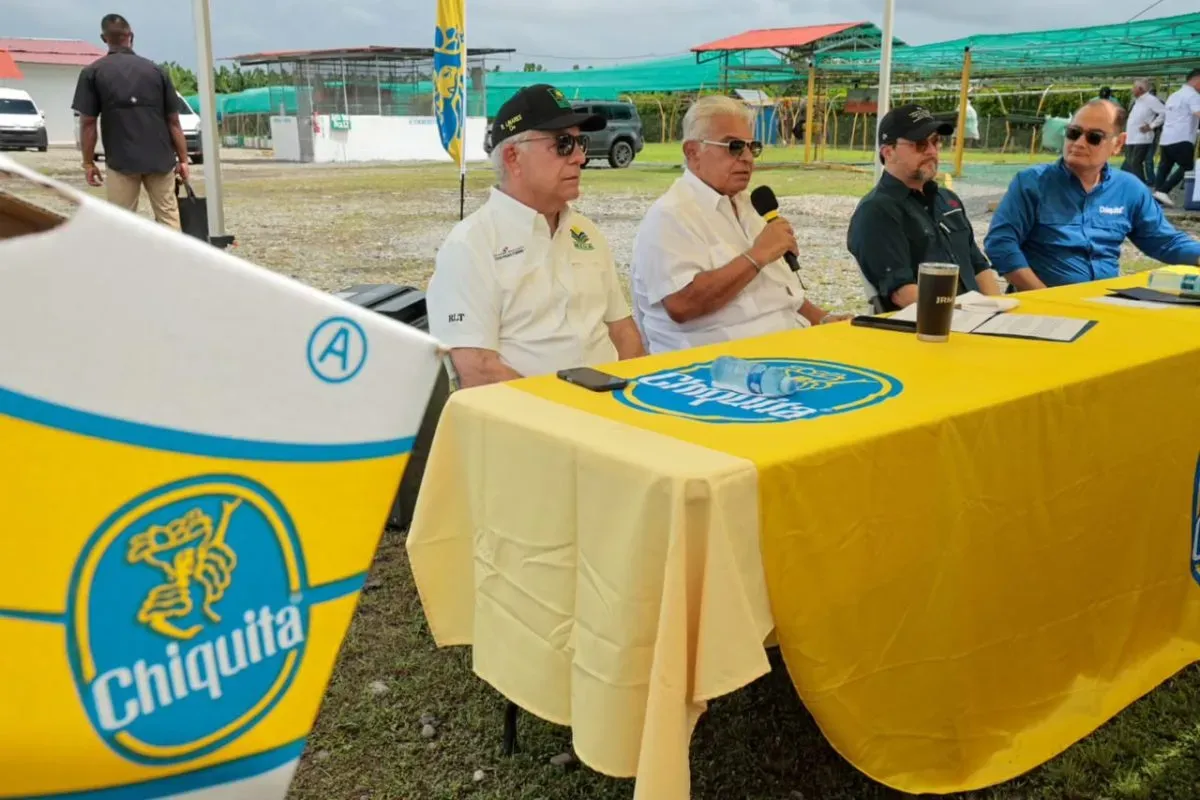
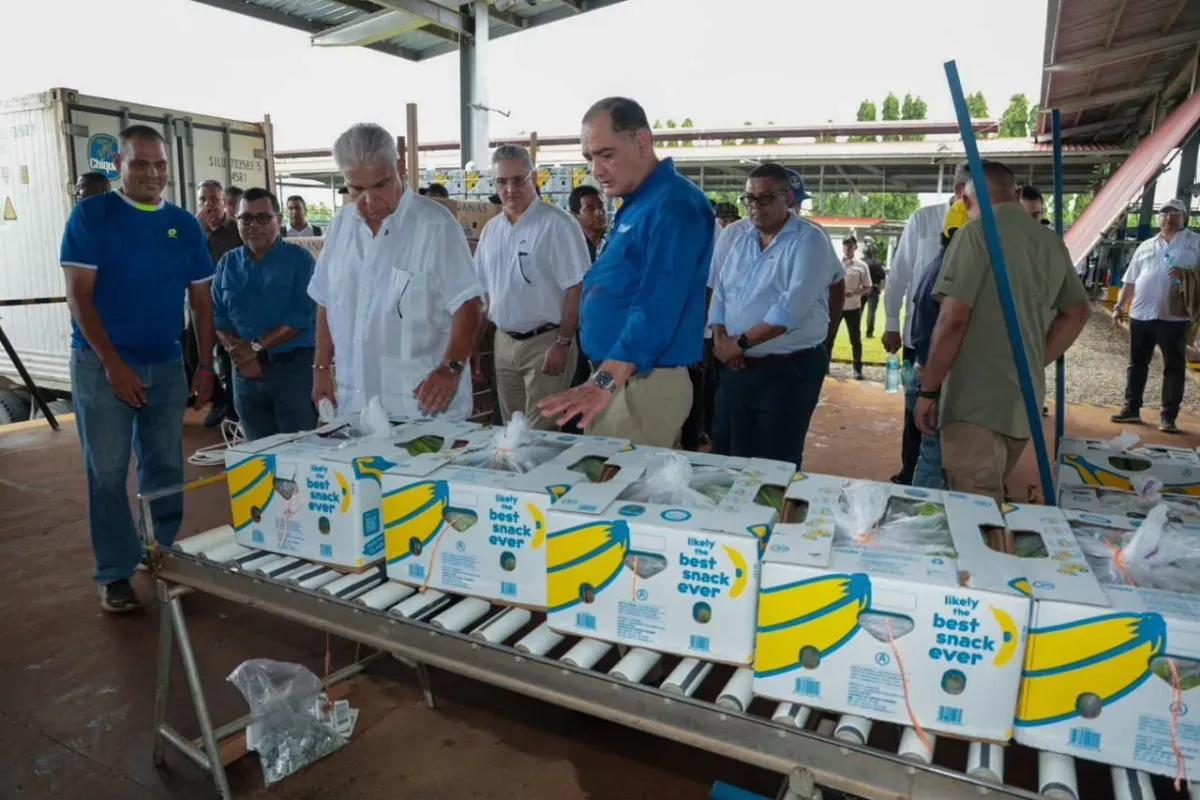
The sweet smell of ripe bananas hangs heavy over Finca 12 in Bocas del Toro these days. It smells like opportunity. President José Raúl Mulino stood among the lush green plants last week, watching workers pack fruit destined for international markets. The scene marked a dramatic turnaround for an industry that nearly collapsed.
Just ten months ago, the banana sector in this coastal province faced an uncertain future. Now, Chiquita expects to ship 11 million boxes of bananas this year. Company officials project that number will climb to 15 million boxes by 2027. The rebound comes after the government stepped in to rescue the struggling industry.
Mulino toured the 200-hectare farm alongside Chiquita CEO Carlos López Flores and cabinet ministers Julio Moltó and Roberto Linares. The president watched as workers prepared shipments at one of 20 active plantations currently operating in the region. He called the revival deeply personal.
‘I see with immense satisfaction that we are opening the doors to the export of our bananas, which are recognized worldwide. This is the fruit of the work of thousands of people and investments made in this fertile soil that produces high-quality food’ [Translated from Spanish]
The agricultural rebound could not come at a better time for Bocas del Toro. Panama agricultural employment data shows the sector provides critical livelihoods across the country. In this province alone, the banana industry supports roughly 6,000 direct jobs. The number fluctuates with production cycles.
History nearly took a different path. During an official visit to Brazil on August 29 of last year, Mulino helped broker the deal that kept Chiquita in Panama. The agreement reduced tensions and protected thousands of jobs. It also preserved an economic engine that fuels the entire province.
López Flores thanked the president and his team for bringing the banana industry back to Bocas del Toro. He described the production strategy as both sustainable and aggressive.
‘My administrative and operational team is here so that next year we produce at least 15 million boxes. From there we go up. We are going to keep growing. The more hectares we have, the more employment we will generate, with young people who want to work’ [Translated from Spanish]
The company currently operates across 5,000 hectares of productive land. Twenty farms are active now, but the company wants more. Each new hectare means more jobs for local families.
Mulino emphasized that the near-collapse of the industry should serve as a lesson. He said the community must learn from past mistakes to move forward. Thousands of men and women depend on these jobs to feed their families, pay utility bills, and build stable lives.
The president also announced a new initiative called Mi Primer Empleo Rural, or My First Rural Job. The program launches next month. Young people from Bocas del Toro will be the primary beneficiaries. They will gain paid work experience in their home province.
The Agricultural Development sector has faced significant challenges in recent years. Global price fluctuations and logistical hurdles threatened the viability of Panama’s banana exports. The government’s intervention changed that trajectory.
Chiquita’s history in Bocas Toro runs deep. The company has been a fixture in the region for generations. Chiquita banana exports Bocas del Toro have long been a cornerstone of the local economy. The port town of Almirante has grown around this industry.
The revival represents more than just corporate profits. For the workers loading boxes onto ships, it means their children will eat dinner tonight. For the small businesses that supply the plantations, it means the lights stay on. For the province as a whole, it means hope.
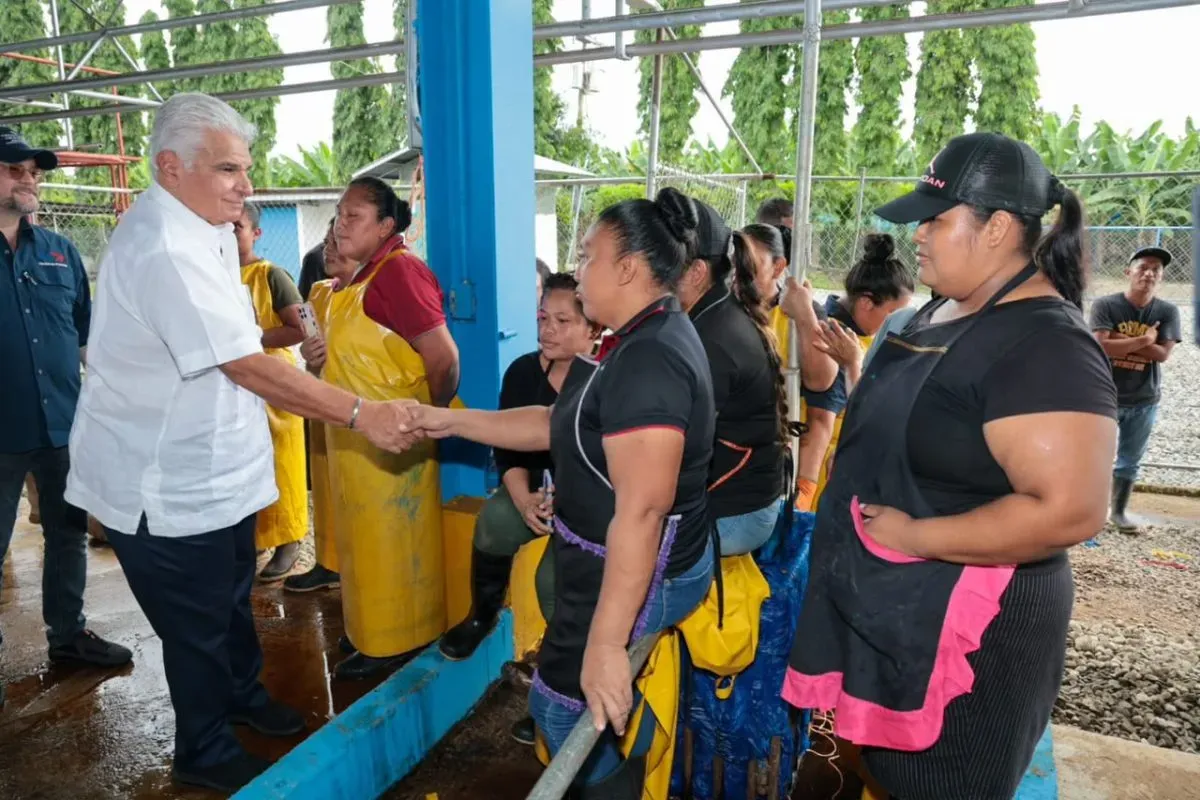
Mulino walked through the rows of banana plants, stopping to talk with workers. He asked about their families, their challenges, their dreams. The conversation was informal but the stakes were enormous. Every banana that leaves this port carries the weight of a community’s future.
The industry’s recovery required coordination between government agencies, private companies, and local communities. Trade officials negotiated terms. Agricultural experts assessed production capacity. Workers returned to fields that had fallen silent.
López Flores made clear that this is just the beginning. The company sees room for expansion. More hectares, more production, more jobs. The goal of 15 million boxes next year is ambitious but achievable. Beyond that, the company aims even higher.
For the families of Bocas del Toro, the sound of banana leaves rustling in the wind is the sound of stability returning. After months of uncertainty, the plantations are humming with activity again. The fruit keeps growing. And so does the hope that this time, the industry will last.