


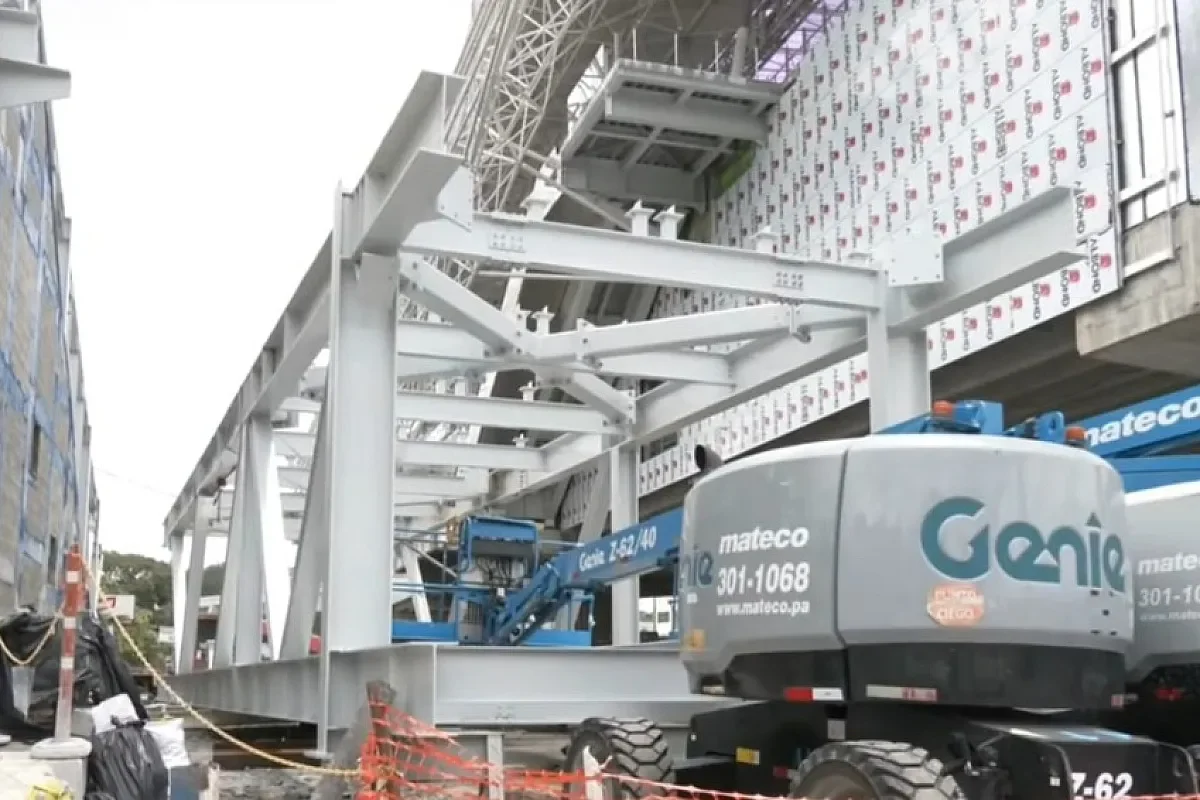
Residents of Arraiján will soon witness a key piece of the Panama Metro’s western expansion coming together as crews lift the first segment of a new pedestrian walkway into place at the future Burunga station. The Panama Line 3 pedestrian bridge is designed to give riders, particularly those with mobility challenges, barrier‑free access to train platforms, cementing a promise of inclusive transit as construction pushes ahead through the weekend.
Panama Line 3 Pedestrian Bridge Segment Lifted Into Place
Work on the Panama Line 3 pedestrian bridge began Saturday night at 9:00 p.m. and will continue through Sunday, August 2, right in front of the Burunga plaza. Metro de Panamá officials confirmed that this first overhead walkway segment forms part of the station’s direct connection from the street to the platform level. It’s a careful overnight operation that prioritizes both safety and steady progress on the 14‑station corridor.
“This pedestrian bridge will allow users, especially those with reduced mobility, to access the platform level to board and alight from trains” [Translated from Spanish]
Installing the structure in a single weekend requires meticulous logistics. Technicians are working around the clock to secure the steel framework that will eventually link the surrounding neighborhoods to the future electric train service. The bridge is one of several elevated pedestrian crossings planned for Line 3, each meant to eliminate the need for passengers to navigate busy at‑grade roads.
Road Closures and Contraflow Measures on the Pan‑American Highway
Motorists heading into Panama City are the only group facing direct lane closures during the lift. Only the lanes in the direction of the capital are affected, Metro officials said, while the remaining roadway switches to two‑way traffic to keep access to the city open. This contraflow setup manages the flow of vehicles through the Burunga sector without fully cutting off the inter‑american highway.
For families whose homes sit within the work zone, the Metro and National Police have set up a guided contra‑lane route. Residents can enter and exit their properties at all times, escorted by project teams to make sure nobody gets stranded. Authorities are urging drivers to plan alternate routes or add extra travel time throughout the weekend, especially near the Burunga plaza where crews and equipment are concentrated.
Line 3’s Elevated Guideway Nears 86 Percent Completion
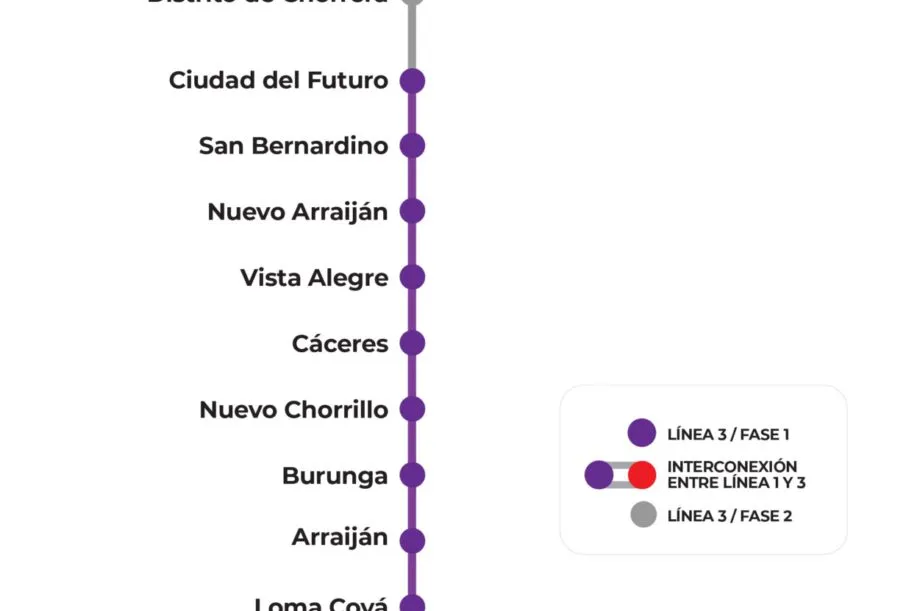
The pedestrian bridge installation comes as the wider Panama Line 3 project hits a major engineering milestone. The elevated section of the monorail is now 86 percent finished, according to the latest progress reports, while the Burunga station itself has reached 74 percent completion. Four more pedestrian bridges still need to be lifted into position at other stations along the line, which will eventually stretch roughly 25 kilometers from Albrook to Ciudad del Futuro.
Together, these elevated walkways will tie into the 14‑station network that promises to slash commute times for residents of Panama Oeste. Once operational, Line 3 is expected to carry more than 160,000 passengers daily, providing a reliable alternative to the congested Pan‑American Highway. The steady advance of the guideway and the first pedestrian links show the project is moving from blueprints into tangible infrastructure that neighborhoods can already see rising above the roadway.
Accessibility and the Road Ahead for Western Panama
While the weekend work is a temporary disruption, the long‑term payoff is a transit system that doesn’t leave anyone behind. Every pedestrian bridge on Line 3 will feature step‑free routes, wide entrances and tactile guidance, making the daily journey safer for seniors, parents with strollers and persons with disabilities. The Burunga walkway sets the standard for the remaining four crossings that will follow in the coming months.
Looking at the broader picture, the Panama Line 3 pedestrian bridge and its counterparts represent more than a convenience; they’re a deliberate attempt to weave new mobility corridors into the fabric of fast‑growing communities west of the canal. As the elevated guideway races toward full completion and stations take shape, thousands of future riders can already glimpse a faster, barrier‑free commute taking form one overnight lift at a time.