


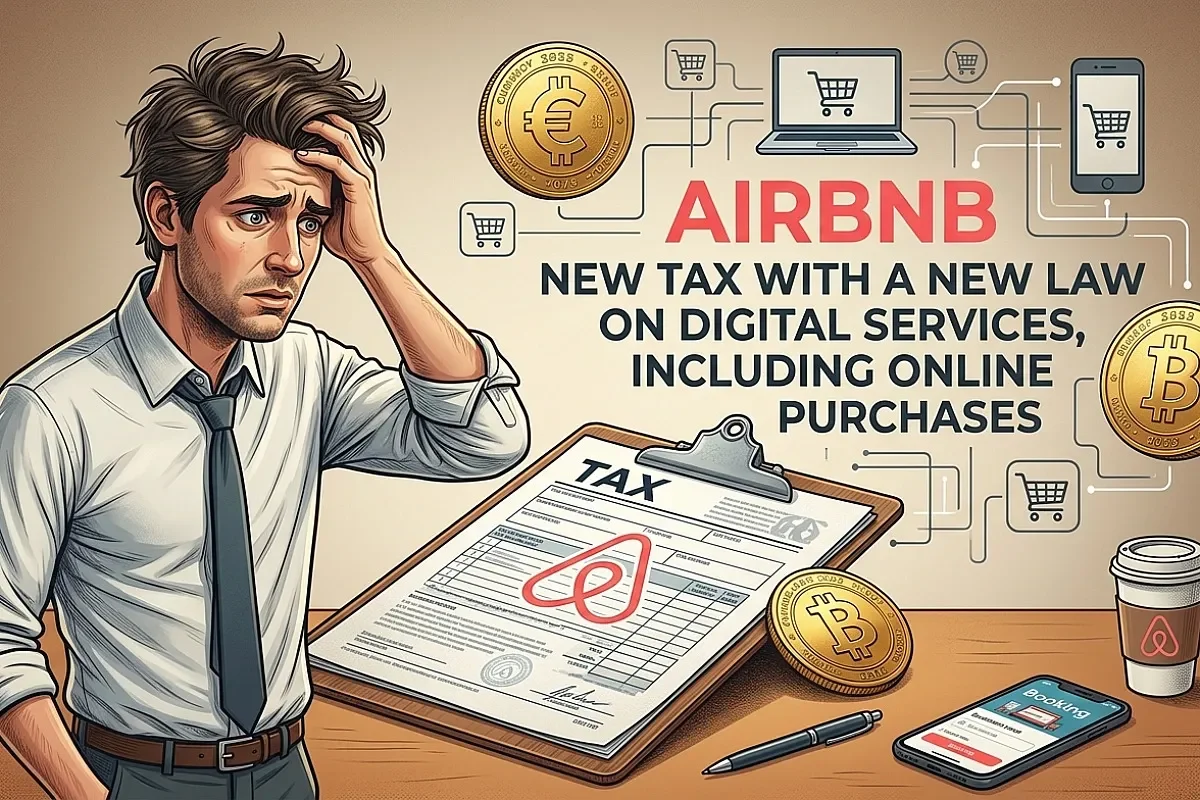
A growing number of vacation rental owners across Panama could soon operate under a different tax reality. The Ministry of Economy and Finance (MEF) has drafted legislation that closes the gap between the Airbnb rental tax framework and the rates paid by traditional hotels, part of a wider effort to modernize how the country collects taxes from digital platforms and cross-border commerce.

Closing the Cross Border Commerce Tax Gap
Shoppers in Panama have long navigated an uneven tax landscape. Buy a product at a local retail store and the ITBMS applies without question. Order that same item from an international e-commerce platform and have it shipped to your door, and the tax often never gets collected. Minister of Economy and Finance Felipe Chapman described this disparity bluntly when explaining why the government is moving forward with new legislation. ITBMS is Panama’s version of VATax.
“What this seeks is to level the paying field” [Translated from Spanish]
Chapman stressed that the initiative does not create any new tax. Instead, it closes an existing loophole in how the ITBMS applies to goods and services delivered through foreign platforms, apps, and other digital channels. The goal, he said, is ensuring that whoever receives a product or service in Panama pays the same tax regardless of where the transaction originated.

Airbnb Rental Tax Parity With Traditional Hotels
Short-term rental properties marketed through platforms like Airbnb have operated under a different tax rate than licensed hotels, a discrepancy the bill aims to eliminate. Vacation rental operators would be required to comply with the same ITBMS obligations that hotels already meet, creating what officials describe as a more balanced hospitality sector.
Camilo Valdés, director of the General Directorate of Revenue (DGI), reinforced this position by appealing to a core principle of tax equity. Two taxpayers providing the same service, he argued, should carry identical tax responsibilities whether they do so through a traditional business or a digital platform. That principle anchors the Airbnb rental tax component within the broader reform package.

Constitutional Substitute Revenue and ITBI Phaseout
The legislation also delivers a win for middle-income homebuyers by eliminating the Property Transfer Tax (ITBI) for properties valued at up to $120,000. But Article 276 of Panama’s Constitution carries a firm requirement. Any tax exemption or modification must come paired with a substitute revenue source.
Chapman addressed this directly, explaining that the MEF will present the substitute revenue bill to the National Assembly as part of the process. He repeated that nothing in the proposal amounts to a fresh tax burden. Rather, the substitute revenue mechanism is designed to offset the ITBI change while simultaneously fixing gaps in existing ITBMS enforcement.
Digital User Location and Regulatory Safeguards
Determining when a digital service is actually consumed inside Panama requires clear technical criteria. The draft legislation incorporates several objective indicators to establish that a service is used, consumed, or leveraged within national territory. These include the location of the bank account or payment instrument, the billing address, the IP address, the SIM card country code, and other signals reasonably tied to a user’s physical location.
The bill also includes protective measures to shield financial activities that operate under distinct legal and regulatory frameworks. Officials want to ensure that updating the ITBMS regime for the digital economy does not create unintended consequences for sectors that already face separate oversight. This careful approach reflects the complexity of taxing modern digital transactions without disrupting established financial services.
The proposed legislation marks a significant shift in how Panama approaches taxation in the platform economy. From Airbnb vacation rentals to imported online purchases, the government is signaling that digital transactions will face the same scrutiny as brick-and-mortar commerce. For property owners, e-commerce shoppers, and foreign platforms serving Panamanian customers, the coming debate in the National Assembly will determine how quickly that new reality takes hold.