


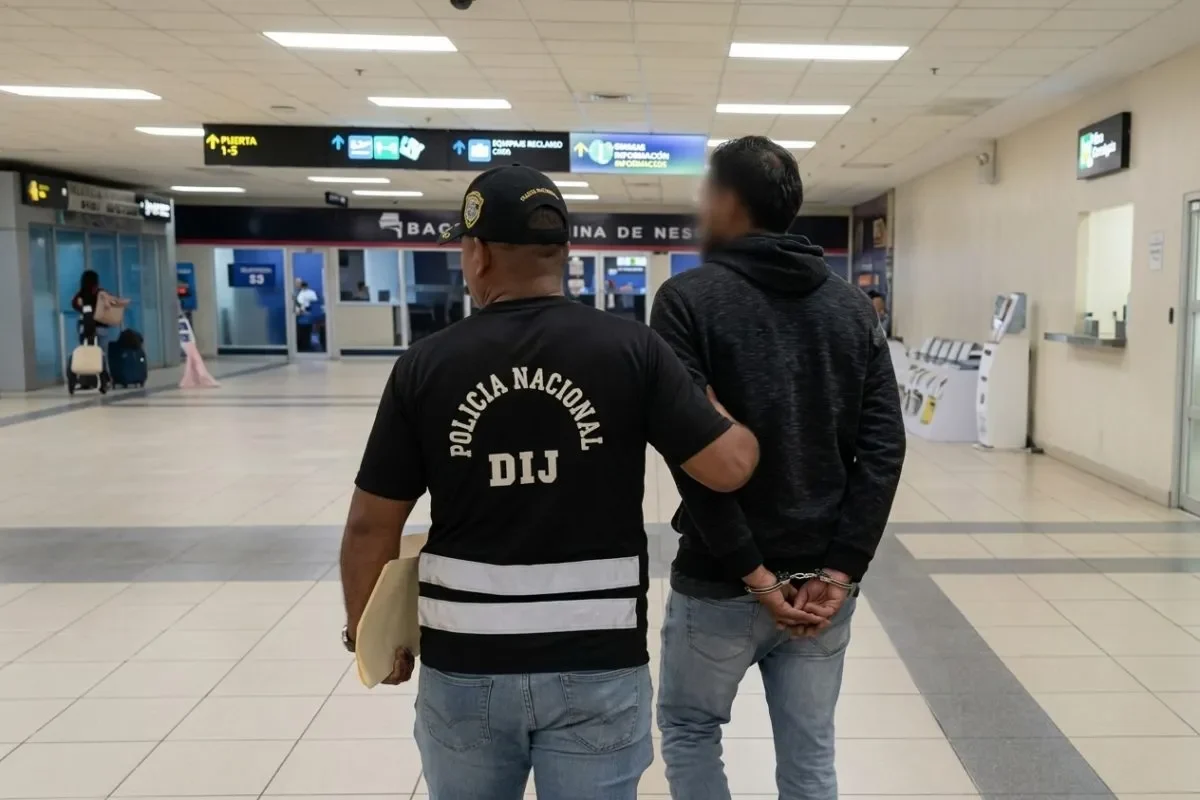
A third war recruiter connected to a network that allegedly sent Panamanians into the Russia-Ukraine conflict now remains in provisional detention after authorities intercepted him at Tocumen International Airport. Judicial officials charged the man with aggravated human trafficking, deepening a case that has already placed three suspects behind bars. The arrest followed an Interpol alert warning that the individual was arriving from Colombia, giving Panamanian authorities enough lead time to move before he could disappear into the capital.
Prosecutors requested provisional detention because they argued the suspect posed a flight risk and had direct ties to a cross-border recruitment operation. Court records indicate the man landed at Tocumen after traveling from Colombian territory, a route investigators say mirrors the movement of recruiters across Latin America. The case has drawn renewed attention to how armed conflict abroad can reach into Panamanian communities through promises of high pay and stable contracts that rarely match reality.
Third War Recruiter Arrested After Interpol Alert
The detention at Tocumen represents the third major enforcement action in an investigation that Panamanian authorities say has exposed a fragmented but connected pipeline of recruiters. The suspect arrived on a flight from Colombia, and an Interpol notification allowed immigration and security personnel to identify him before he cleared the airport. Once in custody, prosecutors moved quickly to file aggravated human trafficking charges and secure provisional detention.
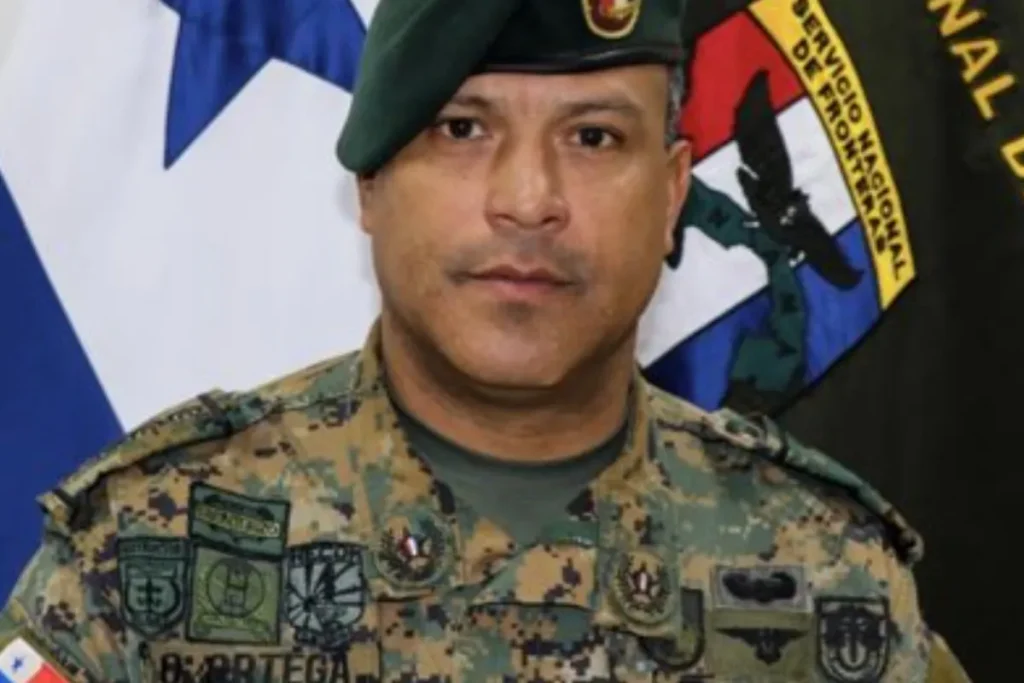
A security expert, Oriel Ortega, explained that these recruitment networks do not operate in isolation. They rely on contacts in Colombia, Honduras, Guatemala, Peru, Brazil, and parts of Europe to move people into combat zones. Ortega said recruiters often receive a bonus for each person they place, while the recruits themselves are promised payments that rarely survive the fine print of their contracts. The flow of people across borders complicates the investigation because a recruiter detained in Panama may hold only one small piece of a much larger operation.

The third war recruiter now faces a legal process that will examine how he allegedly connected Panamanians with foreign military forces. Panamanian law treats human trafficking as a serious offense, and the aggravated designation signals that investigators believe the case involves exploitation, cross-border movement, or the recruitment of people under false pretenses. Provisional detention means the suspect will remain in custody while prosecutors build their file.
How Transnational Recruitment Networks Operate
Ortega described a system where recruiters in one country feed candidates to handlers in another, often using encrypted messaging and social media to identify vulnerable people. The promise is simple and seductive: travel abroad, sign a contract, and earn thousands of dollars per month. In reality, Ortega said, the numbers shift once recruits arrive. A promised bonus of $30,000 may be folded into a salary of roughly $3,000 to $3,500 per month over ten or twelve months, meaning the recruit never receives a true lump sum.
“These people operate through other networks that are multinational. For example, there are groups in Colombia of recruiters, there are groups in Central America like Honduras, Guatemala, also in Europe there are many combatants from Spain, even from Finland. There are also many recruiters in Peru and Brazil that interconnect.” [Translated from Spanish]
The economic pressure in parts of Latin America makes the pitch more effective. Ortega warned that people with steady jobs sometimes abandon their income to chase a supposed high-paying opportunity abroad. He said the need for stability and money pushes people toward offers that seem too good to ignore. But the decision to leave, he added, often places them in a situation where they lose control over their own safety.
Investigators have found that recruits may sign documents without fully understanding what they contain. The contract may list a support role, a technical position, or a security assignment. Once the person arrives in the conflict zone, those guarantees vanish. The network has no reason to honor the original promise because the person is already far from home, without local legal protection, and surrounded by armed units that assign tasks based on need rather than agreement.
Former Combatant Describes Broken Promises and Frontline Deception
Camilo Flores, a former combatant who traveled to Ukraine three times and later helped repatriate other Panamanians, said the recruitment process has changed dramatically. Early on, volunteers sometimes contacted Ukraine’s defense ministry directly, went through an interview, and received an invitation letter. Flores said he never used a recruiter during his first experience. But now, he sees recruiters in Panama making promises before people leave, including commitments tied to specific military units and non-combat jobs.
“I am realizing with this issue that from Panama they are now arriving with commitments to specific units, and that seems to me quite worrying because one thing is when you are here, another thing when you arrive there.” [Translated from Spanish]

Flores recounted the experiences of two Panamanians who returned after discovering that their assignments bore no resemblance to what they had been told. One was promised work as a mechanic but found himself sent to assault operations in less than ten days. Another group of recruits believed they would serve as medics, security guards for drone pilots, engineers, or explosives specialists. When they arrived, Flores said, the entire group was assigned to assault duty.
“The war is not a job opportunity, it is simply a war. And at this moment, with everything I have learned about what is happening here in Panama, yes, there is a deception happening in Panama.” [Translated from Spanish]
The gap between promise and frontline reality forms the core of the trafficking investigation. Authorities are not simply looking at whether Panamanians left the country to fight. They are examining whether recruiters knowingly misled people about the risks, the pay, and the type of duty they would perform. Flores said preparation time has also shifted. In earlier periods, newcomers might train for three or four months before reaching the front. Now, he said, people can be pushed into dangerous roles much faster.
Legal Ramifications and Warnings for Panamanians
The arrest of the third war recruiter signals that Panamanian prosecutors are willing to pursue charges beyond the recruits themselves. Aggravated human trafficking carries the possibility of a lengthy prison sentence, and provisional detention gives investigators time to trace communications, travel records, and financial transactions. The involvement of Interpol also shows that the case extends beyond Panama’s borders, with evidence likely shared among multiple countries.
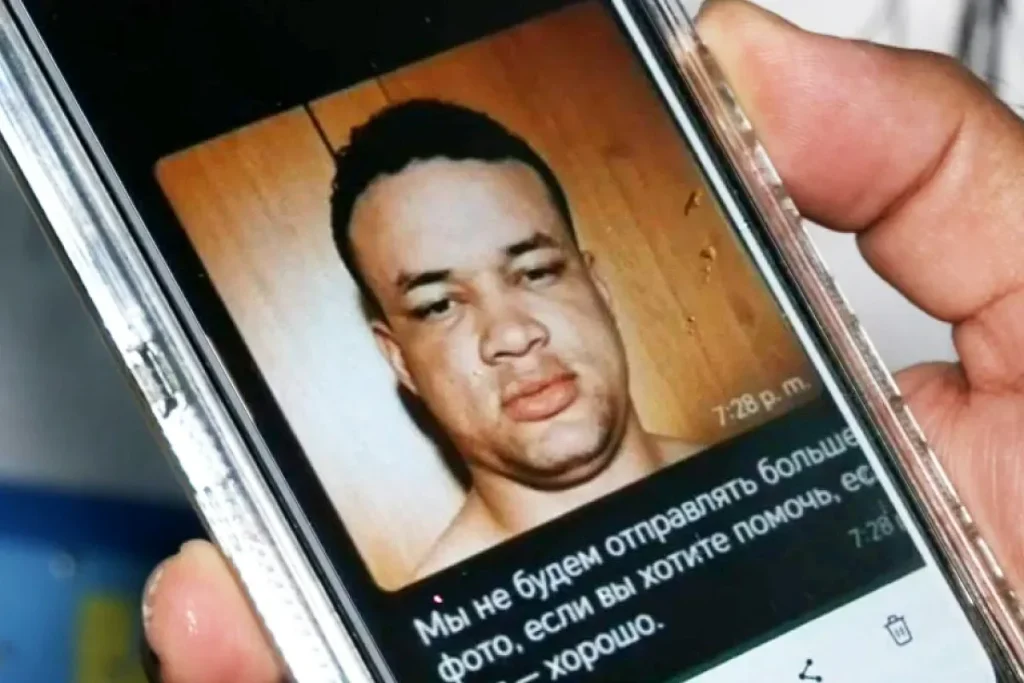
For Panamanians considering similar offers, Ortega and Flores offered the same warning: do not go. Ortega said life has no price, and the pursuit of extra income should not lead someone to abandon a stable job for a conflict zone. He urged people to seek work at home and to avoid desperation, which recruiters exploit. Flores asked young people to pay attention to the news and to the videos circulating on social media that show the true conditions of the war.
The case remains open, and authorities have not ruled out additional arrests. Each new detention reveals another layer of a network that appears to operate across Latin America and Europe. The third war recruiter now held in Panama represents a concrete enforcement step, but the broader question remains how many more people were approached before the first arrests began. The investigation may answer whether the Panamanian suspects acted independently or followed instructions from a larger organization.
Panama has no standing army, a fact that makes the recruitment of its citizens for foreign combat even more striking. The country’s security focus has historically centered on drug trafficking, migration, and organized crime. Now prosecutors are applying human trafficking statutes to a different kind of exploitation, one that uses economic hardship and false promises to send people into war. The result could set a precedent for how Panamanian courts handle cases involving foreign military recruitment and cross-border deception.
Ultimately, the detention of a third suspect at Tocumen International Airport highlights the reach of informal recruitment networks and the speed with which they can pull people across borders. The case combines elements of organized crime, migration, labor exploitation, and armed conflict. For the families of those already recruited, the arrests offer a measure of accountability. For everyone else, they serve as a blunt reminder that not every overseas offer is what it seems.