


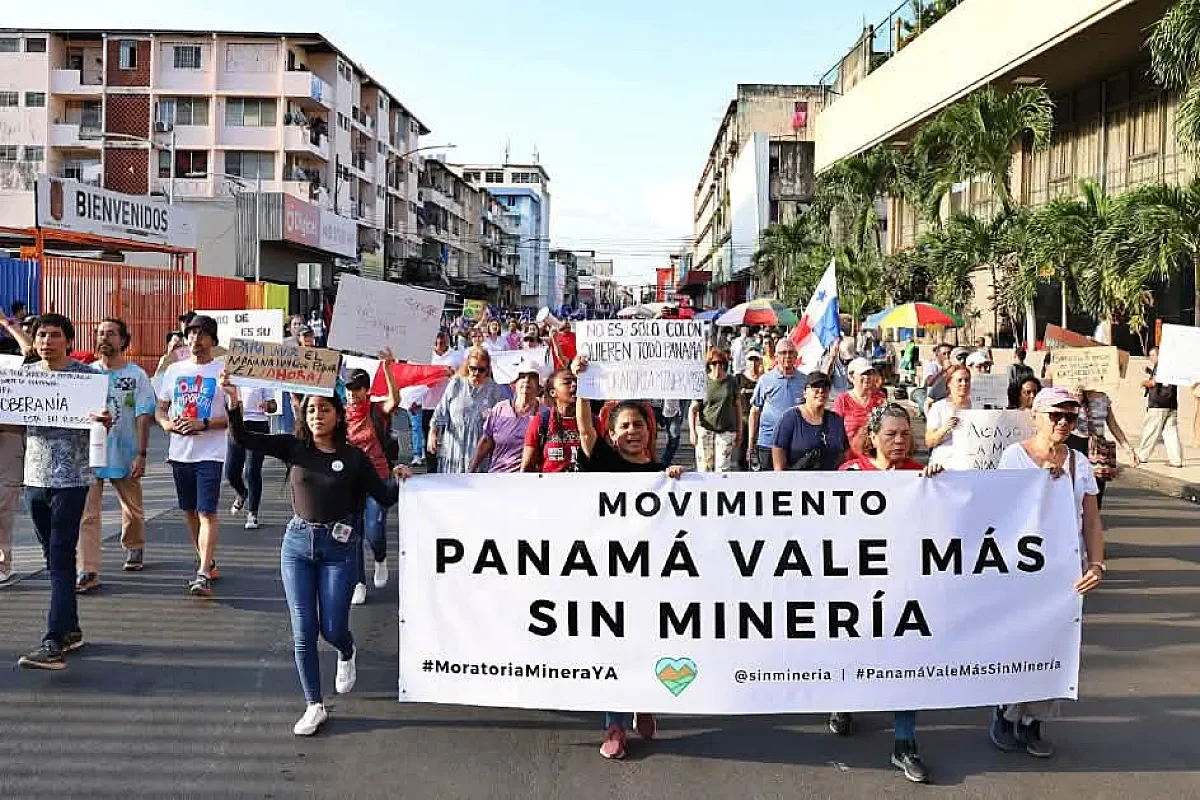
Community and environmental leaders in Panama have rejected a government proposal that would fund the closure of the Cobre Panamá mine through continued mineral extraction in Donoso, calling the self-financing mine closure scheme a legal and environmental contradiction. The criticism came during a press conference on October 7, where representatives from multiple organizations argued the plan violates the 2023 Supreme Court ruling and the national mining moratorium.
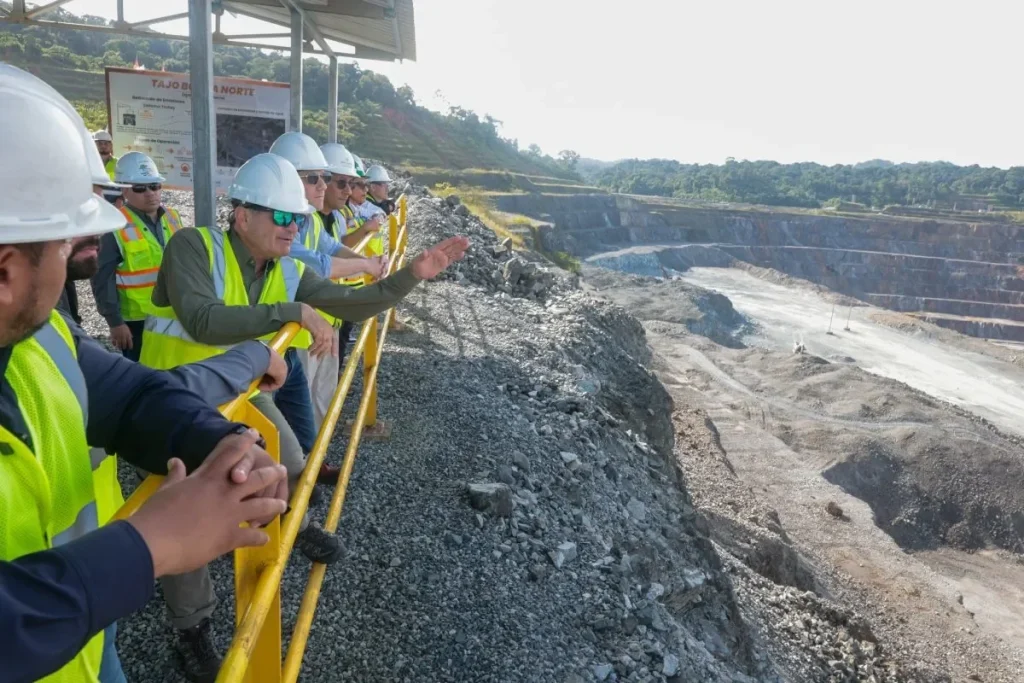
The Interministerial Commission presented its “orderly and self-financing closure” framework on September 30. But activists say the proposal amounts to a new concession disguised as remediation, effectively reopening operations that the court ordered shut.
Legal Challenges to the Self-Financing Mine Closure Model
Carlos Bichet, an advisor at the Center for Environmental Advocacy (CIAM) and representative of the Panama Free Without Mining Movement, said the government’s framing misleads the public. “The ministers’ press conference on September 30 presents something they call the ‘mine closure.’ That is an immense fallacy,” Bichet said. “We in the environmental movement say this is a way of deceiving the Panamanian people with a concession focused on exploitation.” [Translated from Spanish]
Bichet pointed to what he described as legal ambiguity in the official report. He said it lacks clear timelines and fails to meet the human rights and environmental protection standards established by the 2023 unconstitutionality ruling. The executive branch, he argued, has not complied with requirements for public bidding, a new Environmental Impact Assessment, or the principle of environmental non-regression.
“The court said if you reach an established environmental standard, you cannot go backward,” Bichet said. “We are deeply concerned that this is being sold as a mine closure when it is truly a new concession that violates the mining moratorium law.” [Translated from Spanish]
Community and Technical Opposition Grows
The rejection spans multiple sectors. The Panama Worth More Without Mining Movement, the Technical Committee for Mine Closure of the Panamanian Committee of the IUCN, community leaders from Donoso and Omar Torrijos, and allied organizations all argue the proposal undermines the rule of law and ignores Supreme Court decisions.
Alibel Pizarro, from the Panama Worth More Without Mining Movement, questioned why three ministries with legal advisory departments have not presented a viable legal formula after months of analysis. “What the government has presented so far is a closure disguise, when in reality it is exploitation and an opening of the mine,” Pizarro said. “If there were a legal formula, they would have already presented it to us.” [Translated from Spanish]
Isaías Ramos González, a biologist at CIAM, warned that the official discourse creates uncertainty in international markets while omitting essential responsibilities. “A closure requires a whole series of steps concerning the management of structures, guaranteeing chemical and physical stability, and establishing economic compensation mechanisms that the government is not talking about,” Ramos said. [Translated from Spanish]

Local Voices Challenge Economic Justifications
Leysi Rodríguez, from the Donoso Peasant Coordinator, rejected claims that the plan would benefit local residents. “As a representative of my community, I raise my voice for all these families living in the Donoso district, who are taken advantage of because of our needs, offering these solutions based on a project that threatens the lives of all of us and the entire country,” Rodríguez said. [Translated from Spanish]
Environmental activist Raisa Banfield urged citizens to look beyond official euphemisms. “If they wanted to close, there is no need to open. They need to enter to control, to restore, to repair, to transform so that other types of economic activities generate development for those communities directly and benefits for the country indirectly,” Banfield said. [Translated from Spanish]
The activists maintain that a genuine closure plan would prioritize environmental restoration and alternative economic development for affected communities, rather than extending extraction under a different name. The government has not responded publicly to the latest criticisms.