


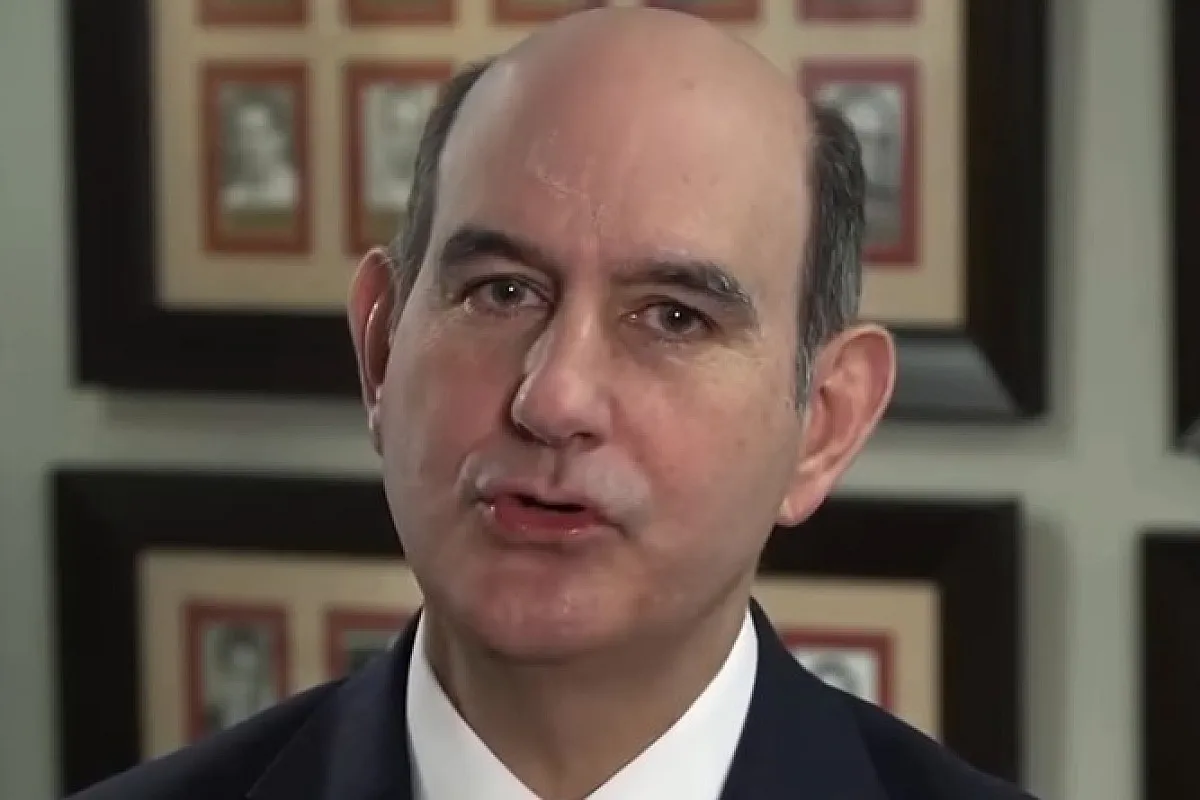
The proposed 2027 Panamanian budget of $35,111.7 million has ignited an unexpected political confrontation over a relatively small line item, $37 million earmarked for state advertising spending. Economy and Finance Minister Felipe Chapman found himself defending that allocation during a Sunday television interview, arguing critics have conveniently overlooked a far larger achievement: the reduction of debt service payments by $2,443 million.

A $2.4 Billion Reduction Overshadowed by One Line Item
Chapman did not hide his frustration over how the public debate has unfolded. The debt service figure drops from $7,938.9 million in 2026 to $5,496 million in 2027, a reduction equivalent to 30.8 percent. Yet, as he pointed out, the conversation centered on a much smaller number.
“That was the headline. But nobody spoke about us lowering debt service by almost 3,000 million. But the headline is $37 million” [Translated from Spanish]
Chapman asked Panamanians to think about proportions. During the interview, he said the question and the headline had scared him because the budget exceeds 35,000 million. The advertising allocation represents just 0.1 percent of the total spending plan, a fraction that he believes should not overshadow the broader fiscal accomplishments.
The minister’s irritation reflects a deeper tension in budget politics. Large structural reforms and debt reductions often struggle to capture public attention, while relatively small expenditures can generate outsized controversy. In this case, Chapman appears genuinely surprised that the state advertising spending debate has consumed so much oxygen when the debt service savings alone amount to roughly 66 times the advertising allocation.
State Advertising Spending Breakdown and Justification
The minister admitted the $37 million figure startled him at first.
“The figure I managed in my mind was 16, 17 million” [Translated from Spanish]
After reviewing the details, he found an explanation: more than 50 percent of the spending comes from state enterprises, including the National Bank and the Savings Bank, known locally as Caja de Ahorros.
Chapman defended those entities paying for promotional space, drawing on his own private sector experience.
“Have you ever managed a bank? I have. And without making its products and services known, the bank does not grow” [Translated from Spanish]
He offered concrete examples from his own ministry. When the Ministry of Economy and Finance sells a property, whether an apartment, a lot, or a house, it must advertise to attract bidders.
“Does it cost money to advertise it? Yes. But the return for the taxpayer is 1,000 to 1,000” [Translated from Spanish].
On the fiscal lottery, Chapman said every dollar invested in promoting it has produced about 1,000 additional balboas in ITBMS revenue.
“Tell me if that is not good business for the taxpayer” [Translated from Spanish]
This cost-benefit framing marks a shift in how Panamanian officials justify promotional spending. Rather than defending the allocation as a necessary government function, Chapman positioned it as a revenue-generating investment. The argument may resonate with fiscal conservatives, but it also raises questions about whether state-owned banks and agencies should compete with private advertisers using public funds.
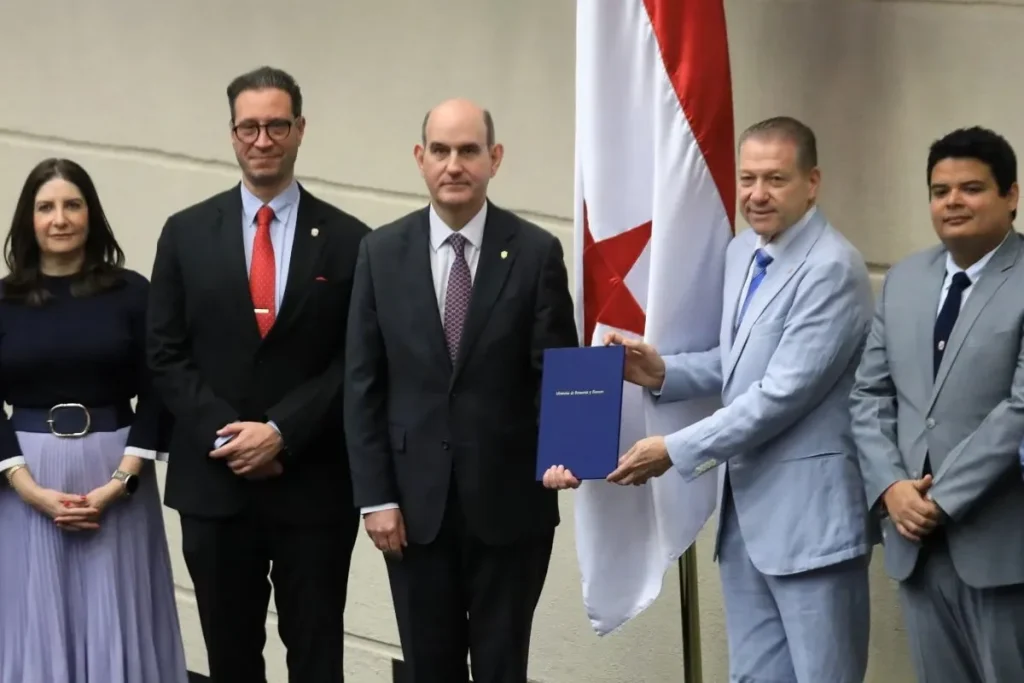
Legal Framework and International Obligations
Hugo Famanía, the journalist conducting the interview, distanced himself from the headline controversy but agreed with the minister on the substance. Panama is a signatory of the Pact of San José, formally known as the American Convention on Human Rights, Famanía recalled. That instrument recognizes the right of citizens to access information and to state advertising as a mechanism for keeping the public informed.
“It makes me uncomfortable that there is an attempt to demonize something that even we are signatories of international pacts that guarantee the principle” [Translated from Spanish]
Famanía also emphasized the boundary set by that instrument: state advertising cannot be used for “promotion of personalities” [Translated from Spanish]. Chapman said he fully agreed with that limitation.
The Pact of San José has long been cited in Latin American debates over government communications. Its provisions on access to information provide a legal foundation for state advertising, but the line between informing citizens and promoting individual figures remains contested across the region. Panama’s current debate mirrors similar discussions in neighboring countries, where public advertising budgets have come under scrutiny for potential electoral influence.
Transparency Concerns and Political Implications
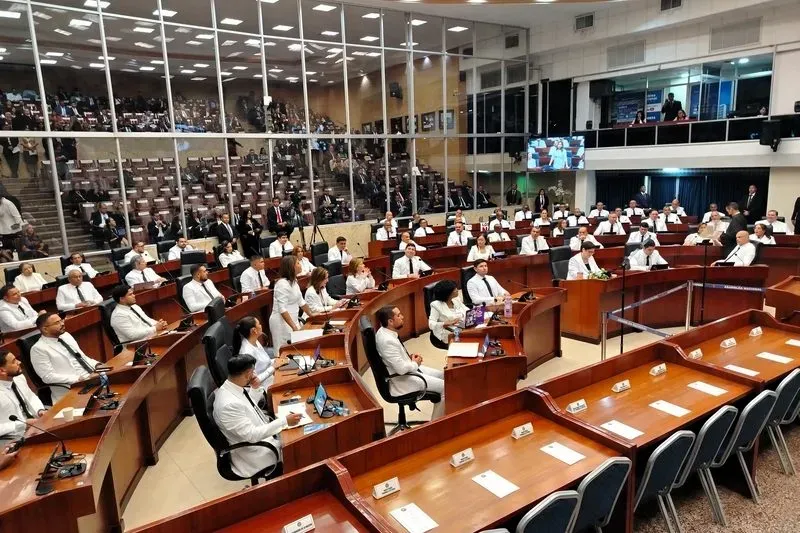
The controversy over state advertising spending began when the executive branch submitted the 2027 budget to the National Assembly. Deputy José Pérez Barboni warned that
“there are complete institutions that manage less budget than the state advertising allocation” [Translated from Spanish]
He cited the National Authority of Transparency, which operates with ten times fewer resources than that single line item.
Chapman responded directly to concerns about political use of public funds.
“I disagree with using budget money for political proselytism. Is that being done with this campaign? No” [Translated from Spanish]
As evidence, he pointed to the plaques on works inaugurated by the current administration.
“None of those plaques says inaugurated by the president. This work is product of the work of the Panamanian people” [Translated from Spanish]
He then posed a question about past practices.
“Who was the last president who did that? I have memory, they all put their name” [Translated from Spanish]
That rhetorical jab at previous administrations underscores the political dimension of the debate. In Panama, as elsewhere in Latin America, the placement of presidential names on public works has long been a visible symbol of the intersection between government spending and political self-promotion. Chapman’s claim that the current administration has broken with that tradition attempts to reframe the advertising allocation as institutional rather than personal messaging.
Chapman closed with a declaration of principles.
“I work for the Panamanian, I serve the Panamanian and my job is to save them thousands of millions. I have the satisfaction and sleep calmly that we are already achieving it” [Translated from Spanish]
The debate over the $37 million allocation may continue in the National Assembly, but the minister clearly believes the larger fiscal picture tells the real story.