


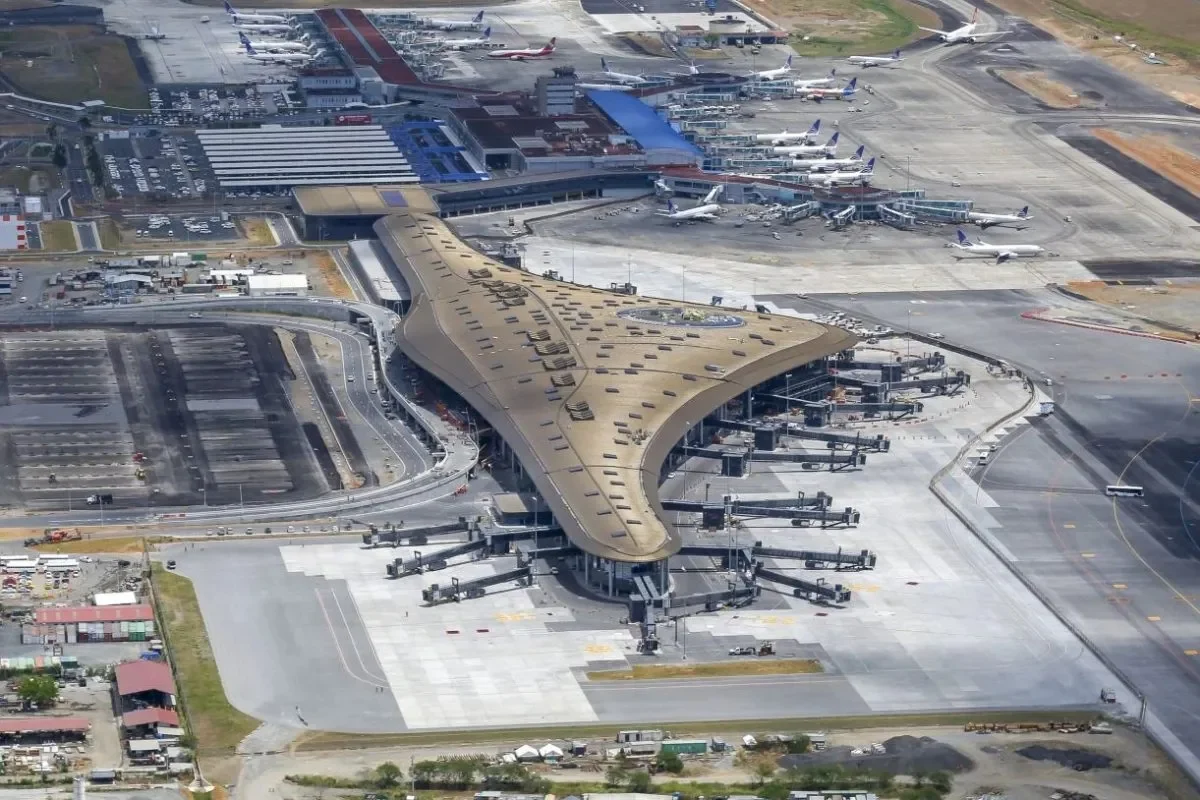
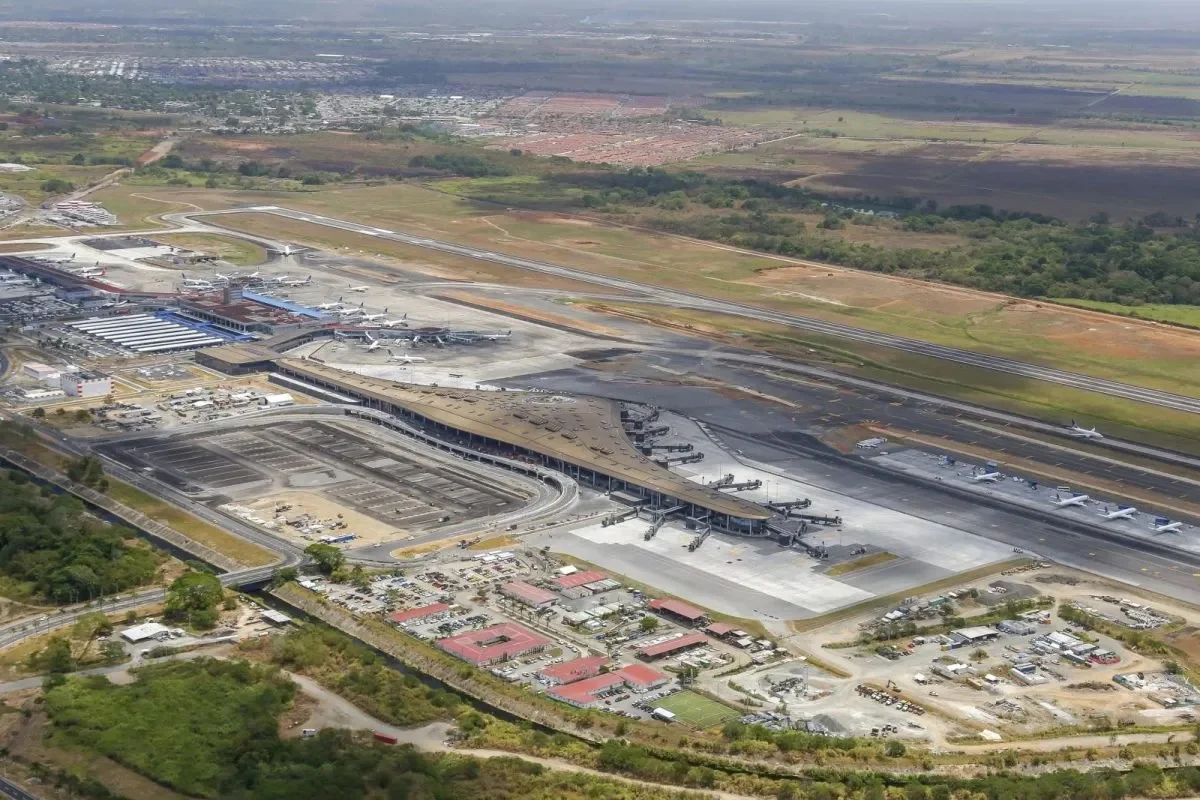
The Tocumen South Pier expansion has entered a critical phase as airport authorities extended the deadline for construction bids to September 28, giving 26 interested companies additional time to prepare proposals for the $208.75 million infrastructure project. The new pier, planned for the far end of Terminal 2, will add ten contact positions, four remote gates, and the reconfiguration of three existing gates within a structure spanning approximately 21,097 square meters.
Tocumen International Airport officials confirmed that Adendum 2 pushed back the original August 31 submission date, providing participants with 20 additional business days. The decision came after ten firms formally requested a 60-day extension, while Portuguese construction giant Mota-Engil sought 30 extra days. Airport administrators granted a shorter window than requested, signaling their intent to keep the procurement process moving forward.
Bidding Competition and Project Scope for Tocumen South Pier Expansion
The roster of interested parties reads like a who’s who of regional construction and engineering firms. ICA Constructora, AIA Project Managers, Ingeniería Estrella, T.Y. Lin, GAMI, Constructora Nova, Constructora Meco, Desarrollo y Construcciones Urbanas, Mota-Engil, and Mallol & Mallol Arquitectos all submitted requests for additional preparation time. This level of competition suggests strong market confidence in Panama’s aviation infrastructure trajectory.
The South Pier must integrate both physically and operationally with the existing Terminal 2 infrastructure, a requirement that demands sophisticated coordination between design, construction, and ongoing airport operations. Airport planners envision the expansion as essential for accommodating growing passenger volumes and improving the terminal‘s operational efficiency. The project’s scale reflects Panama’s broader ambitions to maintain Tocumen as a leading regional hub connecting North and South America.
Amended Eligibility Rules Reshape the Competitive Field
A significant shift in the bidding framework now allows companies to leverage the experience of parent corporations, subsidiaries, or affiliates when demonstrating their qualifications. This change opens the door for international firms whose local entities might lack the full track record required under the original terms. Applicants must provide documentary evidence of the corporate relationship and, where applicable, submit a commitment of unlimited solidarity from the parent company.
Yet airport authorities held firm on a key demanding thresholds. Every bidder must still demonstrate at least one individual project valued at $75 million, fully executed and received during the past 25 years. Combining multiple smaller contracts to reach that figure remains prohibited. This requirement effectively filters the field to firms with substantial large-scale project experience.
Officials also broadened the types of acceptable project experience. The previous language mentioned only airport terminal expansions, while the revised version now accepts construction or expansion of passenger terminals at international airports that remained operational during the work. This adjustment acknowledges the specialized challenges of building within active aviation environments.
Personnel and Technical Evaluation Standards Updated
The amended bid documents bring notable flexibility to staffing requirements. Resident engineers or superintendents can now qualify with a single project completed within their 12 years of professional experience, rather than two projects. The project value must still equal at least 30 percent of the reference price, and the professional must hold valid credentials from Panamanian authorities. Interestingly, the same qualified professional may now be proposed by multiple bidders without triggering automatic rejection, though each candidate must independently meet all academic, experience, and credential requirements for their assigned technical role.
Tocumen introduced more precise evaluation scales for work plans and descriptive reports. Scoring now depends on verifiable elements such as deliverables tied to specific dates, designated responsible parties, mitigation measures, and contingency plans. This structured approach reduces subjective interpretation by the evaluation commission and gives bidders clearer targets for preparing competitive submissions.
Financial Guarantees and Contractual Conditions Remain Stringent
The financial requirements attached to the Tocumen South Pier expansion remain substantial. Bidders must present letters backing 100 percent of their economic proposal, audited financial statements for 2024 and 2025, working capital equivalent to 15 percent of the project budget, and minimum annual billing of $150 million. For documents in foreign currencies, Adendum 2 permits using exchange rates published by the United States Federal Reserve, in addition to certifications from the National Bank of Panama or a licensed accountant. The source, period used, and conversion calculation must all be clearly identified.

While the reference price stands at $208.75 million, the bid documents allow offers up to $250.5 million before triggering automatic rejection. Airport authorities rejected several requests from prospective bidders, including a 4 percent contractual penalty clause that remains unchanged. The window for correcting documentation errors stays limited to three business days, and original plans will not be released for general download, though interested parties may consult them through the established procedure.
The procurement timeline now points toward late September for bid submission and opening. With 26 firms already registered and the amended rules providing greater flexibility on corporate experience and personnel qualifications, the competition for this transformative airport expansion appears poised to be intense. The result will shape Tocumen’s capacity to handle future passenger growth and reinforce Panama’s position as a critical aviation connector in the Americas.