


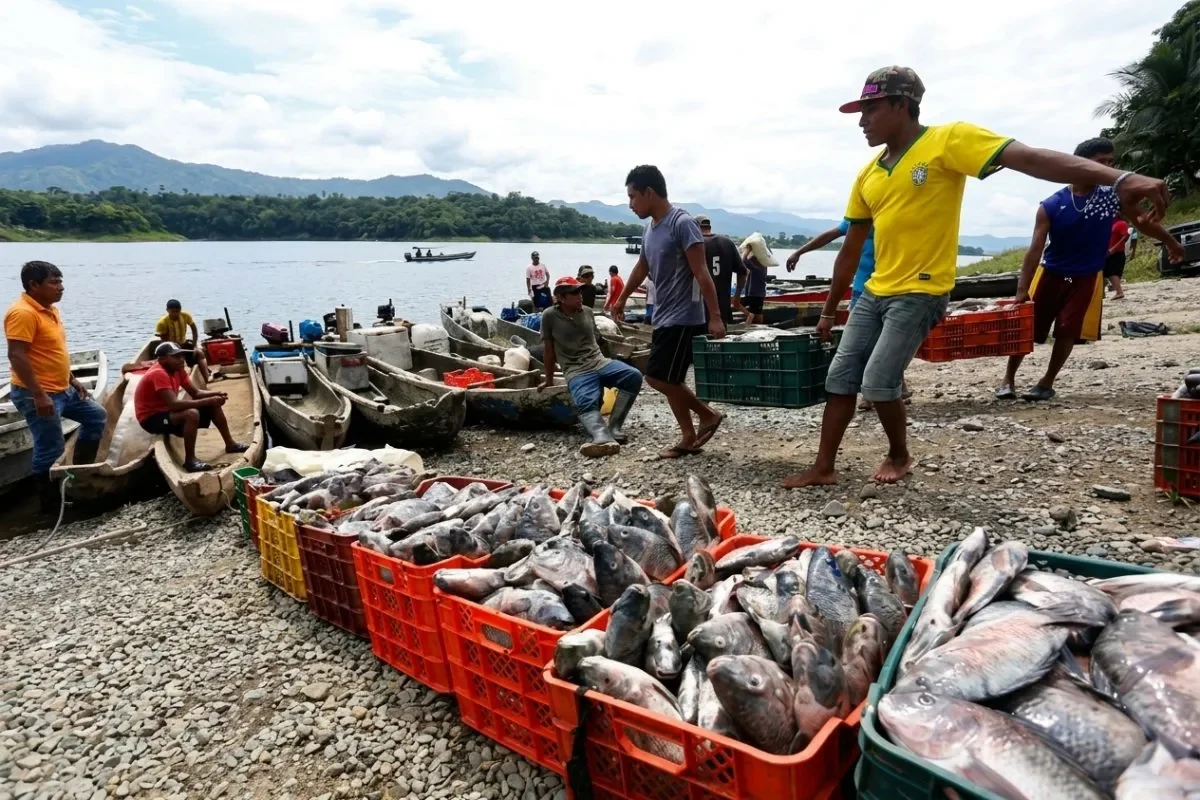
Export Infrastructure Powers the Panamanian Fish Market
Just twelve months after launching operations, a processing complex in eastern Panama now ships roughly 300,000 pounds of frozen seafood each week to buyers on three continents. The Pacific Fishing Free Zone in Tanara, Chepo, has rapidly positioned the Panamanian fish market as an emerging force in international seafood trade, with active commercial routes reaching the United States, Spain, Nicaragua, Chile and other global destinations.
The facility operates under Panama’s Special Free Zone Regime established by Law 32 of 2011 and received its authorization from the Cabinet Council in September 2025. Total investment exceeded $10.8 million, channeling resources into fishing and aquaculture activities designed to add value before products leave Panamanian shores. Three companies anchor the complex: Corporación Pesquera del Istmo, Biorenewal Rendering and Servicios Francos, each handling different segments of processing, byproduct recovery and commercial services.
Edgardo Pérez, the free zone’s administrative manager, described how raw materials arrive from both imported sources and local producers before undergoing processing and transformation.
“Our operations include the entry of raw materials, both imported and coming from the local market, for processing and transformation, with a view to their subsequent export to different international markets” [Translated from Spanish]
That model captures more value locally while feeding demand for frozen fish products across Western Hemisphere and European markets, with Asian buyers also in the mix.
Circular Economy and Clean Energy Drive Processing Innovation
Beyond basic fish freezing, the complex incorporates technologies aimed at reducing waste and energy consumption. Corporación Pesquera del Istmo operates high-tech freezing tunnels and is moving forward with solar panel installation to tap renewable power sources. Meanwhile, Biorenewal Rendering applies a circular economy approach by collecting residues from fish and shellfish processing plants across the region.
Those collected materials get converted into fish meal and fish oil, creating commercially viable secondary products while cutting environmental impact. This dual focus on efficiency and sustainability reflects broader shifts in how seafood processing hubs operate globally, where every byproduct stream represents potential revenue rather than disposal cost. For a country looking to diversify its export portfolio beyond traditional logistics and canal- services, the Panamanian fish market offers a tangible example of value-added industry taking root outside the capital.
Local Employment and Social Investment in Tanara
The workforce story at the Tanara facility carries particular weight in a district where formal employment opportunities remain limited. Roughly 140 direct jobs have materialized since operations began, and free zone administrator Yariela Castillo emphasized that women hold about 70 percent of those positions. That statistic stands out in Panama’s agricultural and industrial sectors, where male-dominated labor patterns typically prevail.
Castillo also pointed to social responsibility programs supporting educational centers in the Tanara community. During an expanded Cabinet Council session held in Tortí, Chepo, Commerce and Industries Minister Julio Moltó underscored the broader significance of such investments.
“This type of project that generates direct and indirect jobs shows how a decision of this administration can open new activities around what a region produces: processing, transportation, logistics, services, exports and employment” [Translated from Spanish]
The minister’s remarks connect the free zone’s daily operations to regional development goals that extend well beyond seafood processing.
Expansion Plans Signal Ambition for Greater Capacity
Administrators are not standing still after year one. Plans call for expanding the complex by approximately 1.5 hectares to attract additional companies, boost commercial capacity and generate more employment opportunities. That physical growth would build on the initial $10.8 million investment and potentially broaden the range of processed products leaving Tanara for foreign markets.
The Ministry of Commerce and Industries views such projects as platforms for attracting investment, diversifying exports and strengthening Panama’s participation across international supply chains. For global seafood buyers, the Panamanian fish market represents an increasingly reliable source of frozen products processed under regulatory oversight with modern equipment. For local families, the free zone means paychecks, skills development and a stake in an industry that connects a rural district in Chepo to dinner tables thousands of miles away across the Americas, Europe and Asia.
The project’s early trajectory demonstrates how targeted free zone policies can activate economic activity in areas far from Panama City. With expansion plans on the table and sustainability practices already integrated into daily operations, the Tanara complex appears positioned to deepen its footprint in international seafood trade while delivering steady employment growth for the surrounding region.